
Virtuix Holdings Inc (NASDAQ:VTIX), a developer of full-body virtual reality systems, made its debut on the Nasdaq earlier this week, signaling a major step forward for the Austin, Texas–based company as it pursues growth in both consumer and defense markets.
Founded in 2013, Virtuix has spent more than a decade refining technology that allows users to walk, run, and move naturally inside virtual worlds—a problem that has long stymied VR developers. The company’s flagship home system, Omni One, has been a catalyst for revenue growth, helping drive a 138% year-over-year increase for the six months ending September 30, according to Virtuix’s S-1 filing. To date, the company has sold over $20 million in systems across three product generations.
CEO Jan Goetgeluk, who founded Virtuix after wanting to walk naturally in VR instead of using controllers, told Proactive that the Nasdaq listing aligns with the company’s readiness to scale operations. “We’re only getting started,” he said. “The missing piece is the ability to move through those worlds naturally. We pioneered the technology to make that possible.”
Virtuix’s Omni platform combines an omnidirectional treadmill with overshoes and a concave low-friction base, enabling players to physically walk or run in 360 degrees while staying safely in place. The mechanical design, coupled with motion tracking and integrated software, is protected by 25 patents, with five more pending.
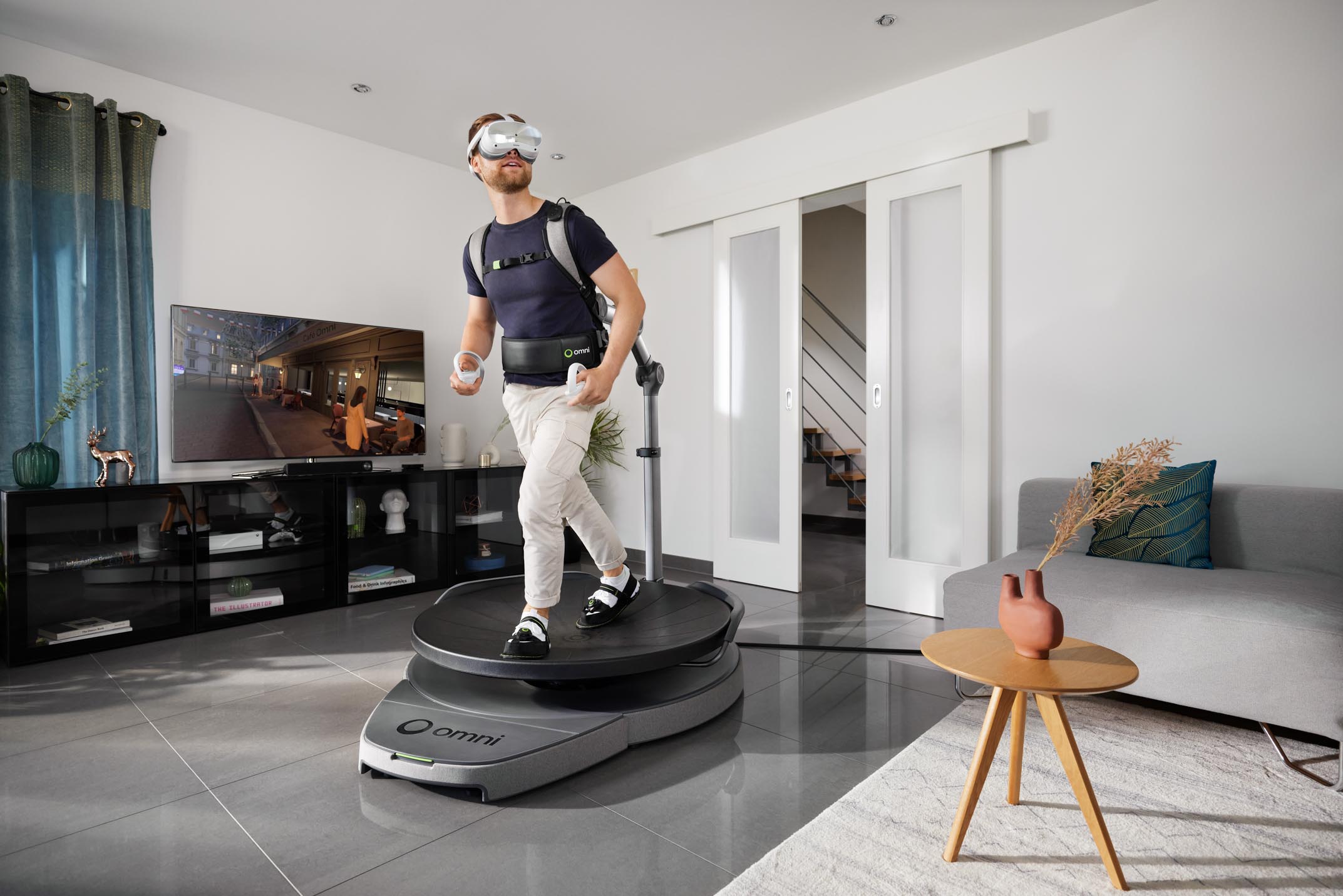
“It’s not a simple device to build,” Goetgeluk said. “It’s a complex piece of hardware combining metals, plastics, electronics, fabrics, and specialized footwear. Then you have motion tracking, and full integration with games and content. It’s a fully vertically integrated system that took us 10 years and $50 million to develop. It’s not something other companies can easily replicate.”
Virtuix is pursuing a dual-use strategy, targeting high-volume consumer sales alongside higher-margin defense contracts. Its Virtual Terrain Walk system leverages AI-driven 3D reconstruction and Gaussian splatting to convert 360-degree video into highly realistic VR terrain for mission rehearsal. “That process used to take months. Now, thanks to AI, that takes hours,” Goetgeluk said. Test units have already been deployed at the US Air Force Academy and Yokota Air Force Base, signaling growing traction in the military sector.
The Nasdaq debut not only brings visibility but also fresh capital. Virtuix raised $11 million from Chicago Venture Partners and secured a $50 million equity line of credit, funds earmarked for scaling sales and marketing of Omni One. Production capacity is now sufficient to support up to 3,000 units per month, representing roughly $100 million in potential annual revenue.
Virtuix’s roots trace back to a Kickstarter campaign in June 2013, which raised more than $1.1 million, among the most successful at the time. The company later attracted investment from notable backers including entrepreneur Mark Cuban and venture firms Maveron and Scout Ventures. Brad Harrison, founder and managing partner at Scout Ventures, said Virtuix fills a critical gap in virtual reality. “Virtuix’s technology offers a unique solution to enable physical movement within virtual worlds,” Harrison said. “It is a key piece of VR that has been missing.”

Goetgeluk emphasized that the company’s approach has evolved alongside the broader VR market. “VR followed the classic Gartner Hype Cycle: there was a lot of hype, followed by the so-called ‘trough of disillusionment,’ and then slow but steady adoption,” he said. Virtuix initially targeted consumer markets with the original Omni treadmill but shifted to commercial applications, including VR arcades and the Omni Arena entertainment system, before returning to consumers with Omni One.
The home-focused Omni One is designed for plug-and-play ease, letting users step in and start moving without complicated setup. Early consumer adoption has been encouraging, with users citing immersive fitness benefits: one reportedly lost 40 pounds in four months using the system. Goetgeluk views this as a compelling differentiator in a market where VR has often been criticized for isolating users physically. “Our system is so immersive that you don’t even realize you’re exercising, but you are,” he said.
With over 500,000 registered players on the commercial entertainment side and high repeat engagement, Virtuix believes it has a strong foundation to scale its consumer business while continuing to expand defense and enterprise offerings. The company’s vision remains ambitious: a VR treadmill in every household, blending entertainment, physical activity, and emerging AI-generated virtual environments.
“Seeing adoption among consumers and how our device helps people stay active and in shape is incredibly rewarding,” Goetgeluk said. “It’s a way to get kids off the couch—there’s a big obesity problem in the US, and people are so sedentary. It’s exciting seeing people enjoy our products and become healthier because of it.”
As Virtuix steps into the public markets, it is betting that the combination of physical immersion, AI-powered simulation, and strategic dual-use applications will position it at the forefront of the next wave of virtual reality innovation.