
South Harz Potash Ltd (ASX:SHP, FRA:D860) has identified an additional copper-gold mineralised area at its Glava Project in central Sweden, following the completion of initial fieldwork that has delivered high-grade rock chip results and reinforced the project’s geological potential.
The early-stage exploration program has outlined a new mineralised zone around 300 metres from known historic workings and close to the southern boundary of the Glava 100 exploration licence. The standout assay returned 9.88 g/t gold and 2.88% copper, with results showing a strong and consistent correlation between the two metals.
South Harz said the work has validated historical data while strengthening its interpretation that Glava may host an epithermal-style copper-gold system, with mineralisation potentially extending southwards into recently applied-for licence areas.
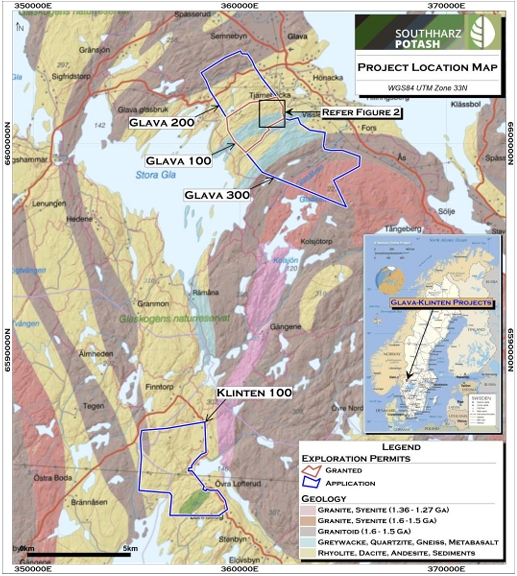
Project Location Map
Fieldwork delivers encouraging early signals
The November 2025 field program covered rock chip sampling, geological mapping, waste dump sampling and a ground magnetic survey across the Glava 100 licence area in Sweden’s Värmland Province.
A total of 59 rock chip samples were collected across a roughly 9-square-kilometre area on a wide-spaced grid. Sampling focused on verifying historic artisanal mining data and identifying new copper-gold anomalies.
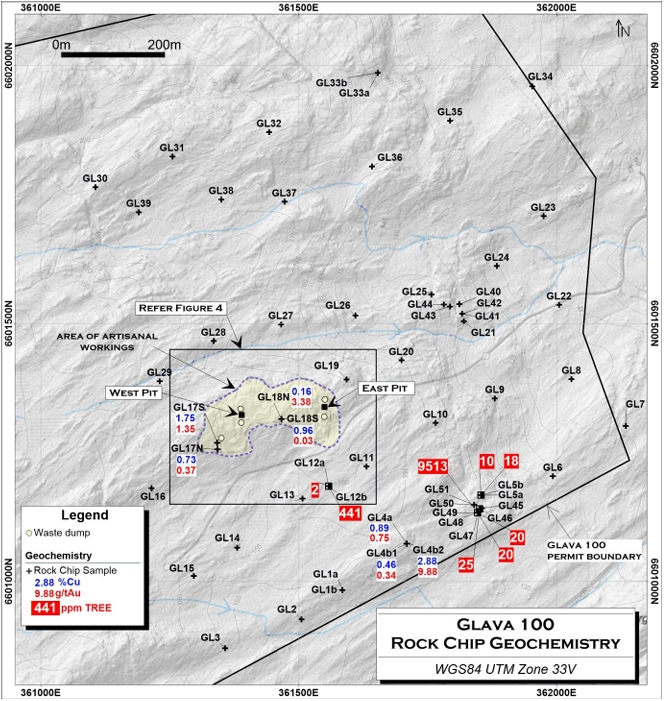
Geochemical Sample Location Map
Outside the main historic mine footprint, South Harz identified an anomalous copper-gold occurrence 300 metres southeast of known workings, where the highest grades were returned. The company said geochemical analysis showed a strong copper-gold relationship across all samples, consistent with mineralisation observed historically at Glava.
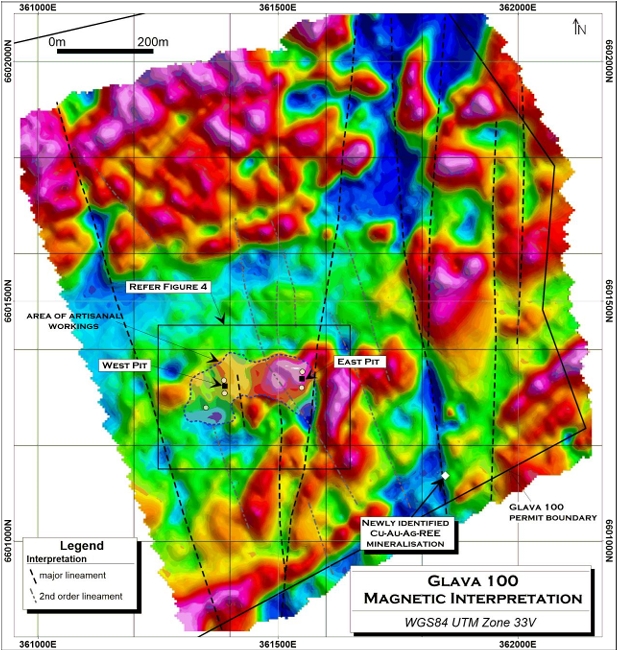
Magnetic Interpretation
Rare earths add optionality
While the program was designed primarily to test for copper and gold, reconnaissance sampling also identified rare earth element (REE) mineralisation in a quartz breccia that is atypical for the area.
Two samples returned anomalous rare earth values, including a result of 9,513 parts per million total REEs, with about 30% comprising the high-value magnetic elements neodymium and praseodymium.
Although the REE samples did not show elevated copper or gold values, South Harz said the results highlight additional exploration upside and justify follow-up work to assess the extent and significance of the anomaly.
Geophysics supports structural model
A 40-line-kilometre ground magnetic survey undertaken around the historic workings has provided further insight into potential structural controls on mineralisation.
Initial interpretation identified a northerly trending array of lineaments intersecting east-west bedding, with known copper mineralisation coinciding with elevated magnetic anomalies. South Harz noted that copper at Glava is directly associated with magnetite, strengthening the link between magnetic responses and mineralised zones.
Residual magnetic patterns may also indicate deeper magmatic activity, which the company believes could represent the heat and fluid source driving mineralisation.
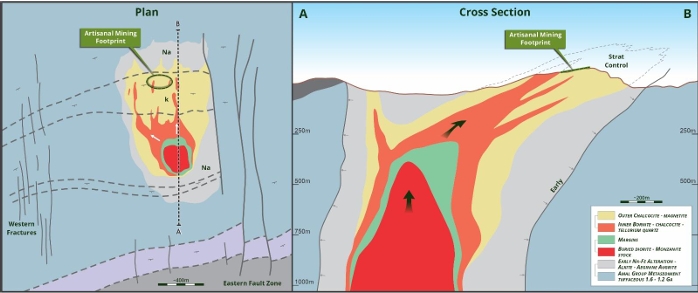
Glava Conceptual Geological Model
Waste dump sampling confirms consistency
Sampling of waste dumps adjacent to historic open pits returned grades consistent with historical results, with data showing a clear correlation among copper, gold and silver.
While not considered bulk samples, the results provide additional confidence in the historical mining data and support the broader geological interpretation emerging from the current program.
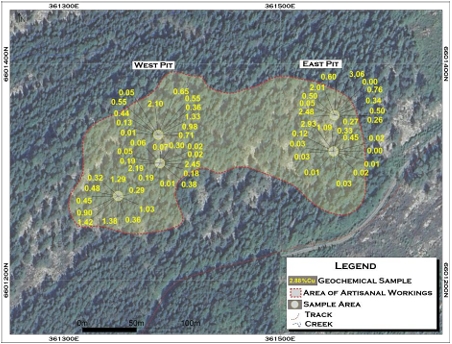
Waste Dump Geochemical Sampling Map
Preparing for drilling in mid-2026
Executive chairman Len Jubber said the results had strengthened the company’s confidence in the Glava Project and its broader landholding strategy.
“The initial program both confirms the historic grades recently reported and strengthens our hypothesis that Glava is potentially an epithermal-style mineral system,” Jubber said.
“The newly identified mineralisation at the southern boundary is evidence of the exploration upside and highlights the value of the recent contiguous exploration licence applications.”
South Harz is now planning follow-up fieldwork and progressing the design of a maiden drill program targeted for the June quarter of 2026. Next steps include extending geochemical and magnetic surveys, detailed mapping, further assessment of REE potential and finalising permitting requirements.
The company said Sweden’s established mining framework, infrastructure and strong government support for critical minerals development underpin Glava’s appeal as an exploration opportunity.