
Larvotto Resources Ltd (ASX:LRV) has reported further high-grade antimony-gold intersections from diamond drilling at the Clarks Gully prospect, reinforcing growth potential at its 100% owned Hillgrove Antimony-Gold Project in New South Wales.
The latest drilling confirms mineralisation continues both at depth and along strike to the north, with results also validating the company’s resistivity geophysical targeting model.
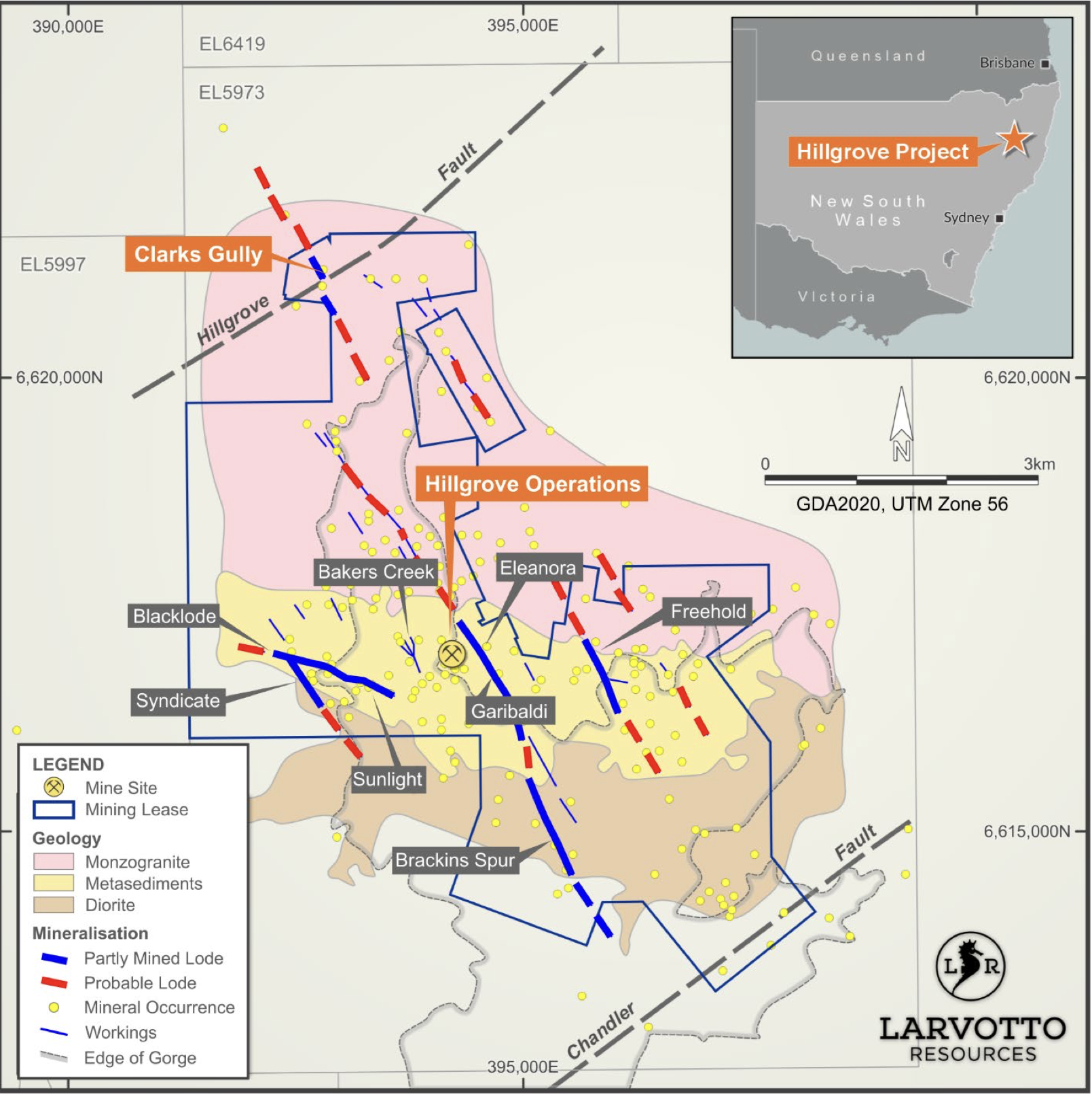
Hillgrove project location map.
“The results from Clarks Gully have strengthened our understanding of the mineralised system, confirming both the continuity of antimony and gold mineralisation to the north and high-grade zones at depth. Drill hole CLG127 targeted an untested resistivity anomaly to the north, with results confirming mineralisation associated with that response, validating the effectiveness of our geophysical targeting approach," LRV managing director, Ron Heeks, said.
"Significantly, this zone remains open. The hole was also extended to close a knowledge gap within the main Clarks Gully lode, returning a standout intercept that exceeded currently modelled grades. Drill hole CLG126 tested the depth extension of the mineralisation below the planned open pit. The exceptional intercept of 6.4m @ 12.92g/t AuEq provides important geological and grade continuity in this key area.
"Also, in drill hole CLG126, a potential newly identified parallel lode was intercepted in the footwall of the main Clarks Gully mineralisation. This intercept of 3.6m @ 8.74g/t AuEq highlights further near-mine upside and warrants further drilling to test this new zone.”
Standout gold-antimony intercepts
Results from three diamond drill holes, completed as part of a near-mine exploration program, delivered multiple high-grade gold-antimony intercepts, including:
- 6.4 metres at 12.92g/t AuEq from 208m in hole CLG126, including 4.1m at 19.76g/t AuEq
- 3.6 metres at 8.74g/t AuEq from 245.6m in CLG126, interpreted as a potential new parallel lode in the footwall
- 8.0 metres at 8.35g/t AuEq from 160m in CLG127, including 1.6m at 22.81g/t AuEq
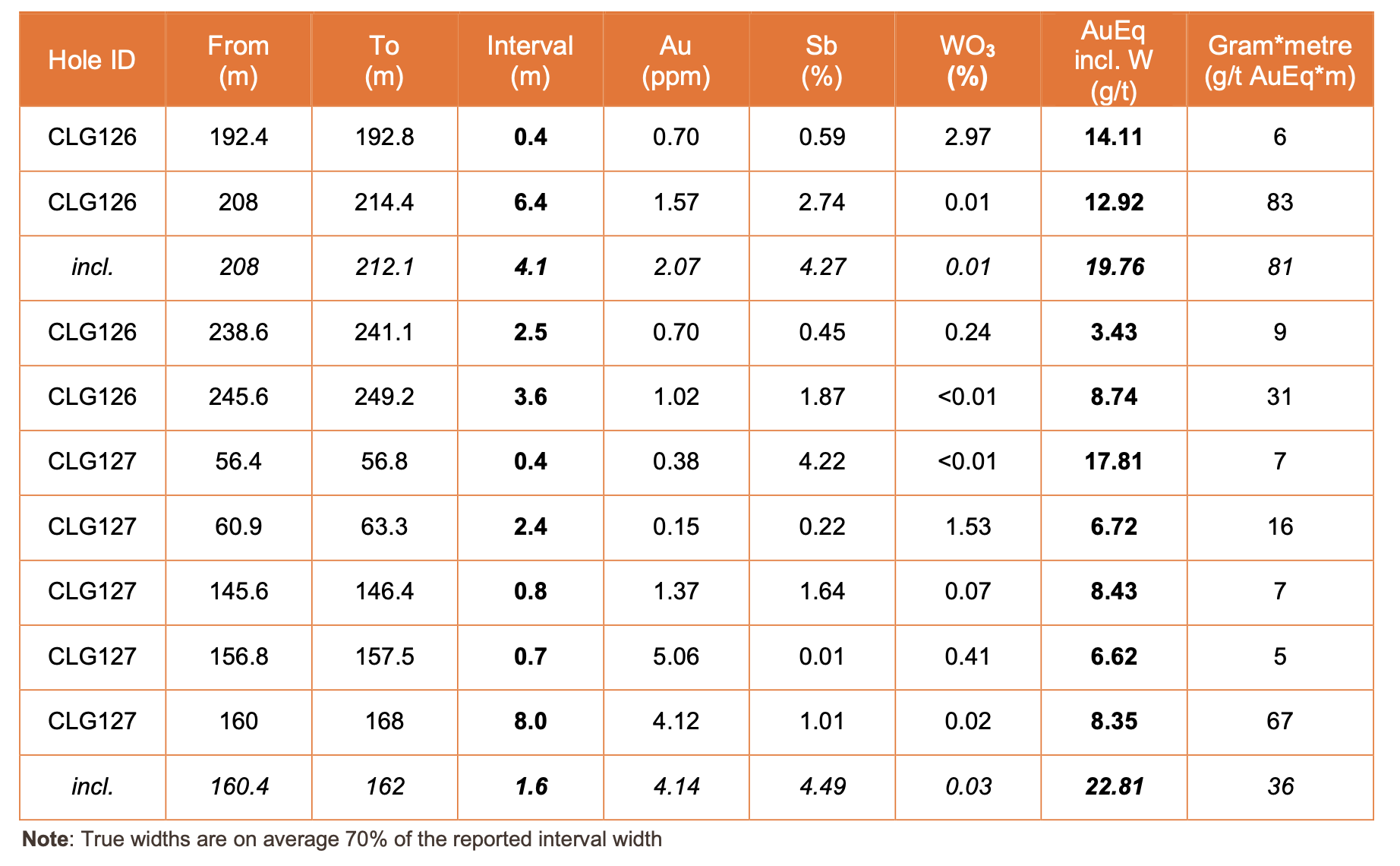
Recent Au-Sb-WO3 drill hole assay intercepts greater than or equal to 5 grams*metre (AuEq).
The deeper intercept in CLG126 tested mineralisation below the planned open pit, providing important geological and grade continuity beneath the current mine design.
New zones and northern extensions remain open
Hole CLG127 targeted an untested resistivity anomaly north of the main Clarks Gully lode and successfully intersected high-grade mineralisation, confirming the effectiveness of the geophysical model.
The northern strike extension intersected in CLG127 remains open, while additional footwall mineralisation intersected in CLG126 is also open to the south, highlighting further near-mine upside.
Tungsten adds potential by-product upside
In addition to gold and antimony, drilling intersected significant tungsten mineralisation associated with the Clarks Gully lodes, including:
- 0.4 metres at 2.97% WO₃ from 192.4m in CLG126
- 2.4 metres at 1.53% WO₃ from 60.9m in CLG127
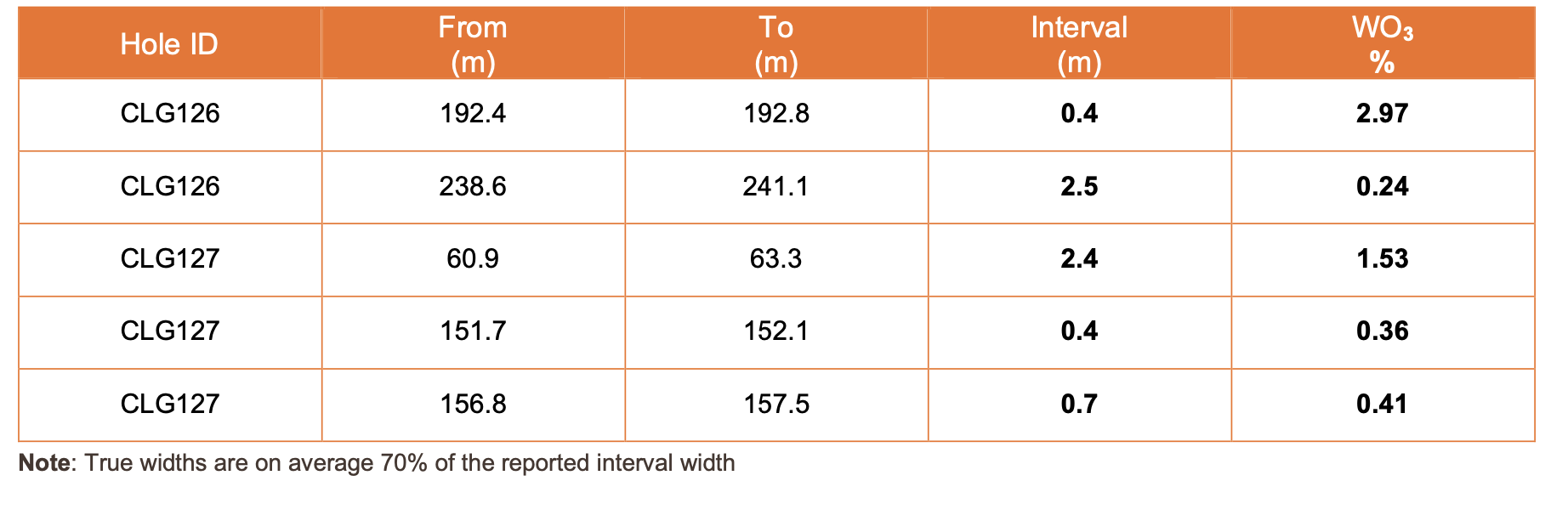
Recent WO3 assay intercepts greater than or equal to 0.2% WO3.
Larvotto noted tungsten mineralisation typically occurs peripheral to the gold-antimony structures and may provide additional value as a potential by-product.
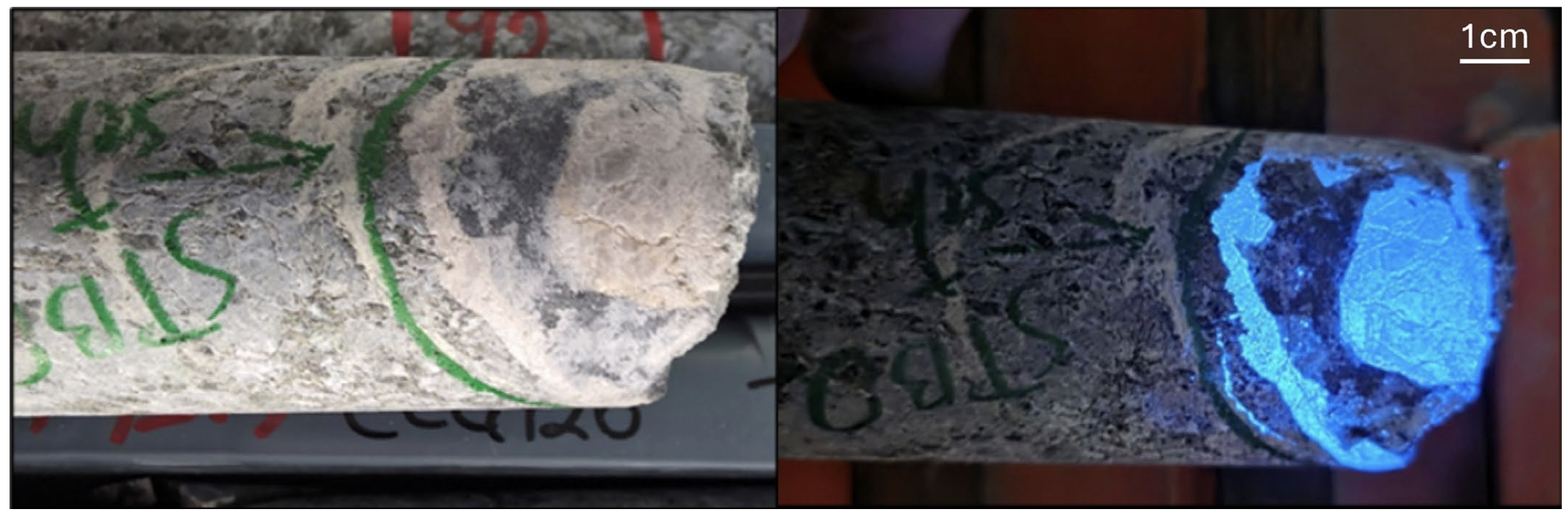
Scheelite (tungsten) mineralisation in CLG126 diamond drill core. Fluorescence observed under UV light.
Implications for mine planning and growth
The new drilling information sits largely outside the current open pit design, which was developed under a previous tailings storage facility concept. With Hillgrove now transitioning to dry-stacked tailings, Larvotto expects a greater focus on underground mining, potentially improving efficiency and reducing dilution.
The results have significantly improved LRV's understanding of the mineralised system and confirmed the potential for resource growth along strike and at depth.
Further drilling is planned in 2026 to test extensions at Clarks Gully and continue expanding the Hillgrove resource base.