
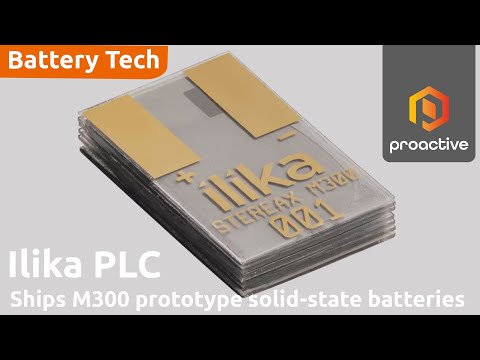
Ilika PLC (AIM:IKA, OTCQX:ILIKF) earlier this week announced the shipment of its M300 prototype solid-state batteries to customers. The company said this represents a key commercial milestone in its development roadmap.
The M300 units are miniature solid-state batteries designed for use in active implantable medical devices. Ilika said potential applications include neurostimulators, sensors, smart orthopedic and orthodontic implants, and devices used in ophthalmology.
The company described the innovation as part of the broader shift toward electroceuticals, where electronic implants could replace certain pharmaceuticals. Ilika highlighted that this could offer advantages by reducing the risk of side effects. It said neurostimulators, for instance, are used for pain relief without the addiction risks associated with pain medication.
CEO Graeme Purdy joined the Proactive studio to tell us more.
Proactive: Graeme, good to see you again. How are you?
Graeme Purdy: Hey, Steve. Good to speak to you again. Very well, thank you.
Proactive: Good. Well, excited because you've got significant news out for the company. In fact, a real major milestone for Ilika. I'll let you take it from there. Graeme, tell everyone what you're very excited about today.
Graeme Purdy: We've started shipping M300 prototypes to customers. This is a really important commercial milestone for us. We've been working hard together with our manufacturing partner, Cirtec Medical, and we've been able to initiate those deliveries just in time for Christmas.
Proactive: Let's tell everyone about the M300 prototypes. What are they, what do they do, and why are they so significant?
Graeme Purdy: These are miniature batteries developed for active implantable medical devices. They’re designed for a range of applications, including implanted sensors, neurostimulators, smart orthopedic implants, orthodontics, and ophthalmology devices.
Proactive: So people understand, this is really the future of where medical is going. You're on the cutting edge of where things are heading in the medical world.
Graeme Purdy: That’s right. Some people refer to this as the electroceutical revolution. The idea is that these implants can replace pharmaceuticals, and they offer advantages because they don't carry the same side effects. For instance, neurostimulators are often used for pain relief, but strong pain-relieving drugs can come with addiction issues. If you can come up with an alternative, you've got a significant advantage.
Proactive: You mentioned Cirtec. Just want to get a comment from you on them. I know you signed this ten-year manufacturing agreement. From where that was to where you are today, I imagine you're pretty happy with that agreement and the work you do together.
Graeme Purdy: Absolutely. I think they’ve been exactly the right partner for us. They’ve got a great reputation as a manufacturer of medical devices, strong customer relationships, and they’re already delivering quality product to a lot of the target and order book customers we’ve identified for these Stereax batteries.
Proactive: Yeah, 21 of them in fact—21 customers. I thought it'd be a good opportunity, Graeme, also to get a comment on 2026. You've hit this milestone as the year ends, so what should people be expecting next year?
Graeme Purdy: We're going to ramp up production. These initial prototypes will go through an enhancement process, and we'll begin work on the roadmap for additional types of miniature solid-state batteries.
Proactive: Congratulations on this milestone. Sounds like it's going to be an exciting 2026. Graeme, thank you so much. Good to see you again. We'll talk soon.
Graeme Purdy: It's been a pleasure. Thank you.