
C3 Metals Inc (TSX-V:CCCM, OTC:CUAUF) said on Monday its first-ever drill hole at the Khaleesi copper project in southern Peru intersected a broad zone of copper mineralization, marking an early success at the greenfield property.
The Vancouver-based explorer said the hole cut 269 metres grading 0.3% copper, including 60.4 metres at 0.41% copper, from a depth of 346 metres downhole.
The hole was drilled to a total depth of 626.1 metres and ended in copper mineralisation, with results remaining open in all directions and at depth.
Khaleesi is a 100%-owned project located in the Andahuaylas-Yauri Belt of southeastern Peru, a region that hosts several large copper skarn and porphyry deposits and operating mines, including Las Bambas, Constancia and Antapaccay.
“This is a tremendous result for the first hole ever drilled on a greenfield project like Khaleesi,” CEO Dan Symons said in a statement. “The geology and alteration we are seeing indicate the potential for a large copper system comparable to some of the major deposits in the district.”
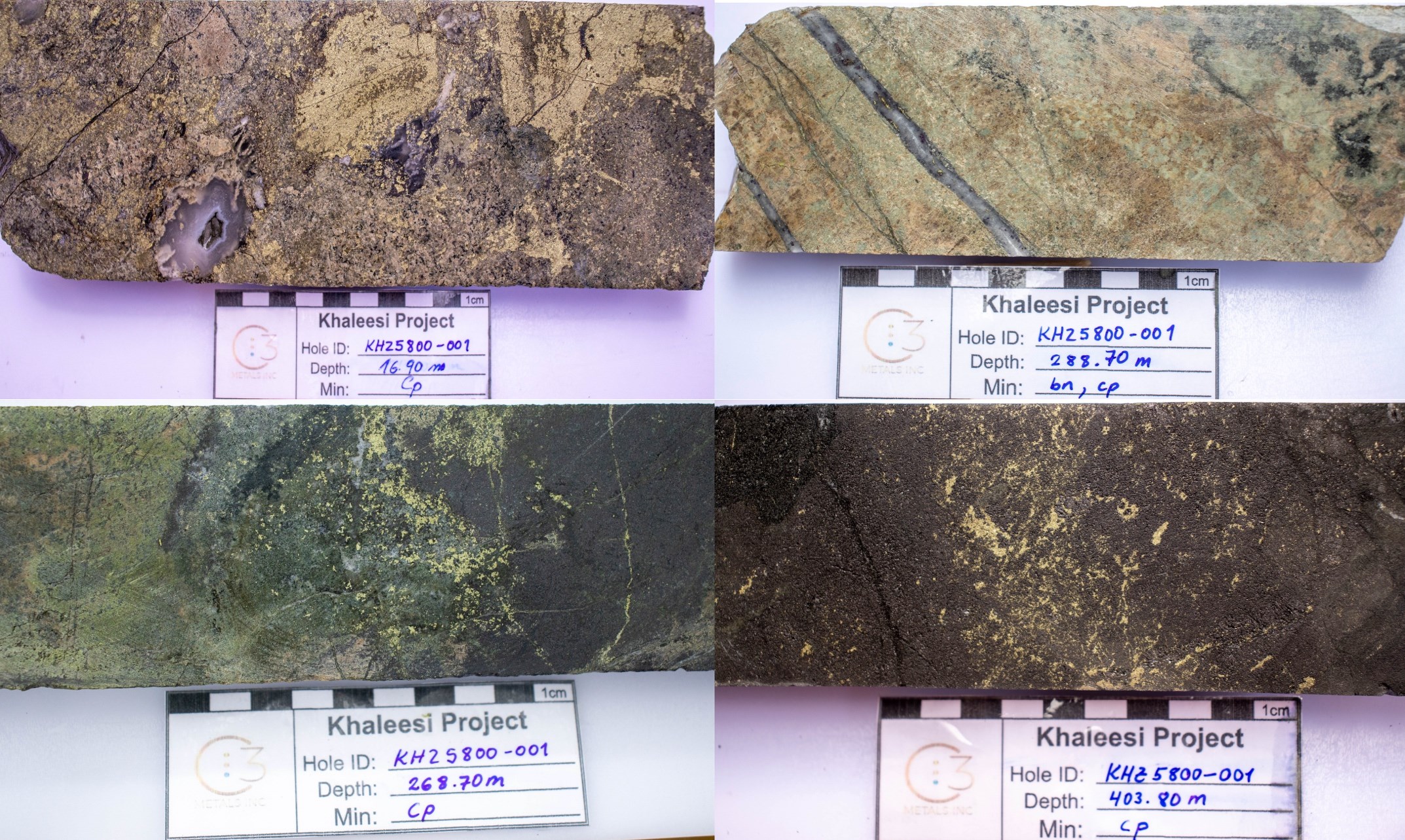
C3 Metals said the drilling confirmed that copper mineralization extends beneath a broad area of thin glacial till cover, significantly expanding the potential drill target area. The hole tested a coincident magnetic and chargeability anomaly near a marble-diorite contact and intersected multiple styles of mineralization interpreted as skarn- and porphyry-related.
At the top of the hole, the company reported a narrow interval of higher-grade garnet exoskarn mineralisation, including 4 metres grading 2.03% copper, along with gold and silver credits. Deeper sections included a long interval of garnet skarn and altered diorite cut by sulfide veinlets carrying chalcopyrite, bornite and molybdenite.
The company also reported anomalous molybdenum, cobalt, silver and gold values throughout the hole, as well as a polymetallic epithermal vein that returned elevated copper, gold, silver, zinc and lead.
C3 Metals is currently testing the Khaleesi project for the first time using two diamond drill rigs as part of an initial program of about 6,300 metres across 14 holes. Follow-up holes are planned to extend the mineralisation along strike, near surface and at depth, including beneath areas covered by glacial till.
The company said it is integrating geological, geochemical and geophysical data into a three-dimensional model to refine future drill targets and is considering expanding the drill program based on the initial results.