
American Rare Earths Ltd (ASX:ARR, OTCQB:ARRNF) has strengthened the geological confidence underpinning its Halleck Creek Rare Earths Project in Wyoming, updating the Mineral Resource Estimate (MRE) for the Cowboy State Mine (CSM) area and securing two new drilling permits ahead of next year’s planned development work.
The updated MRE incorporates 18 new channel samples and 102 samples collected across 2025, enabling a reclassification of about 63.9 million tonnes from Inferred to Indicated resources. The CSM area now hosts 547.5 million tonnes at a 1,000 parts per million (ppm) total rare earth oxides (TREO) cut-off — with the project’s highest-ever assay among the latest samples.
ARR said the refinement does not materially alter total tonnage but does improve the level of confidence in near-surface material, an important step as pit designs and mine plans are prepared for the forthcoming pre-feasibility study (PFS).
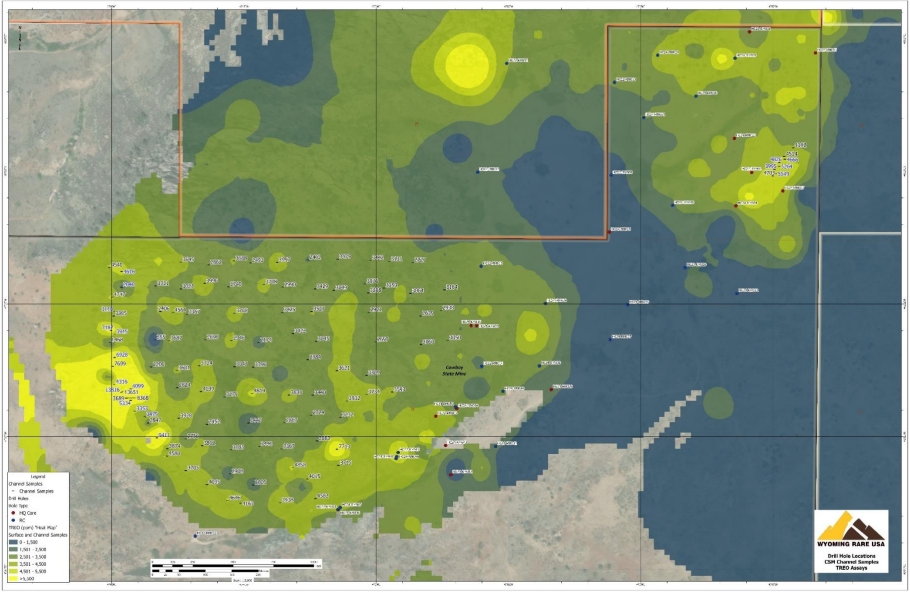
Drill hole and Channel Sample Locations – Recent Sample Locations in Blue.
New benchmark grade emerges
The latest sampling campaign delivered standout grades, including a new record for the entire Halleck Creek system. Sample CS25-RM111 returned 13,816 ppm TREO, roughly four times higher than the current resource average.
Thirteen samples taken across a banded zone at Red Mountain averaged 5,706 ppm TREO, while five samples from the nearby CSM test pit area averaged 4,860 ppm. The magnetic rare earth oxide component from the 18-sample batch averaged 1,614 ppm, marking an uplift of nearly 68% on modelled averages.
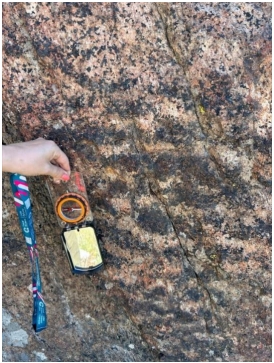
Example of Localised area of foliated texture in outcrop with bands of mafic minerals from Red Mountain.
ARR commissioned Odessa Resources Ltd to integrate the new data into an updated block model, which drove the resource reclassification and added a further ~4.5 million tonnes through refinements to lithological domains.
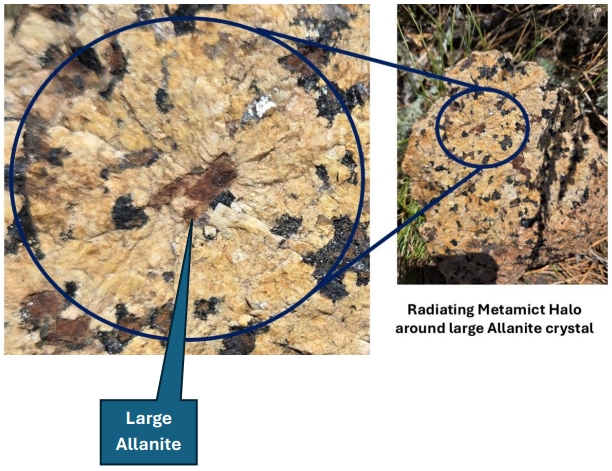
Example of Allanite Phenocryst and Associated Metamict Structure.
Drilling permits locked in
The company has also secured two new drilling permits from the Wyoming Department of Environmental Quality’s Land Quality Division. These approvals pave the way for in-fill and step-out work crucial to technical studies beyond the PFS.
At the CSM area, 27 drill hole locations have been permitted, targeting both improved geological confidence for proposed pits and deeper testing of higher-grade zones identified at Red Mountain. ARR expects access-track construction to begin before year-end, with drilling slated to start by mid-2026, subject to conditions.
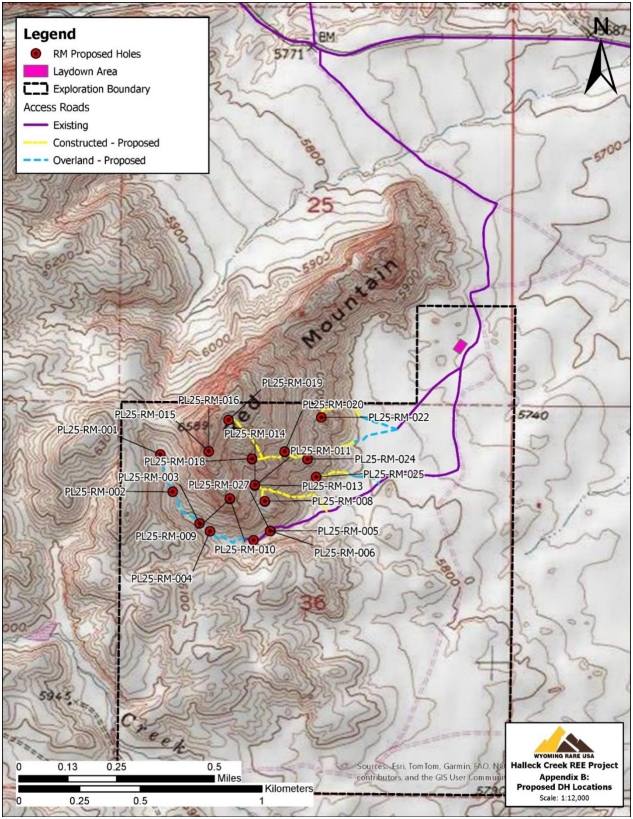
Proposed Hole Locations at Cowboy State Mine.
Separately, up to 29 drill holes have been approved at the Bluegrass exploration area on Federal land. Bluegrass has delivered encouraging surface geochemical and channel sampling results and may contribute additional tonnage to Halleck Creek’s broader 2.63-billion-tonne resource base.
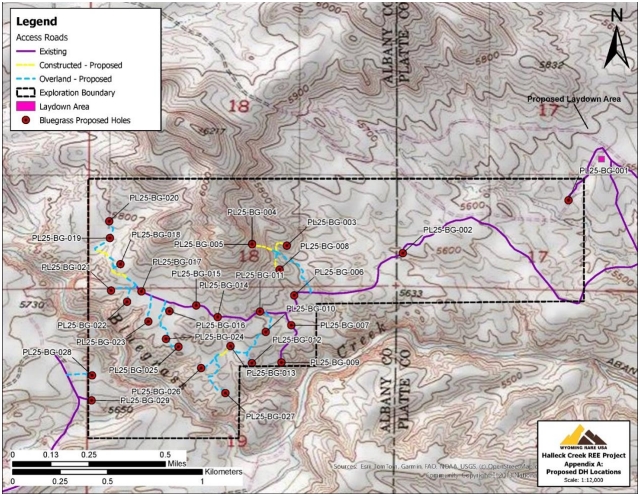
Proposed Hole Locations at Bluegrass Exploration Area.
Why it matters
Upgrading Inferred tonnes to the Indicated category means more near-surface material can be incorporated into mine scheduling for the CSM PFS. Consulting group Stantec will now integrate the updated block model with ongoing process optimisation work to refine pit shells and mine designs.
ARR said it is moving proactively to secure the drilling, sampling and geological data required for subsequent technical studies, including future measured resource definition.
What’s next
The company is finalising preparations for bulk sampling at the CSM test pit, advancing metallurgical optimisation, and coordinating with contractors and consulting geologists on access logistics for Red Mountain drilling.
With CSM sitting at the core of Halleck Creek’s development pathway — and the broader project positioned as a potential cornerstone for US rare earths supply chain security — ARR continues to progress both its exploration and permitting streams to maintain development momentum.