
Pinnacle Silver & Gold Corp (TSX-V:PINN, OTCQB:NRGOF) CEO Robert Archer talked with Proactive about recent sampling results from the company’s project in Mexico, where work has resumed after a 35-year hiatus.
Archer explained that Pinnacle is developing its understanding of the Dos de Mayo vein system by examining three historic mine workings, including the La Dura mine – the latest to be resampled.
“This project hadn’t been worked in 35 years, so we started from scratch,” Archer said, noting that the company is building a clearer picture of the mineralization through surface and underground sampling.
He described the process as “a little bit like a jigsaw puzzle” as they connect isolated pockets of mineralization across the trend.
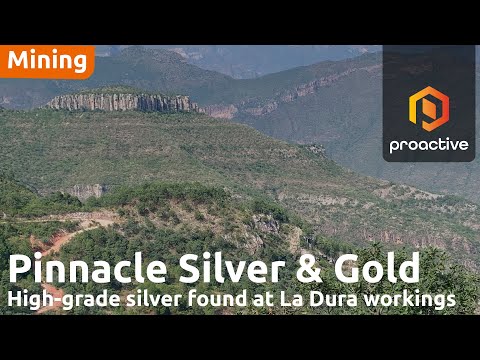
The La Dura mine, while small in size, provided valuable data. “It’s just a little tunnel into the side of the hill,” Archer noted, but it has already helped define a small exposure of mineralization.
The company plans to drill between the three mine areas to determine whether they connect.
High-grade assays have been recorded, with Archer highlighting samples reaching up to 2,000 grams per tonne silver on surface and up to 85 grams per tonne at Pinos Cuates.
Proactive: Welcome back inside our Proactive newsroom. And joining me now is Robert Archer, the CEO of Pinnacle Silver and Gold. Bob, good to see you again. How are you?
Robert Archer: You too. Doing well, thanks.
Good to have you along. The company has some news today about the extension of a mineralized zone on your project in Mexico. So tell me a little bit about the area you were looking at on this particular project and how the sampling is really paying off.
Well, just a quick background. When we picked up this project just at the end of February, it hadn't been worked in 35 years. We had no data whatsoever. But we did know that there were three old mine workings along what we call the Dos de Mayo vein or structure. So we basically had to start from scratch—resampling these old workings to determine exactly where the mineralization is and how it all connects.
The La Dura mine is the third of the three that we’ve sampled. We've now identified where the mineralization is within those workings. That allows us to start putting together a better understanding. It's a little bit like a jigsaw puzzle. If you get another piece that suddenly fits, it’s like an “aha” moment that helps determine where everything is along this trend.
Not to get too into the weeds, but you mentioned those three principal mines and the areas in between. You’re kind of looking to see whether they might all connect together—is that right?
Yeah, kind of. Those three mines provide access to the vein system at those three locations. But in between the mines, there’s absolutely nothing. The vein has never been drilled by anyone, and there’s very little outcrop between the old workings.
So again, using the jigsaw puzzle analogy, it’s like you’re developing three separate mini pictures and trying to figure out how they fit together. That’s where we’re at. We’ll need some drilling between the three, but having those three pockets of mineralization is good evidence that there’s some repeatability. It’s not continuous—it’s not one big sheet. There are pockets along the trend.
And the numbers you're getting—are you quite happy with them? Was it what you were expecting?
Yeah, totally. I mean, there is variability in these systems. In the past at the Pinos Cuates mine, we’ve received some very, very high grades—up to 85 grams per tonne, and on surface in some places over 2,000 grams of silver. So we know it can be very high. In the end, it’s a matter of averaging everything out to figure out what the grade will be going to the plant.
What we discovered at La Dura is a small exposure. The underground workings are just over 12 metres long—a little tunnel into the side of the hill. That’s really the only access we had. But by being able to sample that and understand the mineralization, we can now drill and start to test around it to determine how big it might be and what the average grade is overall. So yeah, we're very pleased with what we’re seeing.
Quotes have been lightly edited for clarity and style