
Alvopetro Energy Ltd (TSX-V:ALV, OTC:ALVOF) is looking to build on a record-setting third quarter, as the Canadian oil and gas producer deepens its foothold in Brazil while expanding its optionality through a growing Canadian portfolio.
The company posted record production in the third quarter, averaging 2,343 barrels of oil equivalent per day (BOE/d), driven largely by its Murucututu natural gas project in Brazil. That performance generated more than US$10 million in funds flow from operations, with October output climbing to a new monthly record of 2,923 BOE/d following the addition of the 183-D4 well.
CEO Corey Ruttan said the latest results mark a key turning point for the company. “We’re obviously extremely happy with the results from our capital programs and feel well-positioned to ramp up cash flows, as evidenced by the production increases we’re seeing as we move into the fourth quarter,” he said.
Expanding production capacity
The standout 183-D4 well, drilled over 100 metres higher on structure than its predecessor and completed using advanced North American technology, produced nearly 1,100 BOE/d over its first 30 days—almost double pre-drill expectations. That performance followed the 183-A3 well result last year that already prompted an amendment to Alvopetro’s gas sales agreement with offtaker Bahiagas, allowing for a one-third increase in contracted delivery volumes for 2025.
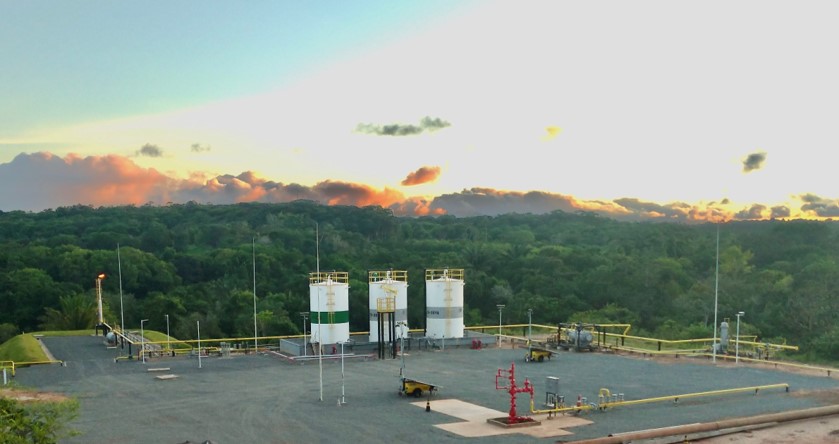
Ruttan said the company is now focused on three parallel growth priorities: expanding well deliverability, increasing gas sales capacity, and completing facility enhancements to support higher production. “We’re in the final phases of engineering some facility enhancements that will allow us to produce even higher levels of production from this Murucututu asset, which then will support more drilling,” he said.
Alvopetro’s near-term target is to reach 18 million standard cubic feet per day, or roughly 3,000 BOE/d, filling the company’s current gas plant processing capacity. Over the longer term, the goal is to double that level, supported by new wells and infrastructure upgrades.
Growth beyond Brazil
While Brazil remains its core operating base, Alvopetro has also expanded in Canada, growing its joint venture footprint in the Mannville Stack heavy oil play in western Saskatchewan to more than 74 square miles of prospective land. The company said the area offers stacked, multi-zone oil sands with potential for open-hole multilateral drilling and low-cost, scalable development.
According to Ruttan, the Canadian assets provide diversification and flexibility. “The growth outlook is probably stronger than it’s ever been, and we can have growth potential now both in Brazil and Canada,” he said. “It’s not one thing, it’s all three: value, growth, and yield.”
Strong margins and disciplined capital returns
Alvopetro continues to generate industry-leading margins, with operating netbacks approaching US$60 per BOE and realized natural gas prices above US$11 per MCF. The company benefits from a favorable fiscal regime in Brazil, with low royalties, low operating costs, and a 15% income tax rate, factors that Ruttan described as “probably the most profitable production on the planet.”
That profitability supports a robust dividend policy. Since introducing dividends in 2021, Alvopetro has paid out over US$60 million to shareholders, representing US$1.70 per share. The quarterly dividend now stands at US$0.10 per share, translating to a yield of roughly 9%.
“We’ve established a strong platform, and our focus is now firmly on growth objectives,” Ruttan said. “We’re talking about the whole bucket of cash flow and taking half of that and returning to stakeholders. It’s a more disciplined approach. The fact that we’ve been able to deliver growth and do that, I think, is quite exceptional.”
Building toward 2026
With production climbing and capital spending slowing, Alvopetro expects to strengthen its balance sheet and build working capital through year-end. The company plans to convert the strong productivity from the 183-D4 well into cash flow while preparing for the next drilling phase and incremental gas sales opportunities.
Looking ahead, Ruttan said the strategy remains clear: continue growing cash flows, expand capacity, and balance reinvestment with shareholder returns. “We’ve got a bigger inventory than ever, and as we enter 2026, we’ll look to migrate more gas into firm volumes to increase our base cash flow levels again.”