
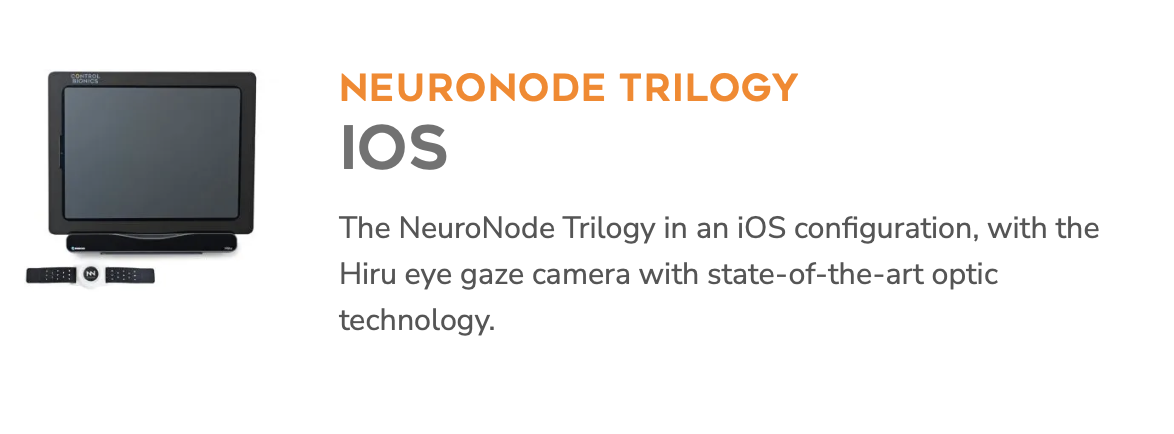
Control Bionics Limited (ASX: CBL) has implemented Apple’s new Brain-Computer Interface (BCI) Human Interface Device (HID) protocol across its NeuroNode® and NeuroNode Trilogy® product lines, in a move the company says will simplify setup and improve day-to-day performance for users of iOS-based augmentative and alternative communication (AAC) tools.
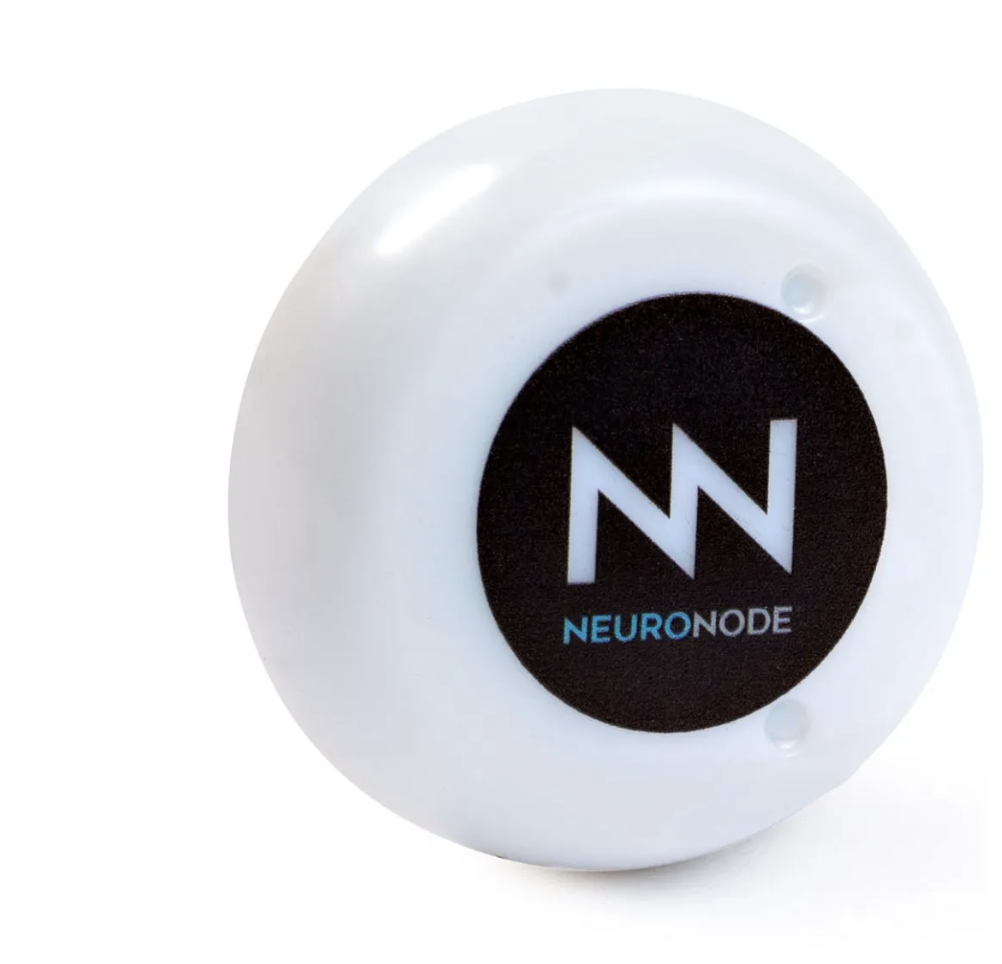
NeuroNode is a wireless, wearable sensor that lets users control their technology through bioelectric signals or movement. Unlike other sensors, it taps into the body’s EMG activity or 3D motion to provide control, enabling people to operate a computer, phone, tablet, and more.
The integration is designed to support a new generation of Control Bionics’ iOS solutions by reducing configuration steps, improving neural signal feedback and enabling automatic activation of Apple’s Switch Control. The features are being released in beta to existing customers, with the company to provide usage feedback to Apple to help refine the protocol for accessibility use cases.
“Integrating Apple’s BCI protocol marks a defining moment for Control Bionics and for AAC innovation globally. For the first time, we can deliver a truly integrated neural-control experience within iOS — reducing setup friction, improving signal monitoring, and making communication faster and more intuitive. This new developer tool from Apple helps us to advance our mission: to give people with disabilities the fastest, simplest path to independence and expression,” Jeremy Steele, CEO of Control Bionics, said.
There’s already practical proof this works. Melbourne-based Control Bionics user Ross Gonis, with his wife Mary, says Apple’s BCI protocol used via the NeuroNode lets him see his neural strength in real time, opening a new way to access technology and helping him engage more independently.
What the protocol changes
Apple’s BCI HID protocol provides a standardised way for neural and motion-based input devices to interact with iOS. For Control Bionics, three immediate changes are expected to be most visible to users and caregivers:
1) Reduced setup complexity and user error.
The protocol streamlines Switch Control configuration on iOS, addressing recurring friction points such as scanning speed, timing windows and mode selection. Control Bionics says the result is closer to “plug-and-play” for NeuroNode devices, with fewer settings to adjust and less trial-and-error during onboarding—an area that has historically absorbed clinical time and created barriers for first-time users.
2) Improved neural signal quality and visual feedback.
Neural signal strength and connection status can now be surfaced natively within the iOS interface. Users can confirm connection quality at a glance and recalibrate when required, a change intended to reduce uncertainty during switching and to help maintain a consistent wireless link. In AAC contexts where reliability directly affects communication speed and clarity, immediate on-device feedback may limit sessions lost to troubleshooting.
3) Automatic Switch Control activation.
When a NeuroNode device connects or wakes from sleep, Switch Control can launch automatically. Removing this manual step is expected to shorten time-to-communication, particularly for users who rely on support staff to navigate device menus before each session.
The following video is long but well worth watching to understand the technology and Control Bionics is scaling for global growth.
Implications for AAC users and clinicians
Control Bionics positions the update as a practical improvement rather than a wholesale change in workflow. For users with severe speech and physical impairments, the anticipated benefit is reduced friction from setup to daily operation. Faster, more deterministic pairing and clearer on-screen feedback could translate to fewer abandoned sessions and fewer adjustments mid-conversation.
Clinicians and educators may see gains in assessment and training time. With less focus on device tuning, sessions can prioritise access strategies, vocabulary selection and feature discovery. For caregivers, a simpler path to stable operation may lower the threshold for independent use.
While the protocol aligns device behaviour more closely with iOS conventions, it does not change the underlying access paradigm: NeuroNode continues to detect small, intentional muscle or neural signals and convert them into switch inputs for navigating apps, composing text and selecting on-screen items through scanning.
Rollout, funding footprint and market reach
Control Bionics has made the new capabilities available in beta to its installed base and will iterate based on early user feedback. The company points to an established reimbursement pathway in key markets—HCPCS reimbursement in the United States and NDIS funding approval in Australia—as positioning it to deploy the enhancements at scale once the beta period concludes.
CBL reports thousands of active users globally across the US, Australia and other regions. By adopting Apple’s BCI HID, the company expects to standardise behaviour across iOS versions and hardware, which could reduce support variability and strengthen its presence across multiple AAC settings, from home use to clinical and school environments.
Technical and ecosystem context
Historically, assistive input devices interfacing with iOS have relied on a mixture of Bluetooth profiles and accessibility settings that required device-specific tuning. A unified HID path for BCI and motion inputs offers a common baseline for vendors and a more predictable experience for end users. For Control Bionics, this standardisation may also simplify firmware and app maintenance, as device logic can target a consistent iOS interface rather than a patchwork of workarounds.
The company emphasises that the update sits alongside, rather than replaces, its existing approaches to signal acquisition and processing. The NeuroNode system continues to interpret minute EMG or neural activity; the shift is in how those interpreted signals are presented to iOS and how iOS responds.
Data handling, reliability and limitations
As with any accessibility pipeline that translates physiological signals into control inputs, reliability will depend on factors such as sensor placement, user fatigue and environmental interference.
The addition of native signal-quality indicators is intended to help users identify and correct issues early. Control Bionics has not announced changes to how user data is stored or transmitted as part of this protocol adoption; the company notes the focus is on device behaviour and user experience within Apple’s existing accessibility framework.
Next steps
The beta rollout allows Control Bionics to validate real-world performance before broader release.
In parallel, the company plans to feed usage insights to Apple to inform further protocol refinements. No timeline has been provided for general availability, but the company says the capability is already supporting iOS-based AAC workflows in the field.