
Christopher Moreau isn’t shy about his ambitions. The CEO of Algernon Health (CSE:AGN, OTCQB:AGNPF) wants to build a network of neuroimaging centers across North America, clinics that could help detect Alzheimer’s disease earlier, faster, safer, and more comfortably than ever before.
The Vancouver-based company is aiming to open its first dedicated brain imaging center in the US by spring, according to its CEO. “There’s a massive need,” Moreau told Proactive.
Algernon Health, a rebranded version of Algernon Pharmaceuticals, is moving into what could become one of the fastest-growing frontiers in healthcare, Alzheimer’s diagnostics. The company’s plan is to launch compact neuroimaging centers equipped with a new generation of PET scanners designed exclusively for the brain. Unlike the massive PET/CT machines currently used for cancer diagnostics, these smaller systems deliver about 25% less radiation, cost a fraction as much, and fit in a space the size of a dentist’s office.
A market on the verge of explosion
The timing of Algernon’s pivot may prove critical. After decades of frustration, Alzheimer’s research is entering a new era, thanks to recently approved antibody therapies from Eli Lilly and Biogen that can slow disease progression by clearing amyloid plaques from the brain. The catch is that patients need a non-invasive PET scan or a spinal tap to confirm they are eligible for treatment.
There are about seven million Americans with Alzheimer’s today, and another seven million expected in the next five to seven years. Roughly half are early enough to be treated, but only about 10% of PET scan capacity in the US is focused on the brain. That imbalance has created bottlenecks. Patients can wait weeks for scans, and neurologists often struggle to get appointments at hospital imaging departments.
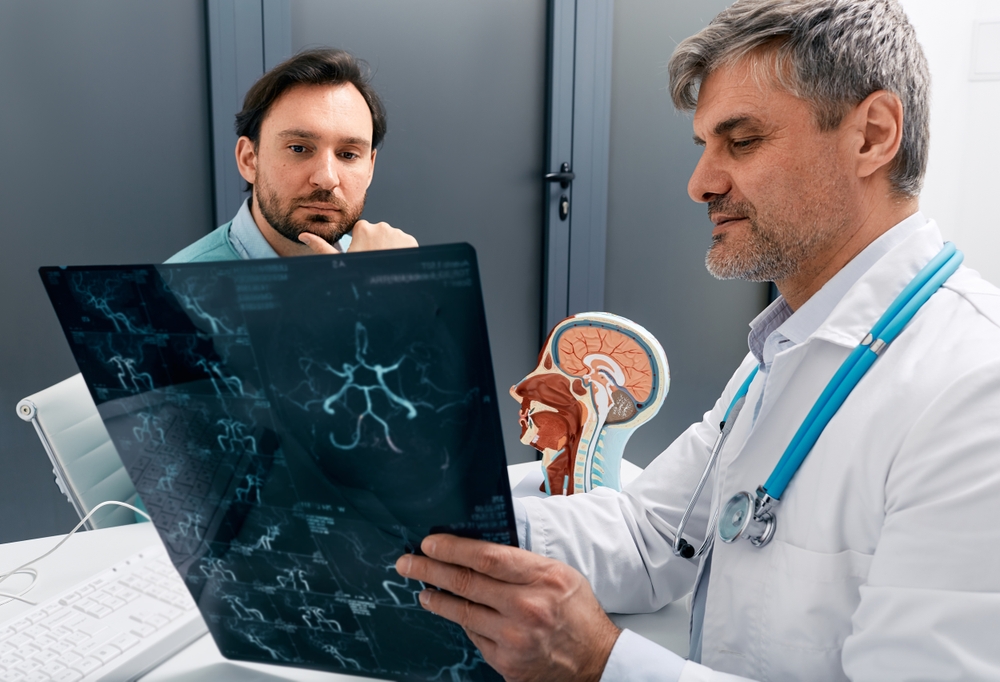
Algernon Health’s model aims to fix that. Its upcoming clinics will focus solely on brain imaging, targeting neurologists, geriatricians, and primary care physicians who are increasingly being urged to manage memoryloss patients directly. Algernon’s first market will be neurologists who currently refer patients to PET/CT scanners, where wait times can be six weeks to three months. Instead of sending them there, physicians can refer patients to Algernon’s clinics.
The business of early detection
Algernon sees its market as multilayered. Beyond referred patients, the company is also targeting proactive adults in their 50s and 60s, those with family histories of Alzheimer’s who may want to pay out-of-pocket for peace of mind. A recent poll found nearly 80% of Americans say they would want to know if they have Alzheimer’s, even if there is no cure. “Even if you don't qualify for insurance coverage that covers the PET scan or treatment costs, for basic life planning or maybe even for your bucket list, people want to know,” Moreau said.
Another revenue stream lies with clinical researchers. More than 160 Alzheimer’s drugs are currently in development, and many require imaging to measure results as they move into Phase 2 clinical trials. Those studies need PET scanners, Moreau noted. “One center is not going to change the needle. But as we open up five, 10, 20 centers, we have a network (that) can start partnering with larger contract research organizations.”
Behind the scenes of a complex buildout
Setting up a nuclear medicine facility is far from straightforward. Each clinic must comply with strict radioactive material regulations and be situated close to a cyclotron—the machine that produces the short-lived radioactive tracers used in PET imaging. Because these tracers have a half-life of roughly four hours, proximity is crucial: by the time a batch travels too far, it has already lost much of its radioactivity.

To navigate the technical and regulatory maze, Algernon Health has partnered with Catalyst MedTech, a US-based imaging technology company that helps design and equip nuclear imaging centers. The partnership includes about $4 million in non-dilutive financing, allowing Algernon to secure its first four PET scanners and begin buildout.
Each facility will be compact—around 1,500 to 1,700 square feet—with just two staff and a single scanner. The design is a turnkey model, built to be replicated easily in multiple locations.
From repurposed drugs to reimagined diagnostics
For Algernon, the leap into medtech represents a major shift but also a logical evolution. The company’s origins lie in drug repurposing, a field that seeks new uses for off-patent compounds. Despite promising early science, Algernon struggled for years to attract major investor attention or Big Pharma partnerships.
After years of funding challenges and stalled programs, including a DMT-based stroke treatment and a promising cough drug sold to a private US firm, Moreau’s team began exploring new ways to leverage its healthcare expertise. The Alzheimer’s imaging opportunity offered a compelling path forward, one that blends biotechnology, diagnostics, and a booming demographic need.
Eyes on the future
Algernon Health’s vision extends beyond its first clinic. The company aims to build a network of 200 centers across North America, each offering faster, lower-radiation and neuro-optimized brain imaging to both patients and researchers.
For a company that once battled indifference in the pharmaceutical world, Algernon Health’s new direction carries both risk and renewal. The goal is still about improving lives, but for the first time, the firm is in a space where science, timing, and demand are finally aligned.