
Lumos Diagnostics Holdings Ltd (ASX:LDX, OTC:LDXHF) has spent the past year firmly in the spotlight of rapid respiratory testing, with its FebriDx® 10-minute point-of-care test at the centre of a high-stakes push toward US approval and commercial scale.
Yet behind that flagship story, Lumos is steadily broadening its scope. The Melbourne- and California-based diagnostics company is developing a more rounded platform business that combines proprietary tests with a growing contract-development and manufacturing arm, and an emerging women’s health pipeline that could mature into its next commercial pillar.
FebriDx remains the anchor
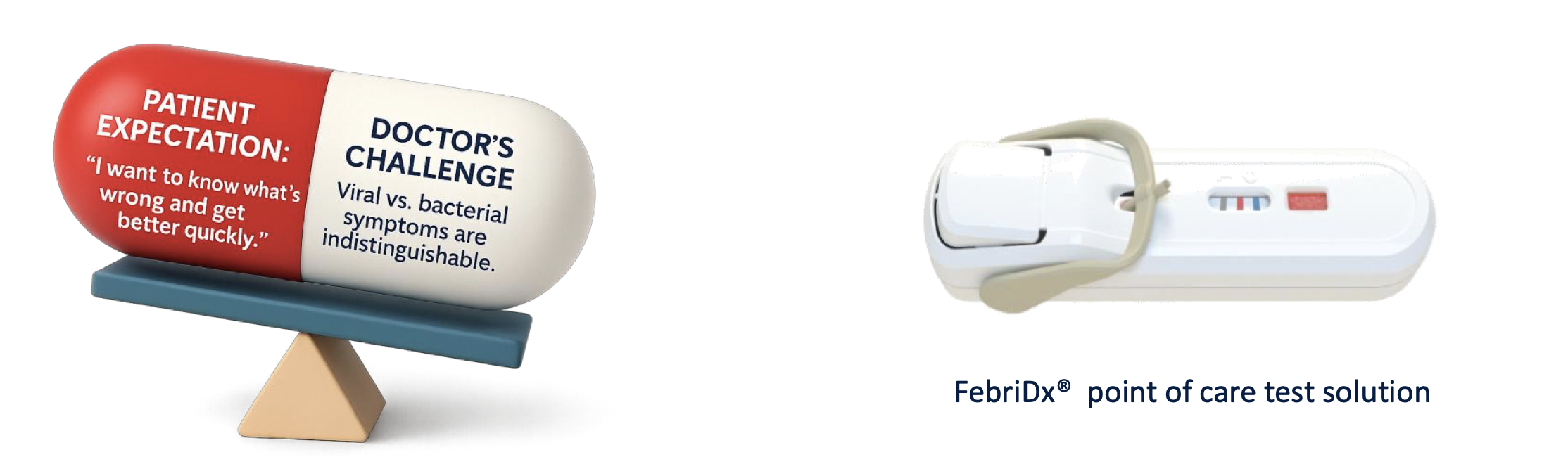
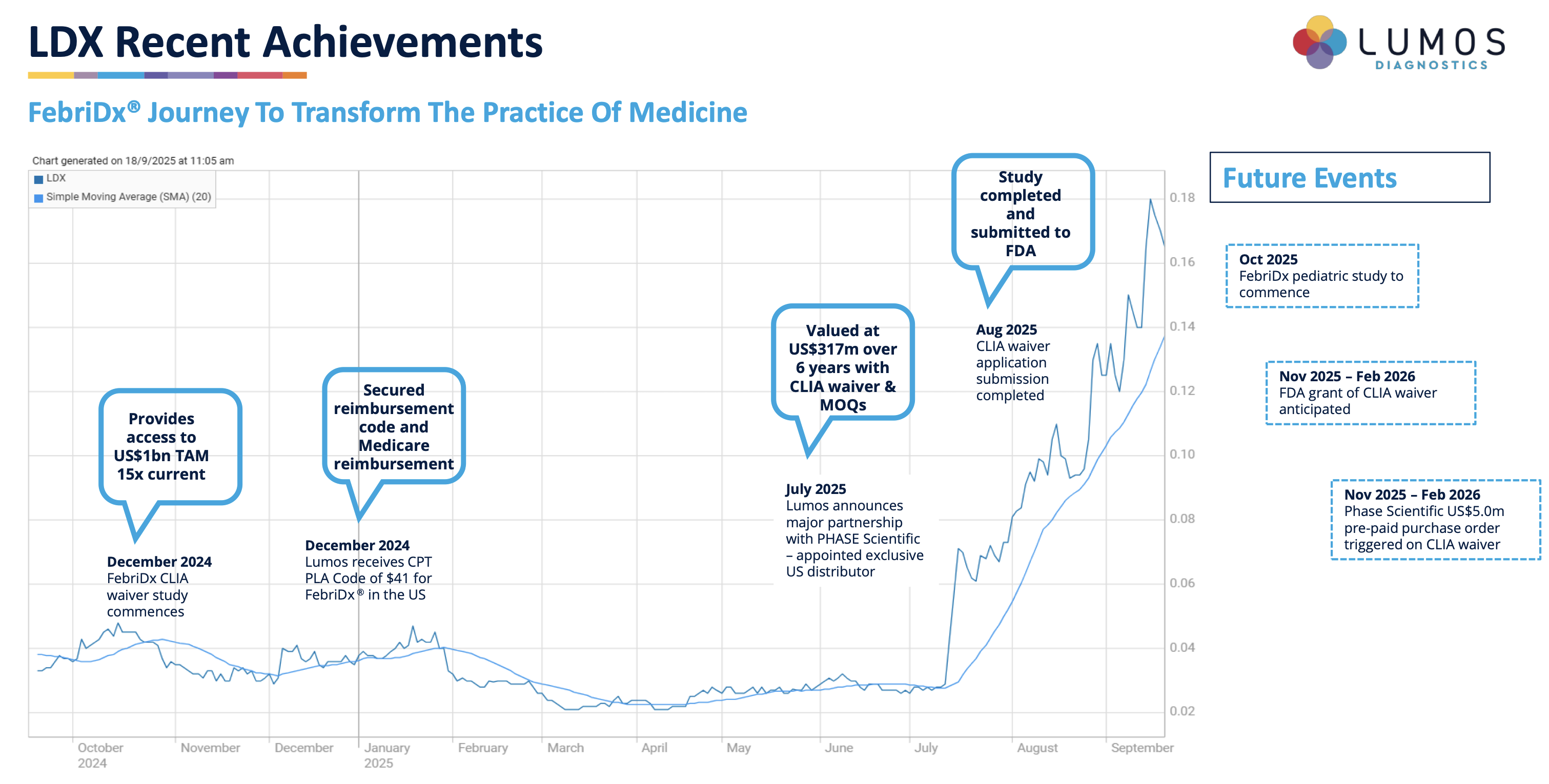
At the heart of the story, FebriDx continues to deliver. A pivotal US Food and Drug Administration CLIA-waiver application — submitted in August — is the key regulatory gate to make the test available in US primary-care offices and urgent-care clinics, representing a roughly fifteen-fold expansion of its current addressable market.
The groundwork has been strong. Lumos secured a permanent reimbursement code (CPT 0442U) and a set Medicare rate of US$41 per test, and inked a US$317 million, six-year distribution agreement with Phase Scientific, contingent on the waiver and minimum order volumes. The first US$5 million prepaid order is slated to trigger once approval lands, expected between November 2025 and February 2026.
Read more: Lumos Diagnostics secures US$317 million US distribution milestone for FebriDx®
A federally funded paediatric study, backed by the US Biomedical Advanced Research and Development Authority (BARDA), is due to begin this quarter and could expand FebriDx’s potential market by another 20%. Combined, these moves position Lumos to transform from a niche point-of-care player into a mainstream diagnostic provider if US uptake meets expectations.
Read more: Lumos Diagnostics launches BARDA-backed paediatric study for FebriDx in US CLIA-waived settings
Services and partnerships provide ballast
Beyond FebriDx, Lumos has been building a steady base of recurring, high-margin service revenue. Its commercial services division handles assay development, reader integration, regulatory and manufacturing support for third parties — effectively offering the same infrastructure it uses internally as a revenue-generating service.
That capability has already attracted heavyweight partners. The company’s collaboration with Hologic on a next-generation fetal fibronectin (fFN) test — a key marker used in assessing pre-term birth risk — shows how Lumos’s platform can underpin high-value programs in women’s health diagnostics. The US$10 million IP licensing and US$6.4 million development agreement covers multiple milestones across prototype design and validation, with additional fees added as the project scope expands.
Read more: Lumos Diagnostics expands scope of work under Hologic fetal fibronectin development agreement
In a recent investor presentation, Lumos also flags plans to progress formal product development on its first Lumos-branded women’s health diagnostic, extending the same assay and reader technology into a broader clinical category. It’s an area where the company’s technical strengths in rapid, point-of-care testing align well with rising demand for near-patient women’s health solutions.
The structure of these partnerships limits capital risk while showcasing Lumos’s capability in regulated assay and reader development — the very foundation that supports both its own products and its contract-service business.
Financials show steady leverage
The company’s latest financial figures underscore incremental progress. Revenue rose 12% year-on-year to US$12.4 million in FY25, with product sales up 46%. Gross margin held firm at 63%, and the adjusted EBITDA loss narrowed to US$3.4 million, reflecting improved scale and discipline.
Lumos ended the year with strong non-dilutive support: US$9.2 million in BARDA funding and a A$5 million facility available from Tenmile and Ryder Capital, both at the company’s discretion. With no debt or royalty encumbrances, Lumos has some breathing room to pursue both its FebriDx launch and new product development without over-stretching its balance sheet.
A broader platform emerging
For investors tracking the diagnostics space, Lumos is becoming more than a single-product story. FebriDx will remain its cornerstone — especially if the CLIA waiver clears — but the scaffolding around it is strengthening. Contract-service revenue, IP licensing and the early steps into women’s health are building a layered business model that can generate steadier cash flow and broaden exposure beyond seasonal respiratory testing.
Lumos is turning the technical foundation that produced one standout product into a repeatable diagnostics platform. If management maintains progress across both regulatory and partnership fronts, the company could enter 2026 with a clearer path toward a more diversified revenue base alongside its flagship test.