
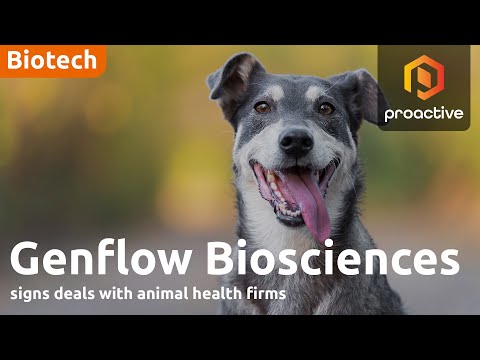
Genflow Biosciences PLC (LSE:GENF, OTCQB:GENFF) CEO Dr Eric Leire talked with Proactive about the company’s recently signed confidential disclosure agreements with two major animal health companies. Leire explained that these discussions are significant for shareholders as they broaden the company’s market potential, provide possible early cash inflows to reduce capital needs, and validate its scientific platform.
“Our core science is focused on tackling aging and muscle loss. The same approach we use for humans has real potential for companion animals,” Leire said. He noted that the global pet market is expanding, and Genflow’s work in this area could deliver solutions to extend lifespan and improve the quality of life for aging dogs.
He also highlighted that early safety data from the company’s first dog trials has been positive. The administration of the treatment was straightforward, with no signs of discomfort or behavioral change in the animals. Leire said this suggests the product could translate into a commercially viable therapy.
The next key milestone will be efficacy data from the dog trials, expected within five months. Leire expressed confidence, citing strong results previously observed in mice studies.
Proactive: Eric, very good to speak with you. You’ve just signed confidential disclosure agreements with two major animal health companies. Why is this important for shareholders?
Dr Eric Leire: We’re very excited about this discussion. As many people know, our core science is focused on tackling aging and muscle loss. The same approach we use for humans has real potential for companion animals. For the shareholders, the impact is mostly three main points. One, it’s obviously expanding our market potential. The global pet market is forecast to grow significantly.
You know that our solution aims to extend the lifespan and the quality of life of aging dogs. Second, it’s de-risking. De-risking because these deals have the potential to bring some longevity in cash. So it diminishes the need for capital requirements for the shareholders. And also very important, the third point, it’s very good validation of our platform.
Dogs and humans share more or less the same biological drivers for aging. That’s not the case for mice. So everything we find in the mouse cannot be fully extrapolated to humans. There’s a better correlation with dogs. So it’s very good for us scientifically. Therefore, it increases the confidence in our chance of success in our human programs.
Proactive: Eric, what’s the initial feedback from these discussions?
Dr Eric Leire: The initial feedback was very encouraging. First, all the people we talked with were particularly impressed by the fact that we were able to manage those clinical trials. It’s notoriously difficult, challenging, and maybe even supposed to be impossible to recruit a large number of dogs of the same breed, aged more than ten years, and who have never been treated or involved in any other clinical trials.
It was indeed difficult, but that was very impressive. What really attracted the interest of the animal health companies was the safety. We have initial safety data with the first administration, and that’s extremely good. When I say safety, I don’t mean just the lack of adverse events or side effects. The fact that the administration was easy means that we had a product that could be translated into a commercially viable product.
If the product had triggered any kind of discomfort in the dog, such as fatigue, loss of appetite, or changes in behavior, it would have been difficult to move forward. So this initial safety data, of course, has to be confirmed. Now, what they’re expecting is the efficacy data. We’re quite confident on the efficacy data because we got very good efficacy data in mice. And what we do is replicate what we found in mice in dogs. This efficacy data should come within five months.
We will continue to discuss under CDAs with these animal health companies, and we are very confident that the process is going according to plan.
Proactive: Eric, I hope you’ll continue to keep us updated with your progress on that. Thank you very much for taking the time to speak with us today.