
Australia’s economy grew more strongly than expected in the June quarter, but economists caution that the rebound reflects temporary factors rather than genuine momentum.
The Australian Bureau of Statistics reported real gross domestic product (GDP) rose 0.6% quarter-on-quarter and 1.8% over the year, ahead of forecasts of 0.5%. Much of the improvement, however, was tied to one-off boosts such as exports recovering from weather disruptions, end-of-financial-year sales, election spending, and seasonal tourism flows.
Ivan Colhoun, Chief Economist at CreditorWatch, said the figures overstated the underlying strength of the economy.
“While today’s GDP data at face value look a little stronger than expected, a variety of special factors suggest the economy is broadly idling, and that the RBA should deliver some extra interest rate support sooner rather than later,” he said. “A further rate cut in September would increase in probability if the August unemployment rate was 4.4%.”
Colhoun noted that profitability in the non-mining sector remained resilient, helping to keep unemployment low despite sluggish growth. However, he warned that productivity gains remained weak and that the Reserve Bank of Australia (RBA) risked being too cautious on easing.
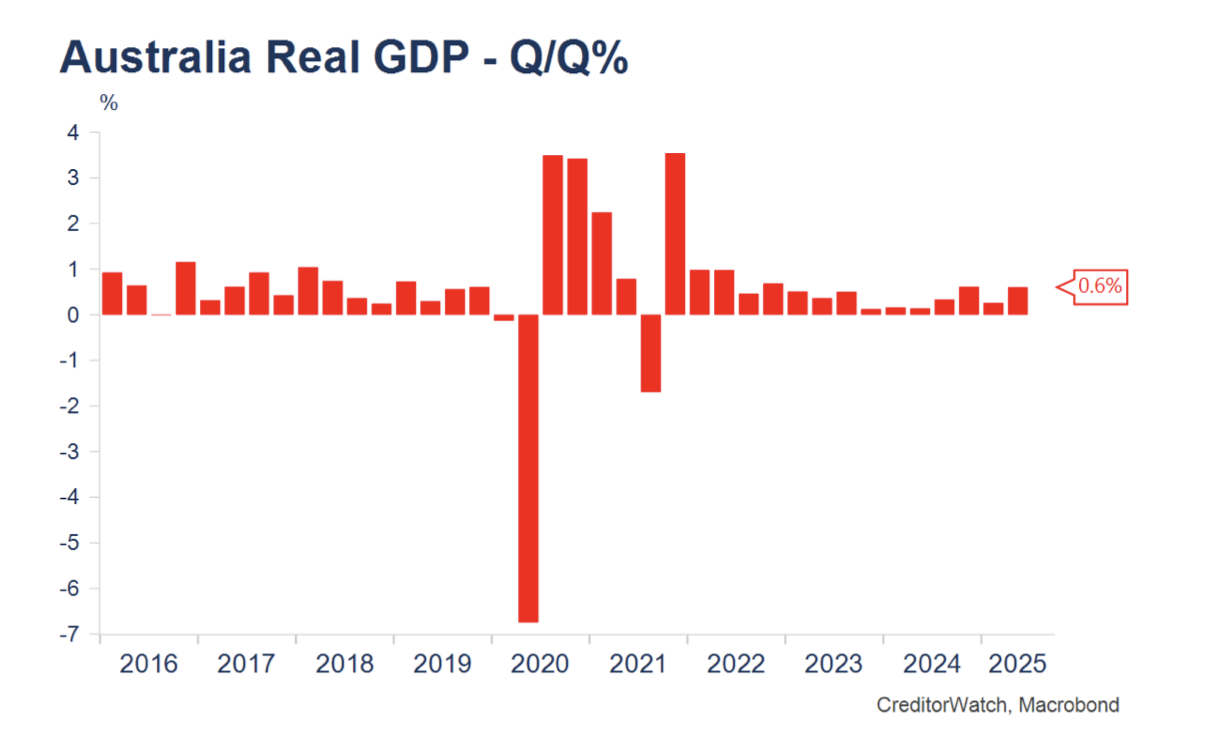
Economists at Moody’s Analytics also highlighted the temporary nature of the growth surge.
“The June quarter delivered one of Australia's strongest growth rates in more than a year, but don't mistake this rebound for a breakout,” Sunny Kim Nguyen, Head of Australia Economics, Moody’s Analytics said. “The economy finally found its footing after the weather-disrupted March quarter; consumers opened their wallets, mining exports normalised, and services demand perked up. That said, much of the improvement owed more to timing quirks, with underlying momentum still well below potential.”
Moody’s warned that household consumption had been driven by savings drawdowns rather than stronger incomes, while external demand remained fragile amid uneven growth in China and ongoing trade tensions. Its baseline view is for subdued growth through 2025, with risks skewed to the downside.
Both economists agreed that while GDP headlines suggested resilience, the economy remains vulnerable and will likely require continued policy support.