
Solar power is the poster child of the clean energy transition. In Australia alone, more than 4 million homes and businesses now have photovoltaic (PV) panels on their rooftops, while utility-scale solar farms are racing ahead to help deliver the nation’s target of 82% renewable electricity by 2030.
But the industry’s rapid growth hides a gathering storm: what to do with a looming mountain of end-of-life panels. By 2050, global solar waste is expected to reach as much as 78 million tonnes. In Australia, at least 1 million tonnes of panels — worth an estimated $1 billion in recoverable materials — could be piling up in landfill by 2035 unless recycling solutions scale up.
Recycling as energy security
The International Energy Agency’s Global Critical Minerals Outlook 2025 report highlights how concentrated and fragile mineral supply chains remain. China accounts for two-thirds of battery recycling growth since 2020 and dominates refining in 19 of 20 strategic minerals. Export controls on gallium, indium and rare earths have underscored how geopolitical leverage is being applied to minerals essential for renewable energy, semiconductors and defence.
Against that backdrop, recycling is not just about waste management — it is emerging as one of the few areas where supply can be diversified relatively quickly. Every kilogram of silver, silicon, indium or gallium recovered from a retired solar module reduces pressure on mining new resources and helps buffer against supply shocks.
Silver in the spotlight
Silver is the standout case. Each PV panel contains about 20 grams of silver in its conductive “fingers” and busbars. Scaled across Australia’s installed base, that embedded silver already represents the equivalent of the country’s largest operating silver mine.
Industrial demand for silver reached record levels in 2024, climbing to 680 million ounces, with photovoltaics and artificial intelligence (AI) hardware the fastest-growing sources of consumption.
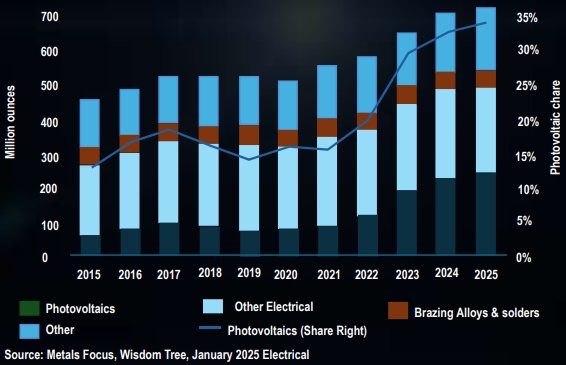
Silver demand drivers.
Supply has not kept up, leading to a market deficit of 118 million ounces. Since 2018, silver prices have surged more than 150%, from US$15 an ounce to around US$38 today.

With solar set to remain the largest single driver of demand growth, recycling silver from panels is no longer a fringe activity — it could become essential to keeping the clean-energy transition on track.
A better way to recover value
Traditional recycling methods involve shredding panels, burning away binders and treating the remains with acids. The process is energy-intensive, yields low-grade powders, and often fails to recover valuable materials like silver and high-purity silicon.
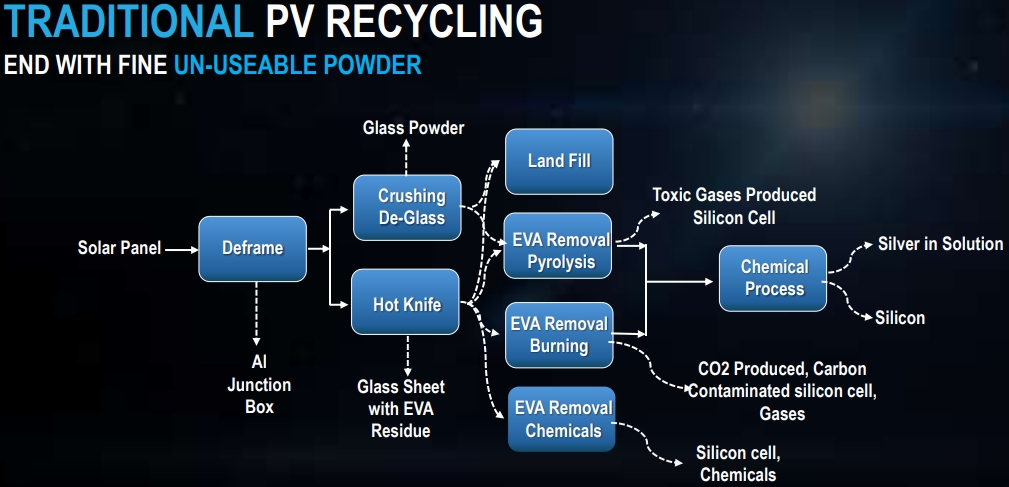
Lithium Universe Ltd (ASX:LU7, OTC:LUVSF) has taken a different tack. While best known for its lithium refinery project in Québec, the company has licensed a suite of photovoltaic recycling technologies developed at Macquarie University. The approach uses Microwave Joule Heating Technology (MJHT) to delaminate panels layer by layer, followed by a Jet Electrochemical Silver Extraction (JESE) process to strip and recover silver.
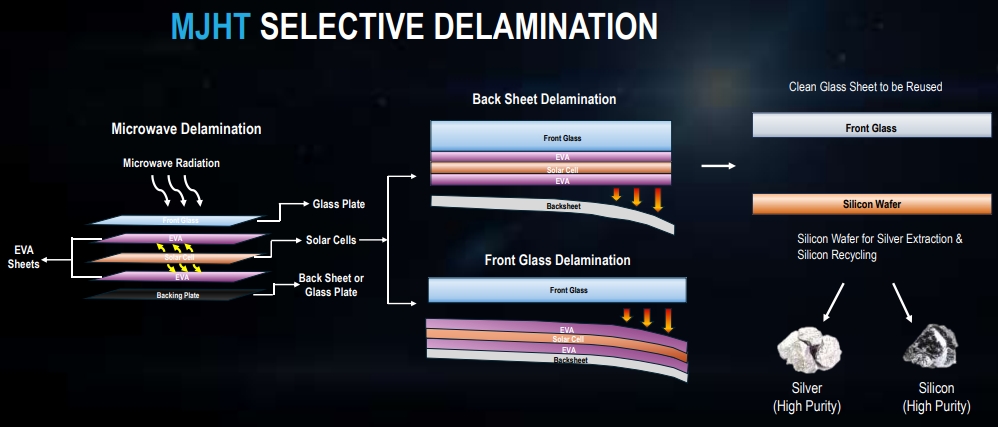
This technique preserves silicon wafers and glass sheets in reusable form, achieving silver recoveries above 95% and producing material pure enough for direct reuse in semiconductors or new solar cells. Lithium Universe says the process can deliver three to four times more value recovery than conventional recycling.
Counter-cyclical positioning
For Lithium Universe, the move into solar recycling offers a way to diversify during a downturn in lithium prices. Lithium carbonate prices have fallen more than 80% from their 2022 peaks, and investment momentum across the sector has slowed.
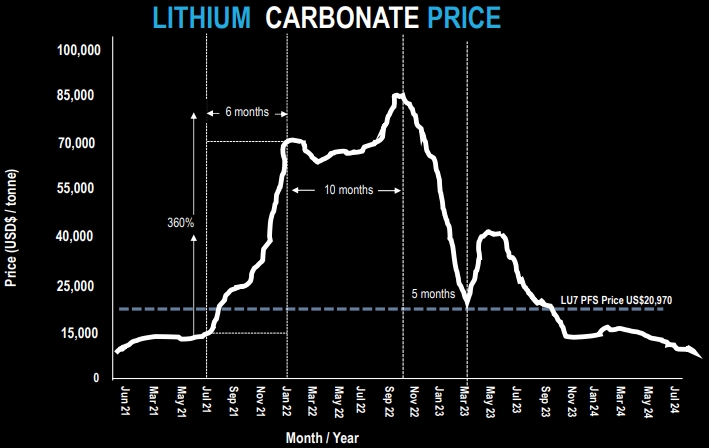
By contrast, the economics of recovering silver and silicon from panels are improving as supply deficits widen.
It also provides a strategic hedge: when lithium prices rebound — as many expect — the company will already have its Bécancour Lithium Refinery project ready to move, while its recycling arm could be contributing to another critical mineral supply chain.
The next frontier in mineral security
Governments are pouring billions into securing new critical mineral supplies, but building new mines and refineries takes years and faces regulatory hurdles. Recycling solar panels offers a faster, lower-impact way to capture scarce resources already in circulation.
Australia’s early lead in rooftop solar adoption means it will also be among the first countries to face large-scale panel waste. If companies like Lithium Universe can prove out new technologies to capture high-value silver and silicon, the nation could turn a looming disposal problem into a strategic resource advantage.
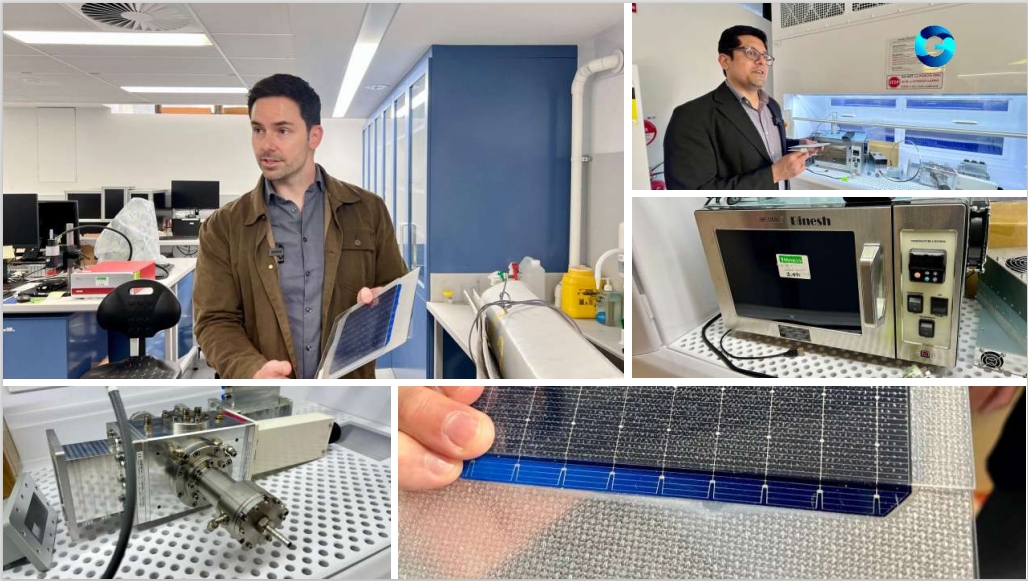
Macquarie-led team with Lithium Universe PV recycling technology.
The energy transition is not just about building new capacity — it is also about not wasting what we already have. As silver demand continues to outstrip supply, the panels coming off rooftops may be as important to energy security as the new ones going on.