
Magnetite Mines Ltd (ASX:MGT) has confirmed rare earth mineralisation at its Ironback Hill Project in South Australia. The results come from re-assaying archived drill samples originally collected during iron ore drilling campaigns in 2011–2012. Intercept grades ranged between 356 ppm and 1,153 ppm TREO at a 350 ppm cut-off. Mineralised intervals were identified within near-surface, clay-rich horizons, often coincident with drainage features.
The discovery represents the first reported occurrence of rare earths at Ironback Hill.
Significant results include (350ppm cut-off applied):
- 8m @ 1,153ppm TREO (215ppm Nd2O3) from 12 to 20m, within 18m @ 866ppm TREO from 10 - 28m (PLRC0053)
- 6m @ 816ppm TREO (190ppm Nd2O3) from 16 to 22m; within 20m @ 583ppm TREO from 12m (PLRC0056)
- 4m @ 977ppm TREO (64ppm Nd2O3) from 18m; within 20m @ 608ppm TREO from 14m (PLRC0059)
Analysis highlighted significant concentrations of neodymium oxide (Nd₂O₃), one of the most commercially important rare earth elements used in high-strength permanent magnets for electric vehicles, wind turbines and defence applications. Intersections included 8 metres at 1,153 ppm TREO with 215 ppm Nd₂O₃ from 12 metres depth (PLRC0053), and 6 metres at 816 ppm TREO with 190 ppm Nd₂O₃ from 16 metres depth (PLRC0056). These results underscore the potential economic value of Ironback Hill’s rare earth mineralisation.
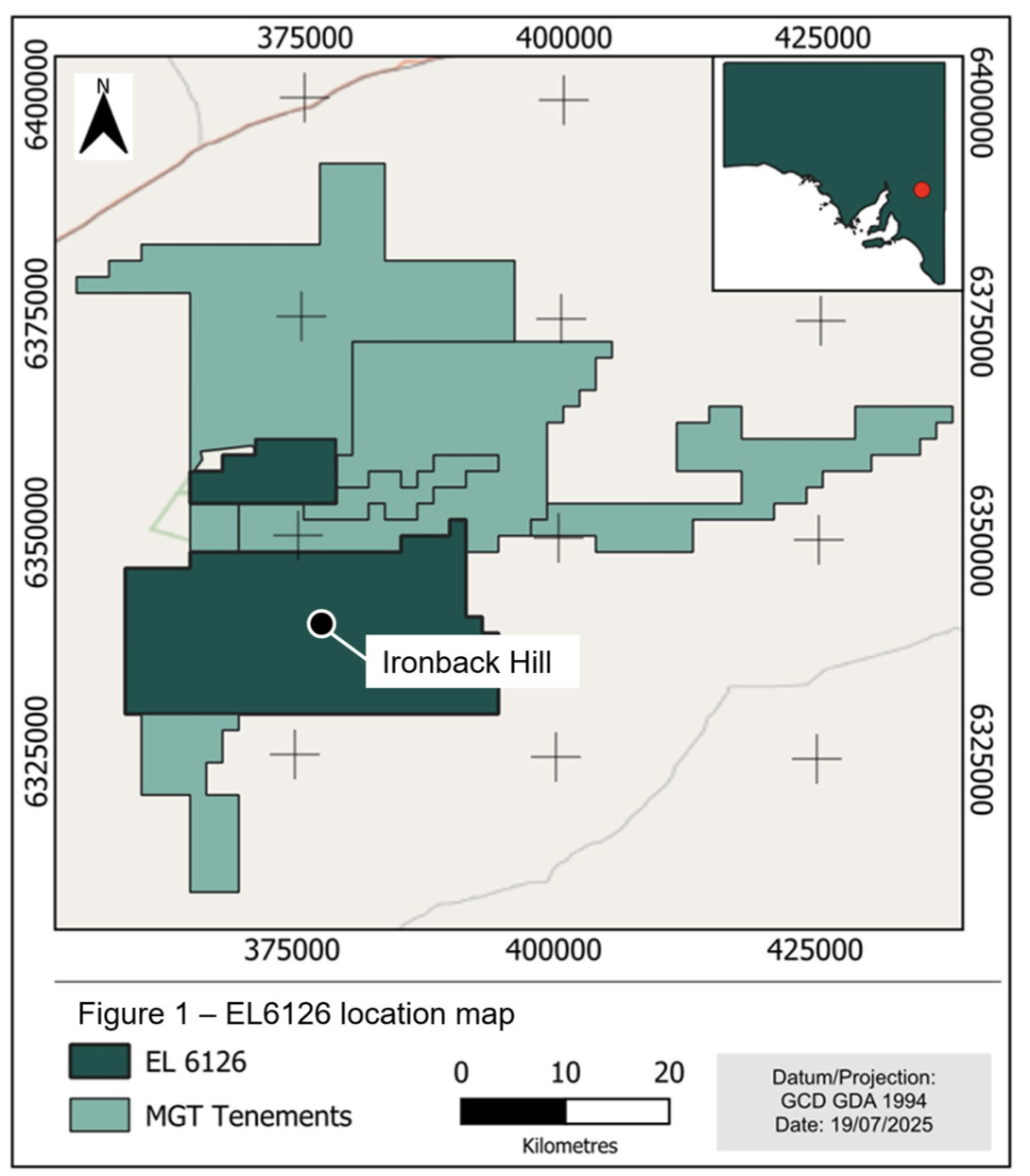
Ironback Hill location within tenement EL 6126.
“As signalled in our 8 August 2025 announcement, Magnetite Mines has commenced a low-cost assessment of its vast South Australian tenement base for gold and critical minerals potential. While the development of the Razorback Iron Ore Project remains our core priority, the Board believes it is in shareholders’ best interests to understand the full potential of the company’s extensive tenements in response to favourable market conditions," Magnetite Mines managing director Tim Dobson said.
“Accordingly, we have tasked our experienced in-house geology team to provide an assessment of mineral prospectivity on our existing ground. This announcement provides the first response from that assessment with the identification of rare earth element mineralisation at Ironback Hill, as detected by analysing existing samples from a previous Magnetite Mines drilling campaign.
“We are excited by this early-stage indication of rare earths mineralisation at Ironback Hill and are planning low-cost follow up exploration work to determine if a wider program of work is warranted.”
Geological setting and mineralisation style
The mineralisation occurs in near-surface clay-rich horizons, suggesting potential for clay-hosted rare earth deposits, which can offer processing advantages under favourable conditions.
While clay-hosted deposits may allow for extraction using mild leach processes, further metallurgical testwork is required to confirm extractability and economic viability.
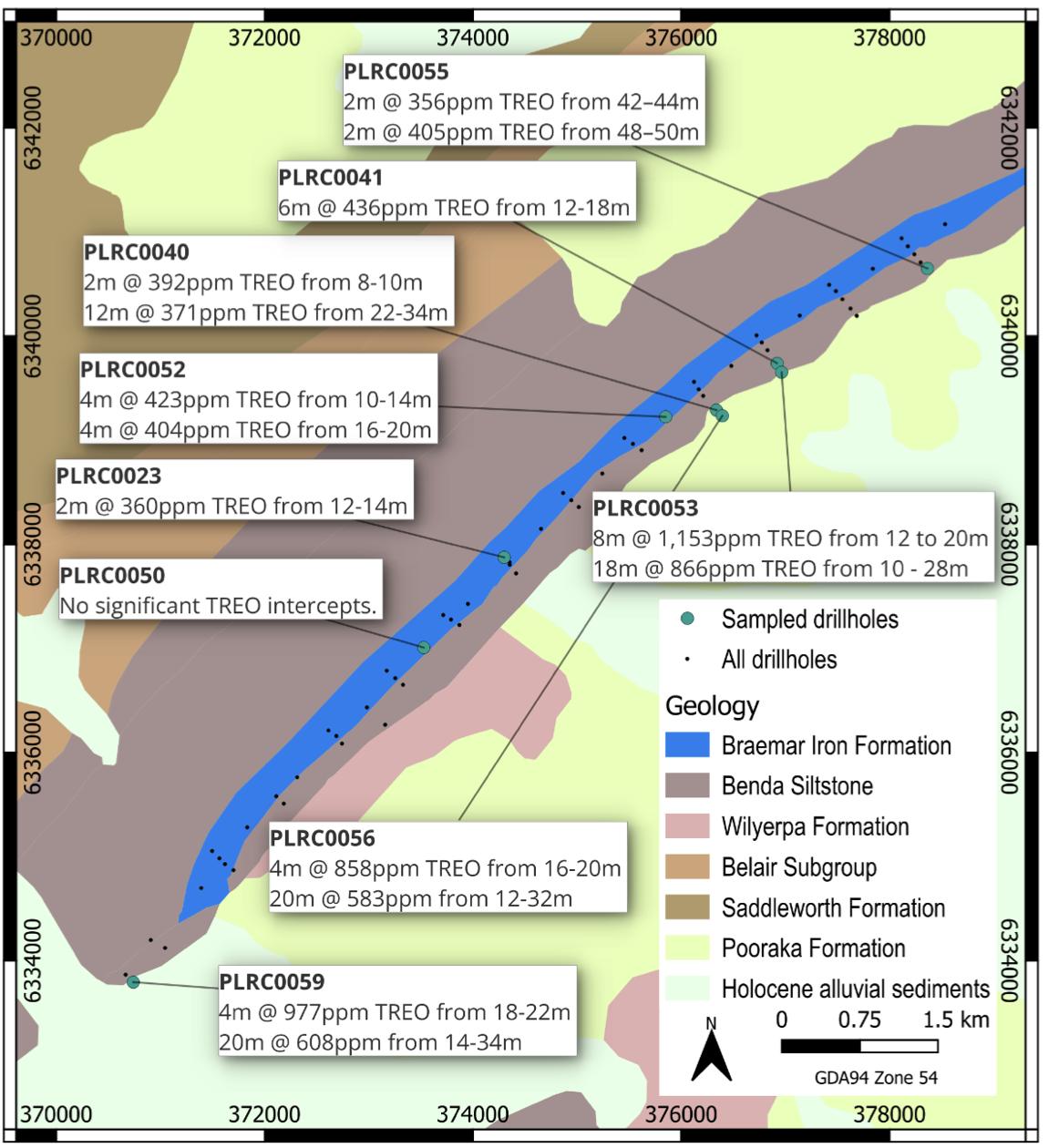
Drill hole locations and geological map.
The company notes that no metallurgical studies have been completed to date, and mineral recoveries remain unknown.
Next steps
Magnetite Mines will undertake low-cost follow-up work, including leachability and metallurgical testwork, to determine the economic potential of the mineralisation. This will be followed by further mineralogical assessments, additional sampling, and geological modelling to define the extent and continuity of mineralisation.
The company emphasised that development of the Razorback Iron Ore Project remains its core priority, but assessing the broader critical minerals potential of its tenement package is a strategic priority in response to favourable market conditions.