
Lithium Universe Ltd (ASX:LU7, OTC:LUVSF) has taken a major step towards advancing sustainable solar panel recycling by acquiring the global rights to Macquarie University’s Jet Electrochemical Silver Extraction (JESE) Technology.
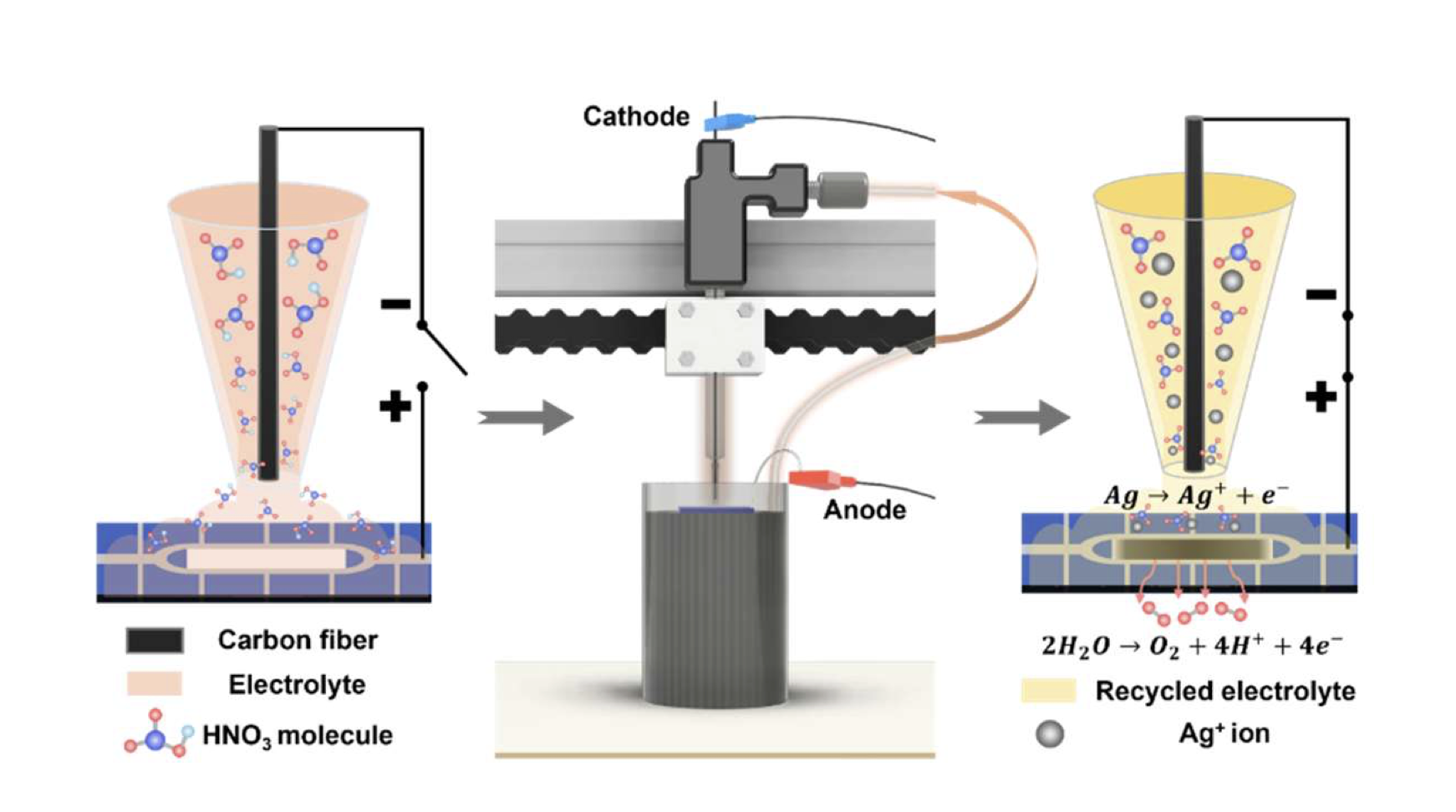
Electrochemical Jet dissolving silver into Ag+ ions.
The innovation enables the targeted recovery of high-purity silver from photovoltaic (PV) cells while preserving the integrity of silicon wafers, offering significant environmental and commercial advantages. Integrated with the company’s existing Microwave Joule Heating Technology (MJHT), the process provides a comprehensive solution for reclaiming valuable materials from end-of-life solar panels.
Highlights
- Acquired worldwide rights to Macquarie University’s Jet Electrochemical Silver Extraction (JESE) Technology.
- JESE uses a low-voltage electrochemical jet to selectively extract silver while preserving silicon wafers.
- Recovers high-purity silver via electrochemical deposition with minimal contamination.
- Integrates with LU7’s Microwave Joule Heating Technology (MJHT) for full photovoltaic (PV) recycling.
- Positions LU7 at the forefront of critical metal recovery from solar waste.
“LU7 has completed its review of the technology and will now proceed to secure the global licence from Macquarie University. Our collaboration with the Macquarie University team has been exceptional," executive chairman, Iggy Tan said.
"Their scientific expertise and innovative approach have greatly accelerated the development of the Jet Electrochemical Silver Extraction technology. We have built a strong, solutions-focused partnership, combining Macquarie’s world-class research with LU7’s commercial vision. Together, we are delivering a breakthrough recycling solution that recovers high-purity silver while preserving wafer integrity. This partnership exemplifies how industry and academia can work hand in hand to create technologies that drive both commercial success and sustainability.”
Acquisition and licensing agreement
Lithium Universe has signed an exclusive global licensing agreement with Macquarie University, secured through subsidiary New Age Minerals Pty Ltd, for the JESE Technology.
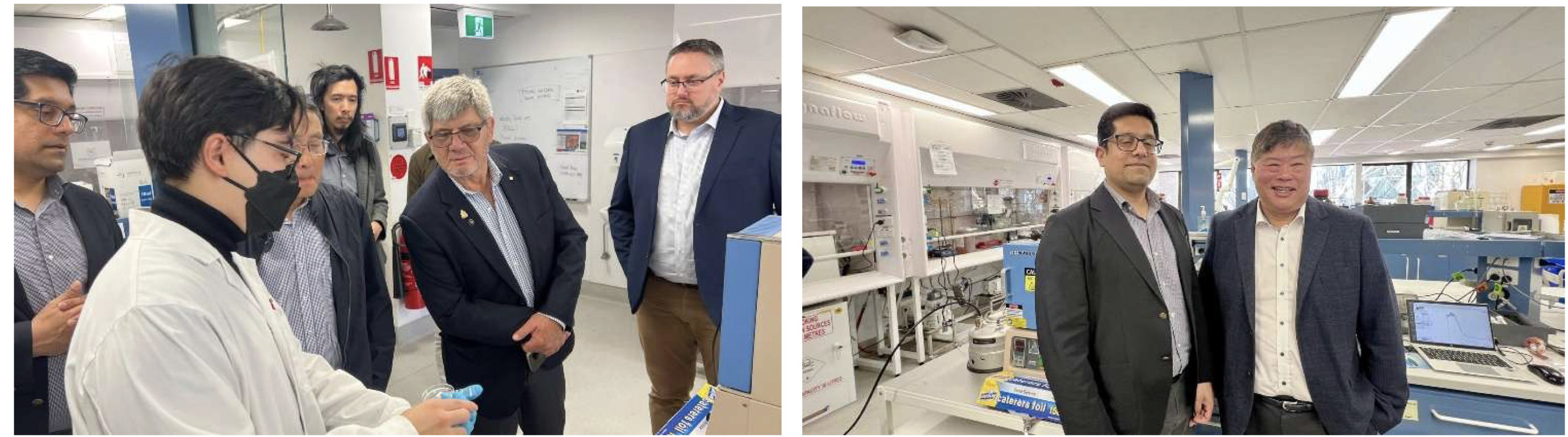
Lithium Universe Directors and CFO meeting Macquarie University team.
The process uses a dilute nitric acid electrochemical jet to dissolve silver from PV solar cells at voltages between 2 and 5 volts. This targeted method oxidises silver into ions without damaging the underlying silicon wafer, enabling recovery through electrochemical deposition.
The recovered silver reaches purities suitable for high-value applications, while wafers remain intact for potential reuse in semiconductor or PV manufacturing.
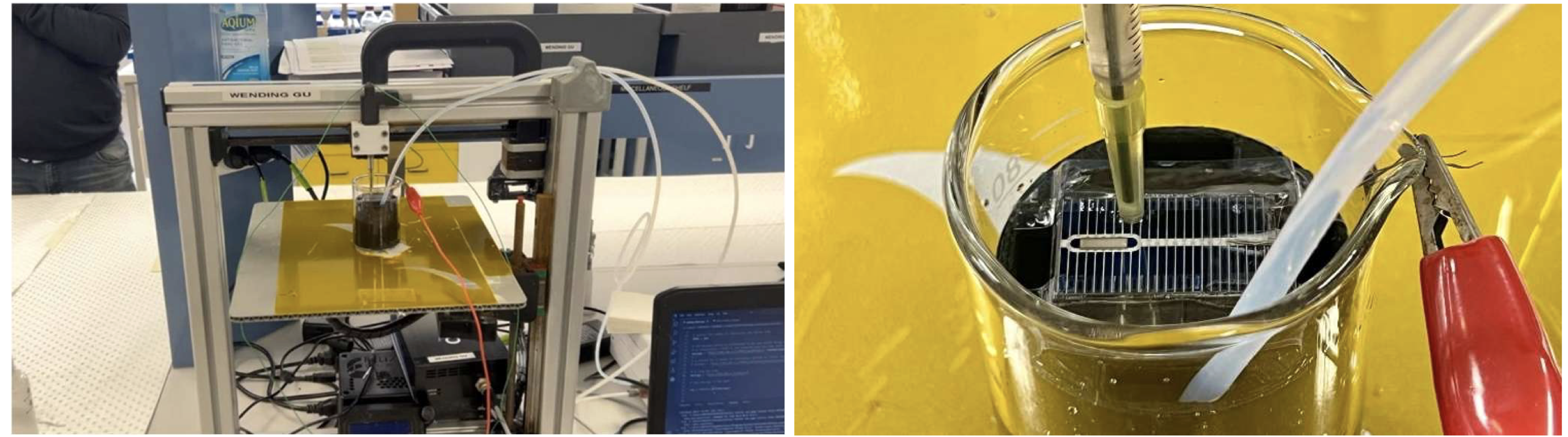
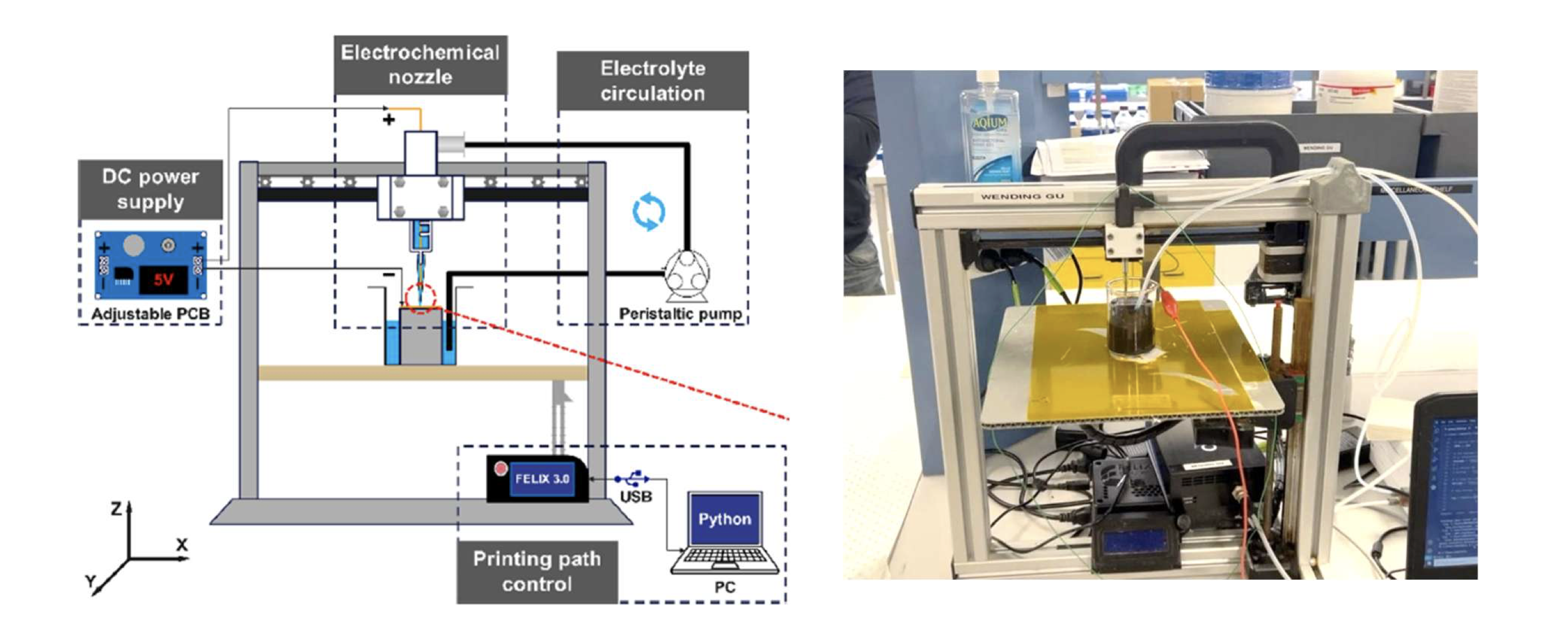
Jet Electrochemical Silver Extraction Probe.
Unlike conventional mechanical grinding and acid leaching, which can contaminate wafers and generate significant waste, the patented JESE process minimises contamination and chemical hazards. Key licensing terms grant LU7 exclusive global rights, with provisions for royalties, milestone payments, and sublicensing.
Integration with Microwave Joule Heating Technology
JESE complements LU7’s previously licensed Microwave Joule Heating Technology (MJHT), which separates PV panel layers without high-temperature furnaces or abrasive grinding. MJHT preserves glass and silicon wafers in a clean state, ideal for JESE’s precision silver removal. Combined, these technologies enable a circular recycling model — recovering silver, glass, and high-purity silicon with minimal waste and low environmental impact.
Electrochemical jet moves along silver fingers and busbars, with precision silver extraction.
This integrated process is a significant advancement over conventional methods, which often destroy wafers and require energy-intensive, hazardous chemical treatments. The approach enhances recovery efficiency and creates commercial opportunities in the growing PV recycling market.
Technology overview
Silver is a critical component in PV cells, forming the conductive fingers and busbars that collect and transport electricity.
In JESE, a narrow jet of dilute nitric acid is applied through a chemically inert nozzle positioned near the wafer surface. At low voltage, silver oxidises into soluble ions in under six seconds, which are then recirculated through the system. High-purity metallic silver is recovered via electrochemical deposition, while the electrolyte is reused, minimising chemical consumption and waste.
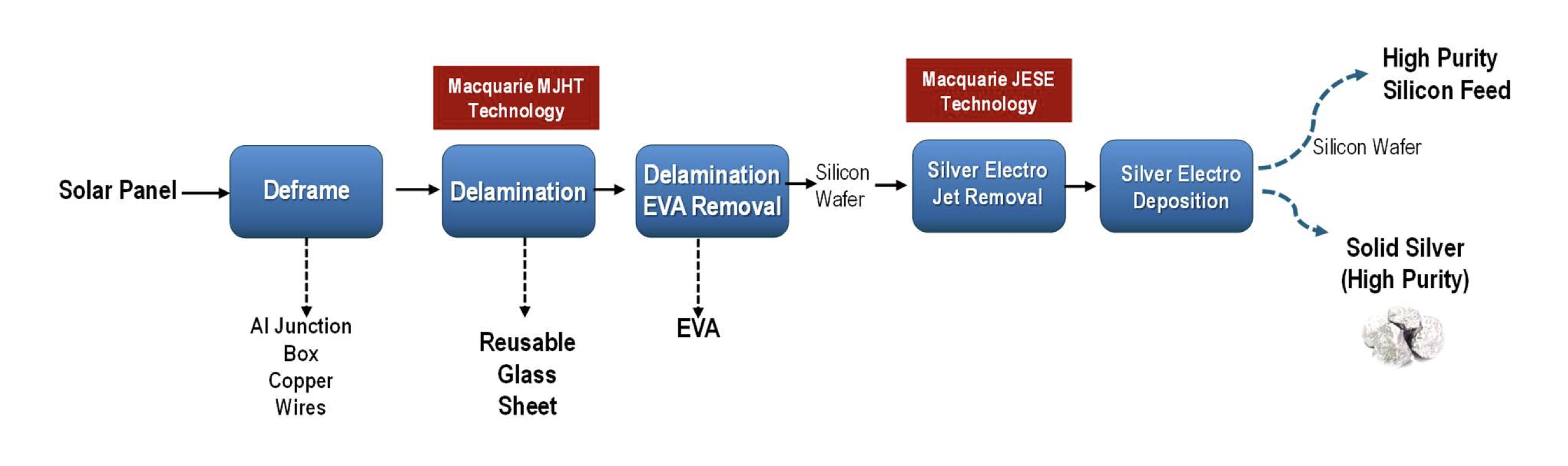
Incorporation of MQU MJHT and JESE Technology in Silver Extraction Process.
This precision method preserves wafer integrity, allowing reuse in PV modules or upgrading to metallurgical-grade or nano-silicon for battery applications.
The process achieves 77% current efficiency, reduces hazards by using dilute acid, and eliminates the need for destructive grinding.
Market opportunity and economic impact
Each PV panel contains around 20 grams of silver — worth about A$36 at current prices. With approximately 50 panels per tonne of PV modules, global waste projections of 60–78 million tonnes by 2050 represent a potential recoverable silver value exceeding A$154 billion.
Silver demand is rising, particularly in photovoltaics, electronics, and emerging technologies like artificial intelligence. Industrial demand is expected to grow at 7% CAGR, with 2025 forecasts indicating a market deficit of 117.6 million ounces.
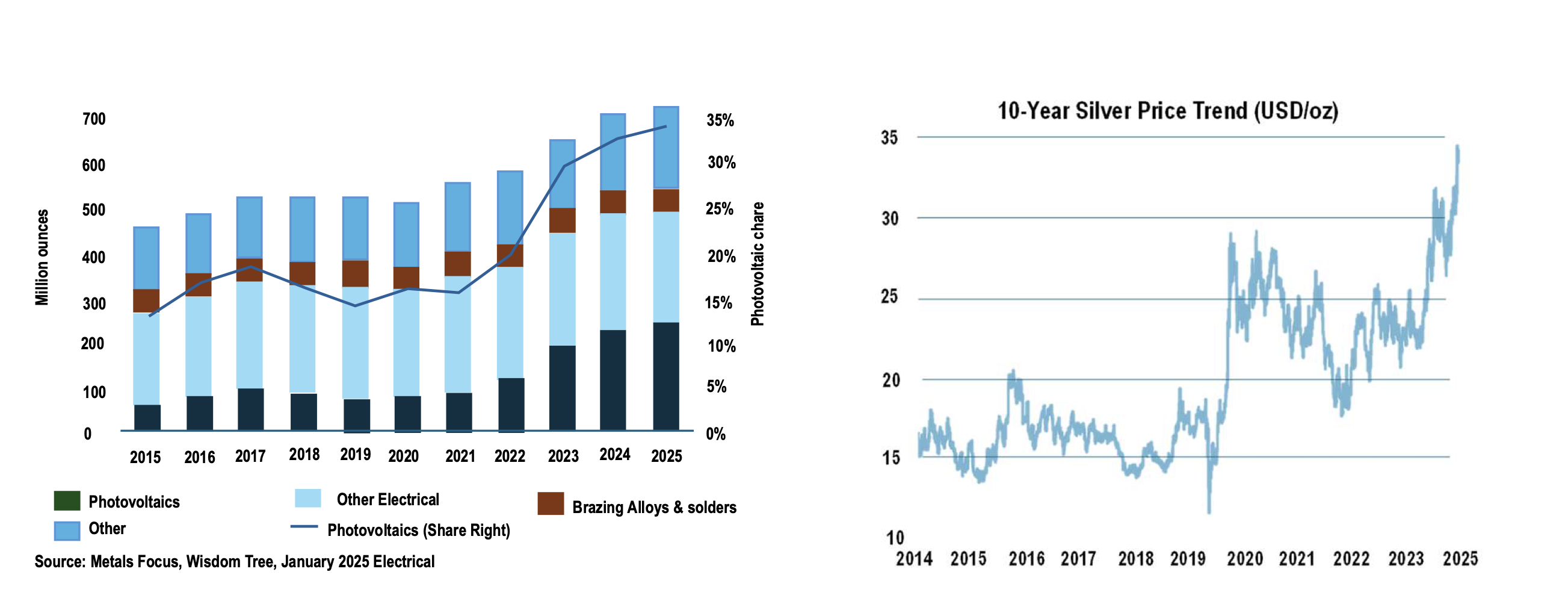
Silver demand driven by PV cells and silver 10-year price trend.
Silver prices have increased 126% over the past decade, from US$15/oz in 2018 to US$34/oz in 2025, underscoring the value of recycling as a supplementary supply source. LU7’s technology positions it to capture value from this underutilised resource stream.
Environmental and sustainability benefits
The JESE-MJHT system supports global sustainability goals by reducing reliance on virgin silver and silicon production. Silicon wafer manufacturing is resource-intensive, involving polysilicon refining, ingot casting, and slicing.
By enabling wafer reuse, the technology reduces energy consumption, carbon emissions, and production costs. The use of dilute nitric acid, closed-loop electrolyte recirculation, and the elimination of mechanical grinding minimise hazardous waste generation. This approach aligns with circular economy principles, maximising material recovery and lowering environmental impact compared to conventional recycling practices.
Demand for silver and future growth
In Australia, renewable energy targets — 82% by 2030 and a 43% reduction in carbon emissions — are driving rapid PV installation growth, increasing demand for silver in solar manufacturing. With recycling rates for used PV modules currently at just 15%, the market for recovery is largely untapped.
LU7’s technology addresses both the economic and environmental challenges, offering a pathway to higher recycling yields and better resource efficiency. The company also plans to expand into the recovery of other valuable metals, including silicon, gallium, indium, and copper, enhancing both revenue potential and sustainability outcomes.
Licensing terms and milestones
Under the agreement, LU7 will make annual payments from 2027 and pay royalties of 3% on gross sales from products or services using the combined JESE and MJHT process.
Minimum royalties start in 2033, alongside milestone payments upon pilot plant commissioning and first commercial sales. The licence grants exclusive worldwide rights, with Macquarie retaining rights for research and education. Performance criteria include research and development completion by 2027, pilot testing by 2030, and commercial deployment by 2032