
Realising the importance of bauxite
The new cold war that is gaining momentum globally is fast creating vast opportunities for jurisdictions hosting commodity projects that have an inelastic demand. Commodities that fall into a real critical supply shortage are all getting a rejuvenation that is now making headlines. Commodities such as bauxite are now starting to get investors' attention.
Bauxite is the main source of aluminium, and most investors did not even know that it is also the main source of the now very sought-after metal, gallium. Western Australia has had a dominant and long history with bauxite, with Alcoa and Worsley Alumina (now South32) being giants in this sector and dominating the bauxite story for decades. Bauxite was first discovered in 1821 by a French geologist by the name of Pierre Berthier near the village of Les Baux in southern France.
Bauxite consists mostly of the aluminium minerals gibbsite (Al(OH)₃), boehmite (γ-AlO(OH)), and diaspore (α-AlO(OH)), mixed with the two iron oxides goethite (FeO(OH)) and haematite (Fe₂O₃), the aluminium clay mineral kaolinite (Al₂Si₂O₅(OH)₄), and small amounts of anatase (TiO₂) and ilmenite (FeTiO₃ or FeO·TiO₂). Bauxite appears dull in lustre and is reddish-brown, white, or tan. (Source: Wikipedia)
The recent nationalisation of projects in Guinea has thrown added pressure on the supply crunch in the business of bauxite, as end users are struggling already with the global "cold war" rhetoric that is creating headaches for all stakeholders in the industry.
According to SMM (Shanghai Metals Market), shortages in 2024 have driven price increases that are now looking to overflow into 2025. Bauxite is not abundant in the biggest consumer, China, and although this may be great for players in the industry, the issue lies in the lack of an economical resource that can sustain a long-term source.
My interest in the bauxite business started in 2020 when I published The Best Small-Cap Bauxite Companies on the ASX, which really made me gain the understanding that, in some way, the bauxite mining business is a smaller-scale version of the mega iron ore industry that drives the Pilbara region iron ore business in Western Australia.
This Samso Insight is all about compiling a story that gives investors a current view of the bauxite business on the ASX. Let's delve into the whole bauxite story and see if we can simplify all the smoke that is currently doing the rounds on mainstream media.
This is an intense Samso Insight, and readers have to have patience as we try and build an extensive context around why I think there are reasons to start taking note of what could be an extensive value-creating sector for ASX investors. To help navigate the Samso Insight, the chapters below will try and help readers stay focused on the review.
Aluminium’s strategic role and the global bauxite landscape
Investors in Australia will need to understand that when we talk about bauxite, there is only really one major group that dominates the bauxite industry. They are Rio Tinto, Alcoa or Alcoa Australia, and South32. These three companies and their projects make up what we know as the Australian bauxite business.
Bauxite mining typically involves a large footprint, and in jurisdictions where this creates a sensitive conversation, it will create unnecessary attention. In Australia, Alcoa is now talking about applying for more ground to expand its operations in the Darling Range. The application is now creating migraines for management as it is creating upheaval among the environmentalists and the Not in My Backyard Crew (NMB Crew).
Alcoa Media Release: Huntly Mine Transition and Pinjarra Refinery Production Increase
Aluminium: A metal for the modern world
Bauxite is a mineral of immense strategic value, serving as the primary ore of aluminium. In the context of a world steadily shifting toward decarbonisation, electrification, and infrastructure growth, bauxite has become an indispensable commodity.
Aluminium is foundational to countless industries, from aerospace and automotive manufacturing to packaging, consumer electronics, construction, and the renewable energy sector.
What sets aluminium apart is its remarkable versatility. Lightweight yet strong, aluminium offers durability, corrosion resistance, and excellent conductivity. It's also infinitely recyclable without loss of quality, which positions it as a metal of choice in a circular economy.
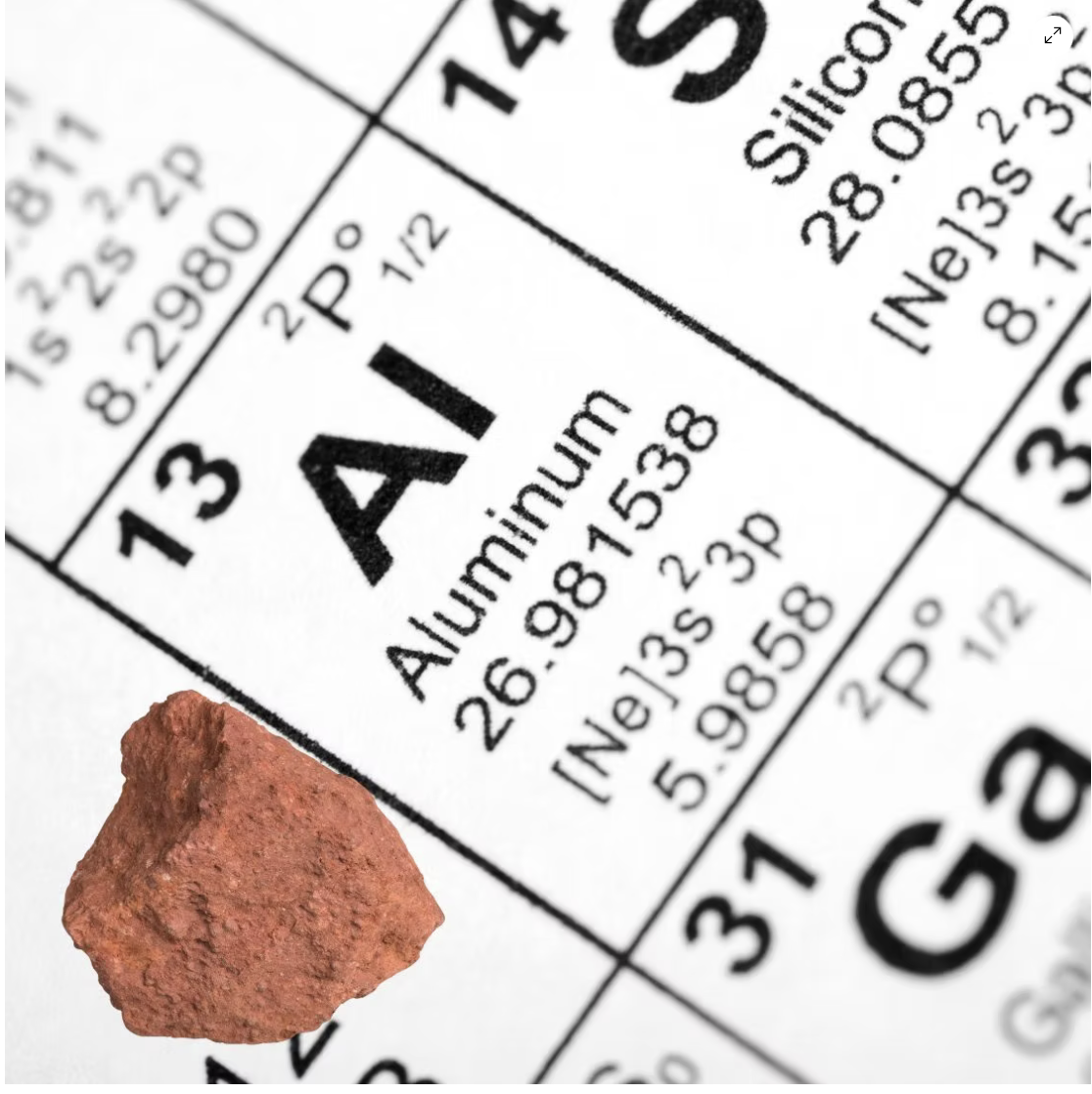
These properties, combined with the metal's role in building electric vehicles, solar panels, and high-voltage transmission infrastructure, have elevated demand for aluminium—and by extension, bauxite—to unprecedented levels. Global aluminium production now exceeds 70 million tonnes annually, requiring over 300 million tonnes of bauxite each year. This demand is projected to rise steadily, with a compound annual growth rate of approximately 3% to 5% through 2030.
Global supply and geopolitical landscape – Bauxite and Aluminium
The supply landscape, however, is becoming increasingly complex. While Australia remains the world's leading producer of bauxite, output from Guinea has surged in recent years due to Chinese investment and off-take agreements. China, as the world's largest aluminium producer, has grown heavily reliant on bauxite imports to feed its refining capacity.
However, Guinea's political instability and periodic export disruptions have exposed the fragility of global supply chains. As such, countries and industrial players are seeking alternative, geopolitically stable sources of bauxite, and Australia—particularly Western Australia—is emerging as a preferred jurisdiction.
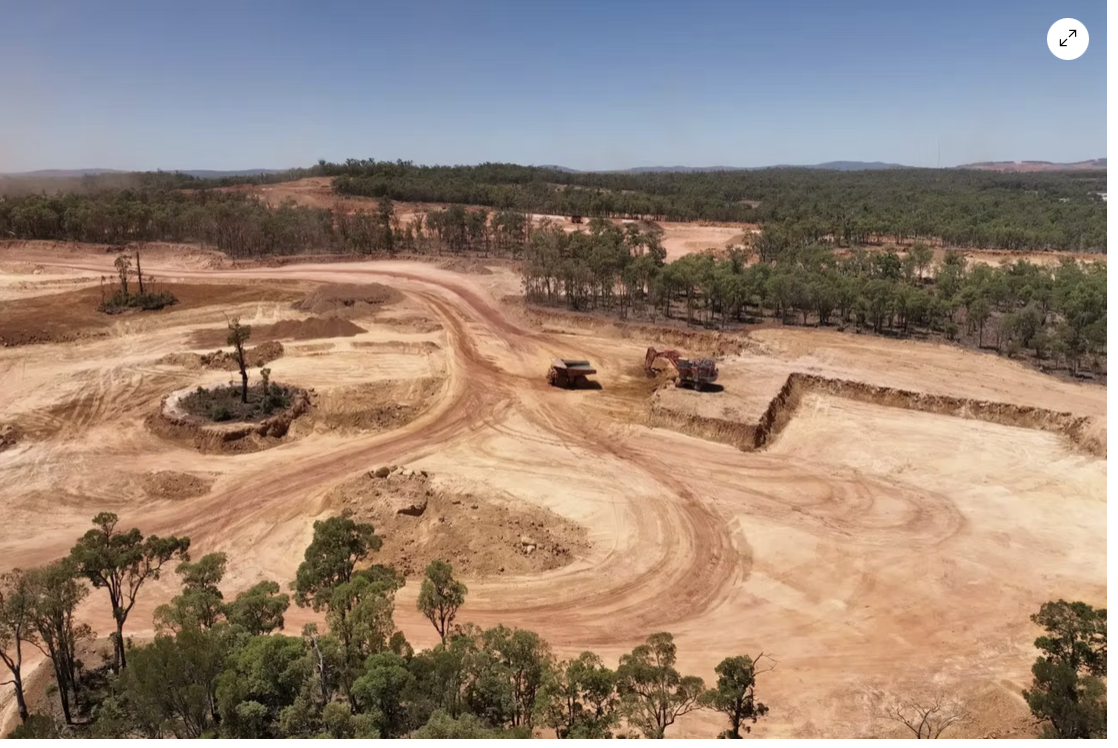
Historical bauxite mining activity in the Darling Range region of Western Australia, showcasing typical red-oxide terrain and open-cut techniques. (source: WA Today).
As fuel to the scarcity of bauxite and hence the refinement of aluminium, Guinea’s military government officially announced the return of mining tenements on May 16, 2025. Information Minister Fana Soumah confirmed in a televised address that President Mamady Doumbouya had issued a decree repossessing 51 mining licences covering bauxite, gold, diamond, graphite, and iron concessions, and that these had been “returned free of charge to the state.”
Just over a week later, on May 27, 2025, the government additionally cancelled 129 exploration permits, citing the need to free up unused concessions and tighten resource control. Government measures implemented by Guinea will only fuel the demand and the rush for bauxite for future global needs.
Stay tuned for part 2 of The Strategic Importance of Bauxite where we drill down into the top five largest bauxite resources globally and look at the highlights of major Australian Bauxite resources.