
European Lithium Ltd (ASX:EUR, OTCQB:EULIF) has begun a 2,000-metre diamond drilling program at the Tanbreez Rare Earth Project in Greenland as the company looks to expand the mineral resource estimate (MRE) for the Fjord Eudialyte Deposit, a key component of the Tanbreez project.
Drilling program targets resource expansion
The drilling campaign will target extensions to the east of the existing Fjord Deposit. The current MRE for the deposit includes an Indicated resource of 8.76 million tonnes (Mt) and an Inferred resource of 13.8Mt, for a total of 22.56Mt.
The 2,000-metre program will focus on extending the resource by exploring about 700 metres eastward and 650 metres along the strike of the north-east to south-west trending kakortokite host rock. Drilling depths will range from 80 to 250 metres, with initial drill hole K25-01 already showing promising mineralisation.
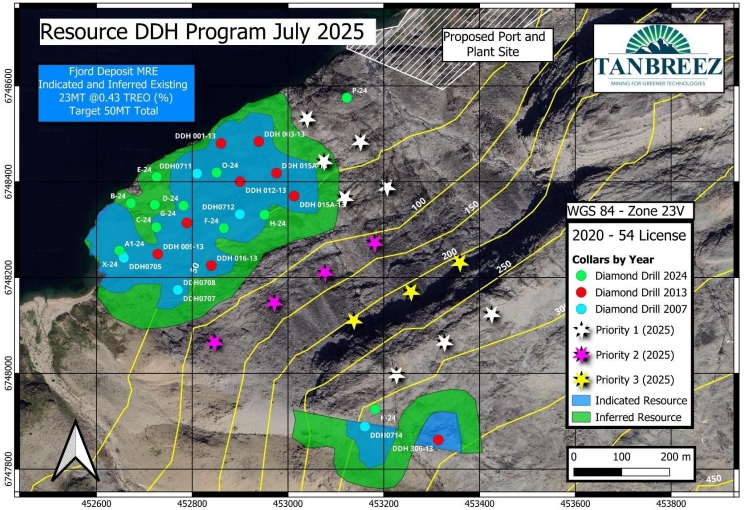
Resource diamond drilling program hole collars in relation to historical diamond and RC drilling and December 2024 confirmation drilling over the Fjord MRE Area.
The first 60 metres of core from drill hole K25-01 has revealed medium-grained eudialyte with a composition of 30-40%, confirming the presence of rare earth elements within the mineralised eudialyte.
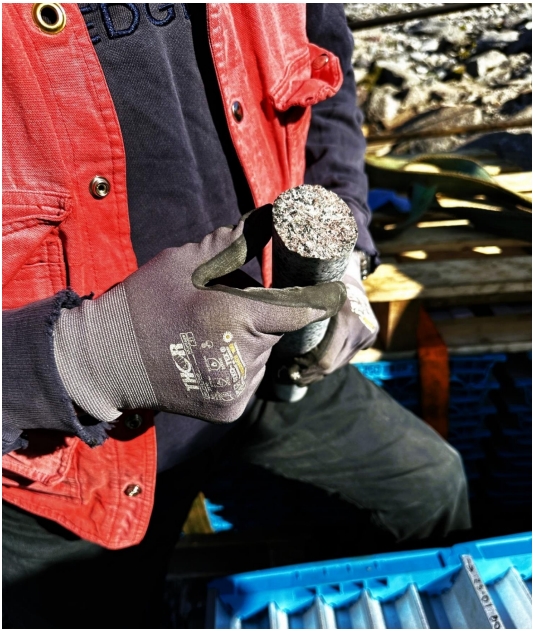
Drill core K25-01 in kakortokite host from surface to current depth of 61m, composing continuous medium grained red - mauve eudialyte mineralisation.
Significant milestone for Tanbreez Project
The data collected during the drilling program will play a critical role in advancing a Bankable Feasibility Study (BFS) for the project and finalising reports required by Greenland regulators.
Tony Sage, executive chairman of European Lithium, called the commencement of drilling an important milestone in advancing the project.
“This program is designed to significantly enhance the current mineral resource estimate and support the development of the Bankable Feasibility Study, paving the way for a final decision to mine,” he said.
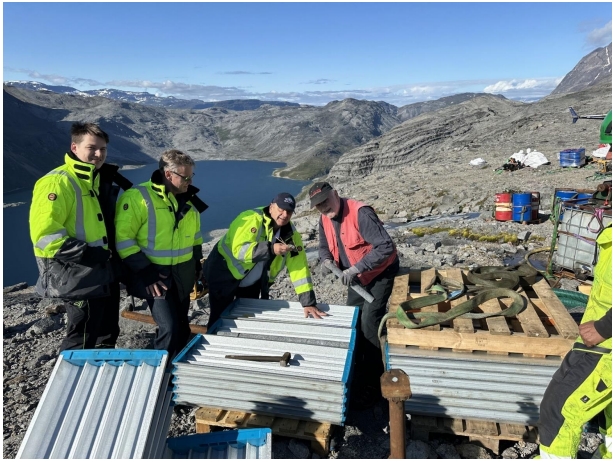
Company Geologists Dr Hans Christian, George Karageorge, Nick Barnes DFS Study Team Representative Kris Barnes inspecting drill core on drill pad K25-01.
The BFS will help support the project’s progression towards permitting and production, with final reports expected to be delivered by the final quarter of 2025.
Non-dilutive funding package supports development
As European Lithium advances its exploration and development work at Tanbreez, the company is working closely with Critical Metals Corp. Critical Metals holds a 42% interest in Tanbreez, and European Lithium’s 63% interest in Critical Metals provides exposure to significant developments in the project.
The development of the Tanbreez Rare Earth Project is supported by a non-dilutive funding package from the Export-Import Bank of the United States (EXIM). Critical Metals has received a non-binding Letter of Interest (LoI) from EXIM for a total funding package of US$120 million (AU$185 million), which is expected to be used for key activities, including permitting, feasibility studies and environmental assessments.
“The proposed funding package has a 15-year term and is subject to key development milestones such as permitting, feasibility studies and environmental assessments and EXIM conducting its standard due diligence investigations,” Sage said. “The non-dilutive funding package is expected to be sufficient to enable the Tanbreez Project to complete final resource drilling pre-production activities and commence mining.”
European Lithium’s strategic positioning
European Lithium holds a 7.5% direct interest in Tanbreez and is poised to benefit from the increasing demand for rare earth elements and critical metals essential for the clean energy transition. The company’s broader portfolio includes exploration assets in Austria, Ireland, Ukraine and Australia.
Critical Metals Corp, which is focused on developing critical minerals for the European market, holds a 42% direct interest in Tanbreez and has the right to earn up to 92.5% equity in the project by investing US$10 million in exploration expenses by June 2026.
The Tanbreez Rare Earth Project continues to advance towards its development goals, with the current drilling program expected to enhance the resource estimate and bring the project closer to production.