
For those affected by Cutaneous T-Cell Lymphoma (CTCL), a rare and aggressive cancer, treatment options can be limited, and the side effects harsh. In Australia, Prescient Therapeutics Ltd (ASX:PTX, OTC:PSTTF) is working on an innovative solution that could offer a new treatment pathway for patients facing this devastating disease.
CTCL, which begins in the skin but can also affect the blood and internal organs, has long been a cancer of unmet need. The disease is often misdiagnosed in its early stages, and as it progresses, it can cause painful, disfiguring lesions. The treatments available today have a mixed track record, with 98% of patients reporting adverse reactions from their current therapies.
But Prescient’s advanced cancer drug, PTX-100, is showing promise to change this narrative.
Strong trial results bring hope
PTX-100 has demonstrated encouraging results in clinical trials, with Phase 1b data showing that 64% of patients experienced either a halt or shrinkage of their tumours. Perhaps most remarkably, the drug has managed to maintain a favourable safety profile, with only one patient reporting a serious side effect (diarrhea) — a striking contrast to the severe adverse events seen with other treatments, which affect 36% of patients.
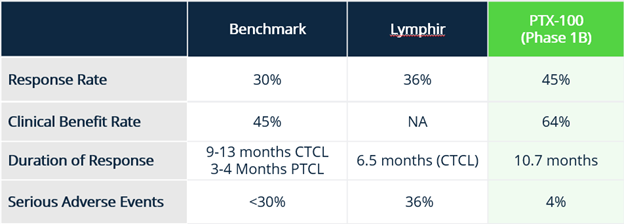
PTX-100 comparison results (source Prescient Therapeutics).
“PTX-100 has given us highly encouraging clinical data, and we are now looking to take it to a US$1.8 billion market,” Prescient CEO James McDonnell said.
“That is exciting in itself, but our technology could apply to 22% of all cancers, so there is a significant opportunity for us to tough millions of lives.”
FDA designations accelerate progress
In recognition of its potential, PTX-100 has already received Orphan Drug and Fast Track designations from the US Food and Drug Administration (FDA), providing the company with a fast-tracked approval process and the possibility of market exclusivity for seven years after approval.
These designations are crucial for Prescient as they accelerate its timeline to get PTX-100 to market, giving patients faster access to a treatment that could improve and extend their lives.
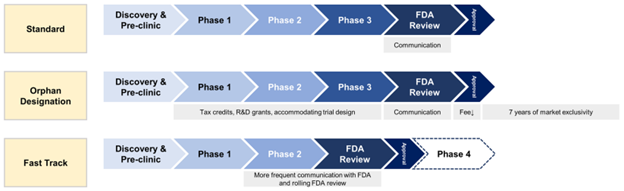
Overview of FDA review pathways and designations (source FDA US Food and Drug Administration).
“If Phase 2a trials show results anywhere near Phase 1b, then things will get very exciting,” McDonnell said. “We could be in the market in very few years. The designations we have received from the FDA so far, plus our Phase 1 results, give us a lot of confidence.”

Expanding the impact of Prescient’s cancer platforms
While CTCL remains Prescient Therapeutics’ primary focus, PTX-100’s potential could extend to 22% of all cancers, including lung, ovarian, and pancreatic cancers. This positions Prescient to address a broader range of oncological challenges with its RAS Pathway Disruptor platform.
In addition to PTX-100, Prescient is advancing its OmniCAR platform, a next-generation CAR-T technology designed to provide better control, targeting, and safety for cell therapies. OmniCAR could improve the durability and cost-effectiveness of CAR-T treatments, making them more accessible to a wider range of patients.
Prescient is also developing CellPryme, a complementary platform to OmniCAR. It enhances CAR-T cell potency and tumour penetration, offering a more effective and longer-lasting treatment.
A growing company with global ambitions
Prescient’s drive to innovate and deliver better cancer treatments aligns with a global cancer landscape that is set to grow exponentially in the coming decades. With the number of new cancer cases projected to increase by 77% by 2050, Prescient’s work has never been more urgent or more promising.
“I’ve got a drug in Phase 2 for a horrible disease of unmet need where we have high confidence from existing data and FDA designations to take it into a US$1.8 billion market within a few years,” McDonnell said. “That’s the near-term opportunity and 90% of my focus. But the wider opportunity is compelling, and with our other applications of PTX-100 plus our CAR-T platform, we have a lot of opportunities.”