
Century Lithium Corp. (TSX-V:LCE, OTCQX:CYDVF) is making progress toward becoming a key domestic supplier of battery-grade lithium carbonate, and a recent collaboration highlights the company's momentum. First Phosphate, a Canadian developer of LFP battery materials, successfully used Century Lithium’s lithium carbonate in the production of lithium iron phosphate (LFP) batteries—demonstrating real-world application of the Nevada-based company’s process.
In this interview, CEO Bill Willoughby joins Proactive to discuss how the partnership with First Phosphate came about, the significance of establishing a North American battery supply chain, and what’s next as Century continues to scale up its lithium production efforts.
Proactive: We recently spoke with the team at First Phosphate, who announced that they had successfully created LFP batteries using your lithium carbonate. First off, congratulations to you and your team—that’s a very exciting development. Maybe you can walk us through how this collaboration came about?
Bill Willoughby: Sure. We were approached by First Phosphate—thanks to them for selecting our material to work with in their LFP battery formulation. It’s a great accomplishment by their team, and we’ve been working together for a couple of months now. The collaboration has gone quite well, and again, we appreciate them choosing our lithium carbonate for the project.
Tell us a bit about the process—how do you produce the lithium carbonate that they’re using? I know this ties into the work you're doing at Angel Island and elsewhere.
For us, it's all about producing high-purity lithium carbonate that can be used in batteries. We've been successfully doing that for over a year now at our demonstration plant in Amargosa Valley, Nevada. The process starts with a clay ore—we leach it to extract the lithium, then purify the solution through several steps until we can precipitate it into lithium carbonate.
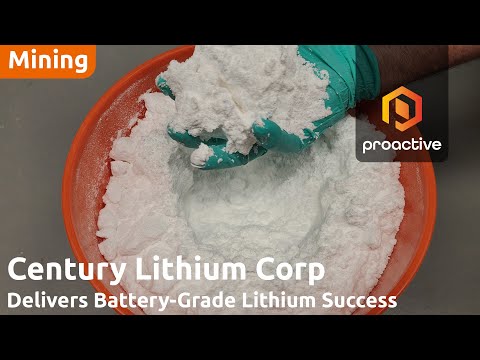
And really, there's no better proof of concept than having that material actually used in a battery. That’s why we’re so thankful to First Phosphate for putting it to the test in their supply chain. They sourced iron powder and phosphoric acid from their property in Quebec, which are also needed to make LFP (lithium iron phosphate) batteries.
Would you say this is a great example of how the North American supply chain is strengthening? First Phosphate is a Canadian company, you're based in the U.S., and it seems like this kind of collaboration is exactly what policymakers have been pushing for.
Absolutely. LFP batteries—lithium iron phosphate—are expected to be widely used across both stationary and mobile energy storage applications. In particular, LFP is gaining traction in the stationary battery segment.
So yes, the future looks bright for lithium batteries in general and especially for LFP. Having a domestic source for these materials is a significant step forward for the U.S. and for North America as a whole.
And lastly, Bill, do you expect to continue working with First Phosphate going forward? And are you hearing from other companies interested in collaborating as well?
Yes, we’re definitely interested in continuing our work with First Phosphate and seeing where that relationship goes. We also have other facets to our project—such as the chlor-alkali plant for caustic soda production—which gives us access to different chemical markets and helps support a low operating cost. And yes, we are getting interest from others in the industry as well.
Quotes have been lightly edited for style and clarity