
US businesses are already feeling the sting of the Trump administration’s revived tariff regime, with more than half reporting a decline in gross margins and many flagging plans to raise prices — moves that could ripple across global markets, including Australia.
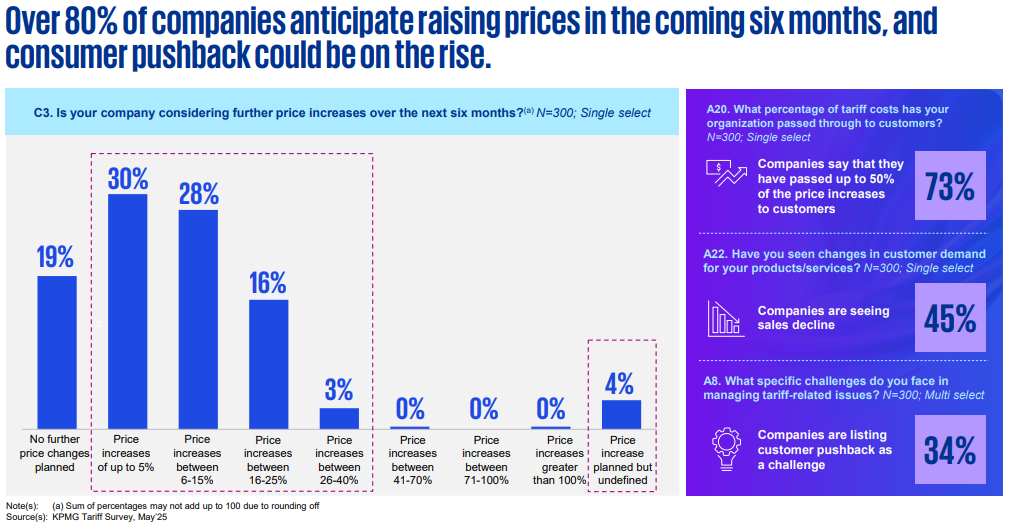
According to KPMG’s latest Tariff Pulse Survey, released on Tuesday in the US, 57% of US companies have seen gross margins fall due to tariffs, while 83% plan to raise prices within six months. The survey of 300 senior executives at firms with revenues over US$1 billion paints a picture of an American corporate sector under pressure but actively responding with technology upgrades, supply chain changes and strategic cost reviews.
“Businesses are navigating a trade environment that’s no longer defined by short-term volatility but by sustained disruption,” said Joe Lackner, advisory partner, industrial manufacturing at KPMG US. “They’re investing in automation, rethinking supply chains, and prioritising technology to protect margins and jobs — while preparing for longer-term shifts in cost structures, sourcing strategies, and global demand dynamics.”
Foreign sales and margins under pressure
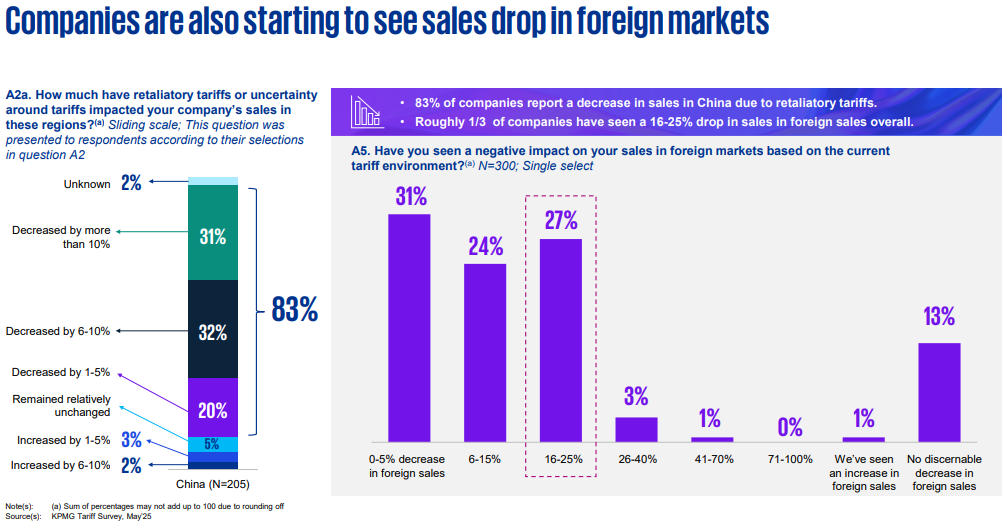
Nearly 60% of companies reported tariff-related margin compression, with about a quarter of respondents seeing margin declines above 6–10%. Sales into key foreign markets are also taking a hit: 83% of companies reported lower sales in China due to retaliatory tariffs, and roughly a third reported a 16–25% drop in foreign sales overall.
To contain the damage, many firms are pushing back on suppliers, renegotiating contracts, and adopting customs and duty management tools like post-payment audits, origin tracing, and entry-time filing.
Price increases expected — but consumer resistance is coming
While businesses are increasingly passing costs on to customers — up to 50% in some cases — consumer backlash has so far been muted. However, KPMG analysts suggest that may change as higher prices begin to hit household budgets.
“The full impact on consumers is likely still to come,” said Brian Higgins, advisory partner, industrial manufacturing at KPMG US. “Companies are modelling multiple scenarios, balancing pricing strategies with supply chain resilience and customer expectations. The leaders in this space are not just reacting but preparing now to compete in a more cost-sensitive, demand-volatile environment.”
Supply chain overhauls and delayed investments
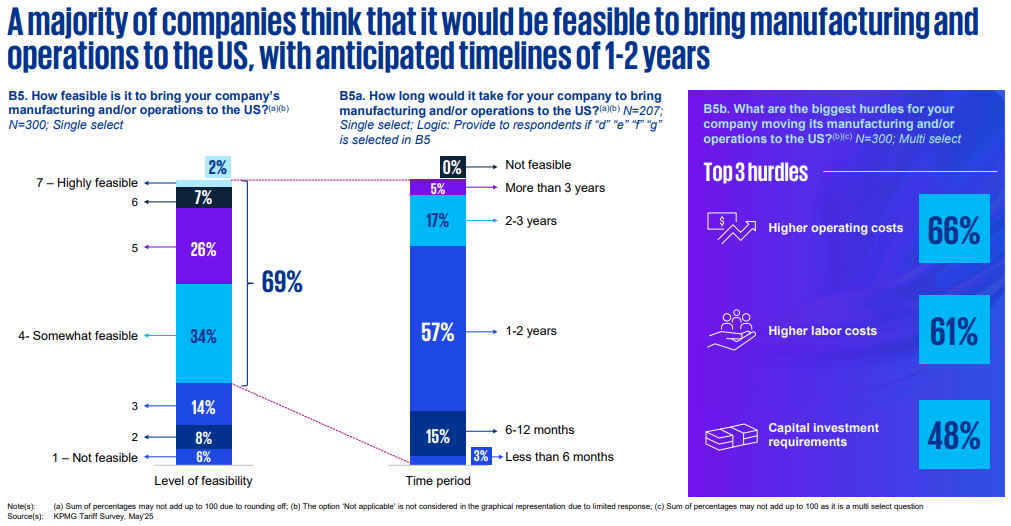
The survey found that 55% of businesses are already working to reconfigure their supply chains, with nearly half saying significant changes take at least 7–12 months to implement. While 69% see reshoring as feasible, many are grappling with higher labour and capital costs in the US.
Uncertainty is also causing delays in long-term planning, with over half of respondents postponing major capital investment decisions — some by up to a year — as they reassess future strategies under the new trade regime.
Automation over layoffs
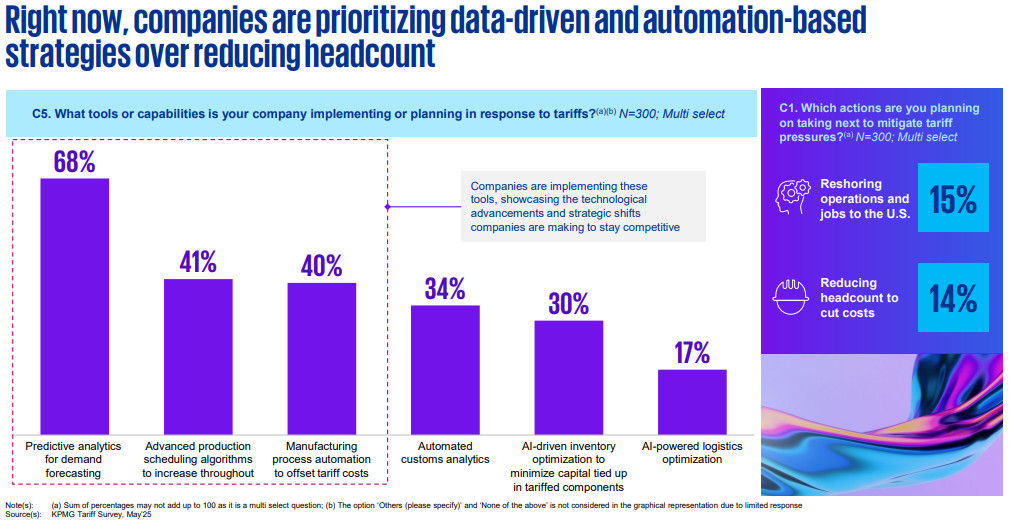
Despite these pressures, only 14% of companies plan to cut jobs. Instead, many are turning to AI and automation: 68% are using predictive analytics, 41% have automated production lines, and more than a third are applying AI to logistics and inventory management.
KPMG’s findings highlight how the new tariff landscape is forcing structural shifts in US industry — with global implications for supply chains, input costs and export dynamics that investors around the world, including in Australia, will be watching closely.