
Prescient Therapeutics Ltd (ASX:PTX, OTC:PSTTF), the Australian oncology biotech firm, has progressed its lead asset PTX-100 into a Phase 2 trial, targeting a critical need in the treatment of T-Cell Lymphomas (TCL). PTX-100, the only GGT-1 inhibitor currently in clinical development, represents promising new treatment options for this aggressive cancer.
In an updated analysis, Pitt Street Research analysts Stuart Roberts and Nick Sundich have raised their valuation for Prescient, citing the significant potential of PTX-100 in the Phase 2 trial. They highlighted the drug's promising Phase 1 results and the upcoming trial's importance in advancing the company's position in the oncology market.
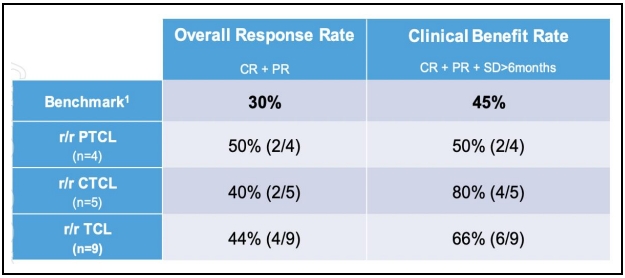
Phase 1 data results.
“T-Cell Lymphoma is among the deadliest forms of cancer, with overall survival in relapsed or refractory forms of the disease tending to be <1 year barring vehemently expensive stem cell transplantation,” the analysts wrote.
"But PTX-100 has shown strong potential in Phase 1, not just trouncing existing standards of care, but working in patients where previous treatments have failed.”
PTX-100 shows potential in treating T-Cell Lymphoma
PTX-100 is targeting an urgent need in the treatment of T-Cell Lymphomas, a deadly form of cancer with a historically poor prognosis.
The Phase 2 trial, which officially commenced in May, will focus on relapsed and refractory Cutaneous T-Cell Lymphoma (CTCL) and be a crucial step towards regulatory approval.
This trial is expected to be faster and smaller than it would have been with a broader TCL patient pool, with a targeted 40 patients for dose optimisation and safety evaluations.
A lucrative market opportunity
In the US alone, the market for T-Cell Lymphomas is estimated to include just 5,000-6,000 patients, a relatively small patient pool. However, Pitt Street highlighted the high cost of treatment, which could make PTX-100 a significant commercial opportunity.
"We think this could be a US$2.6 billion sales opportunity, which could lead to >US$500m in royalties under our model, assuming the same treatment price as Folotyn, which is US$450,000," the analysts noted.
The report also outlines the broader potential for PTX-100, noting that it may be applicable in other cancers treated with RAS-targeted therapies, a market that could encompass over 20% of all cancers. This would substantially expand PTX-100’s market reach beyond T-Cell Lymphoma.
Beyond PTX-100: Exploring CAR-T platforms
Beyond PTX-100, Pitt Street analysts pointed to the company's other assets, particularly its CAR-T platforms, CellPryme and OmniCAR, as catalysts for Prescient.
These platforms could assist in overcoming some of the limitations of current CAR-T treatments, such as high costs and post-infusion complications.
Even more important, according to the analysts, is the “investigation of PTX-100’s ability against other cancers that could be fought with RAS therapies – potentially over 20% of all cancers.” They emphasised the significant upside for Prescient if these platforms continue to show promise.
Updated valuation range and key risks
Pitt Street Research has raised its valuation range for Prescient Therapeutics, citing the continued progress of PTX-100 and the promise of its CAR-T platforms. The analysts have set a base case valuation of A$0.146 per share, or A$118 million, and a bull case valuation of A$0.203 per share, or A$163.2 million.
This is an increase from their previous valuation of A$0.116–0.163 per share, or A$93.5 million–A$131.6 million. The valuation places significant weight on PTX-100, accounting for 72% of the valuation, with the remainder attributed to CellPryme and the company’s net cash/debt position.
The analysts also highlighted key risks, including potential delays in clinical trials, regulatory hurdles, and the general risks associated with pre-revenue biotech companies. However, they remain optimistic about Prescient's future prospects, particularly if the current Phase 2 trial is successful.