
Constellation Resources Ltd (ASX:CR1) Ltd is positioning itself as a disruptor in Western Australia’s energy sector by targeting natural hydrogen and helium – low-cost, low-carbon alternatives to conventional fuels. With gas prices rising and domestic supply tightening, Constellation’s portfolio of three basin-scale projects – covering 88,000 square kilometres – could underpin a new supply solution. Notably, the Edmund-Collier Project has confirmed thermogenic hydrogen potential, validated through CSIRO-backed geotechnical studies.
The company is uniquely placed to capitalise on emerging policy and infrastructure support, including recent legislation enabling hydrogen blending into the Dampier to Bunbury Natural Gas Pipeline (DBNGP). Early exploration success and access to critical gas pipeline corridors give Constellation a fast-track pathway to market. Combined with global investor interest in natural hydrogen and strategic landholdings in underexplored regions, Constellation’s early-stage valuation presents a high-leverage opportunity for investors seeking exposure to Australia’s evolving energy transition.
Project overview and location advantage
Constellation’s three large-scale projects are strategically located across Western Australia, adjacent to key gas pipeline infrastructure including the DBNGP and the Goldfields Gas Pipeline. The acreage spans 88,000 square kilometres and includes the Edmund-Collier, Ashburton, and Yerrida Basins, all prospective for thermogenic and radiogenic hydrogen as well as helium. These locations were selected for their geological signatures consistent with hydrogen-generating systems – organic-rich source rocks, seals, reservoirs and migration pathways.
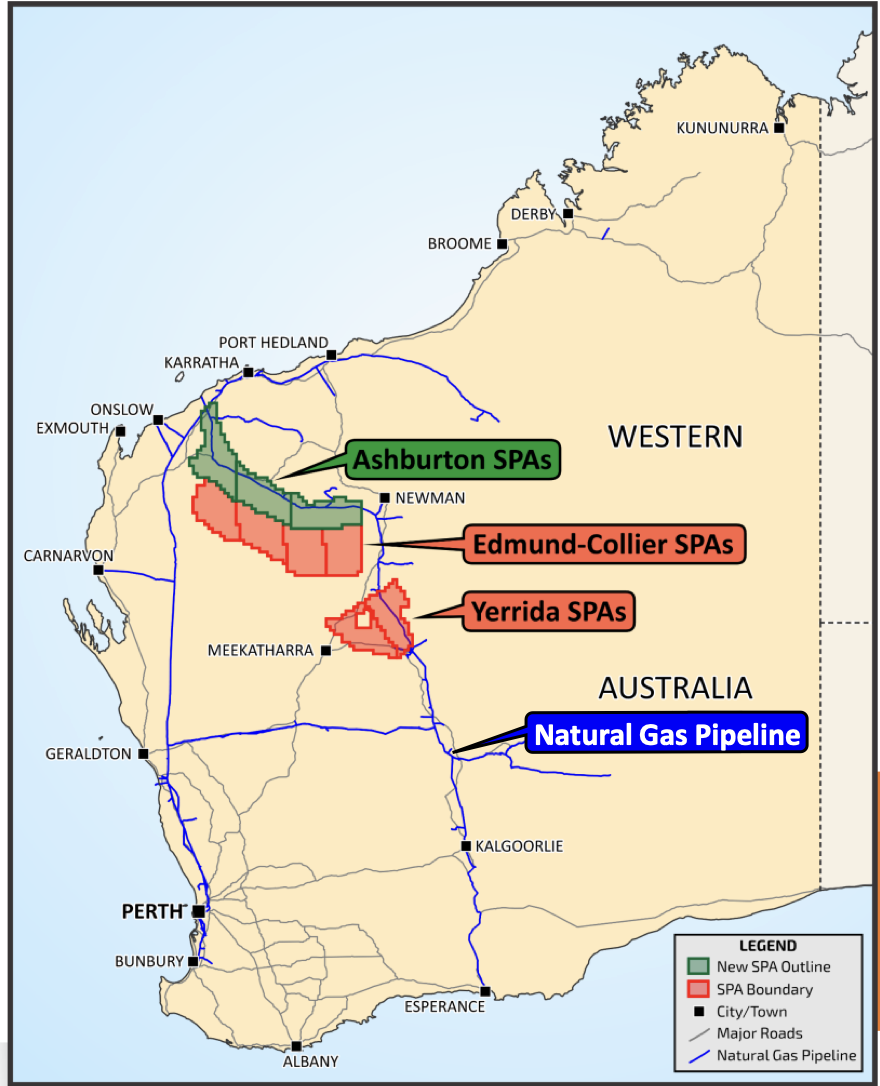
With no existing domestic producers of naturally occurring hydrogen, Constellation’s acreage represents a first-mover opportunity. The company’s proximity to major industrial consumers, such as iron ore operations exploring green steel production, strengthens its potential route-to-market advantage. Should commercial quantities be confirmed, the projects could significantly contribute to Western Australia’s decarbonisation objectives while supporting energy security.
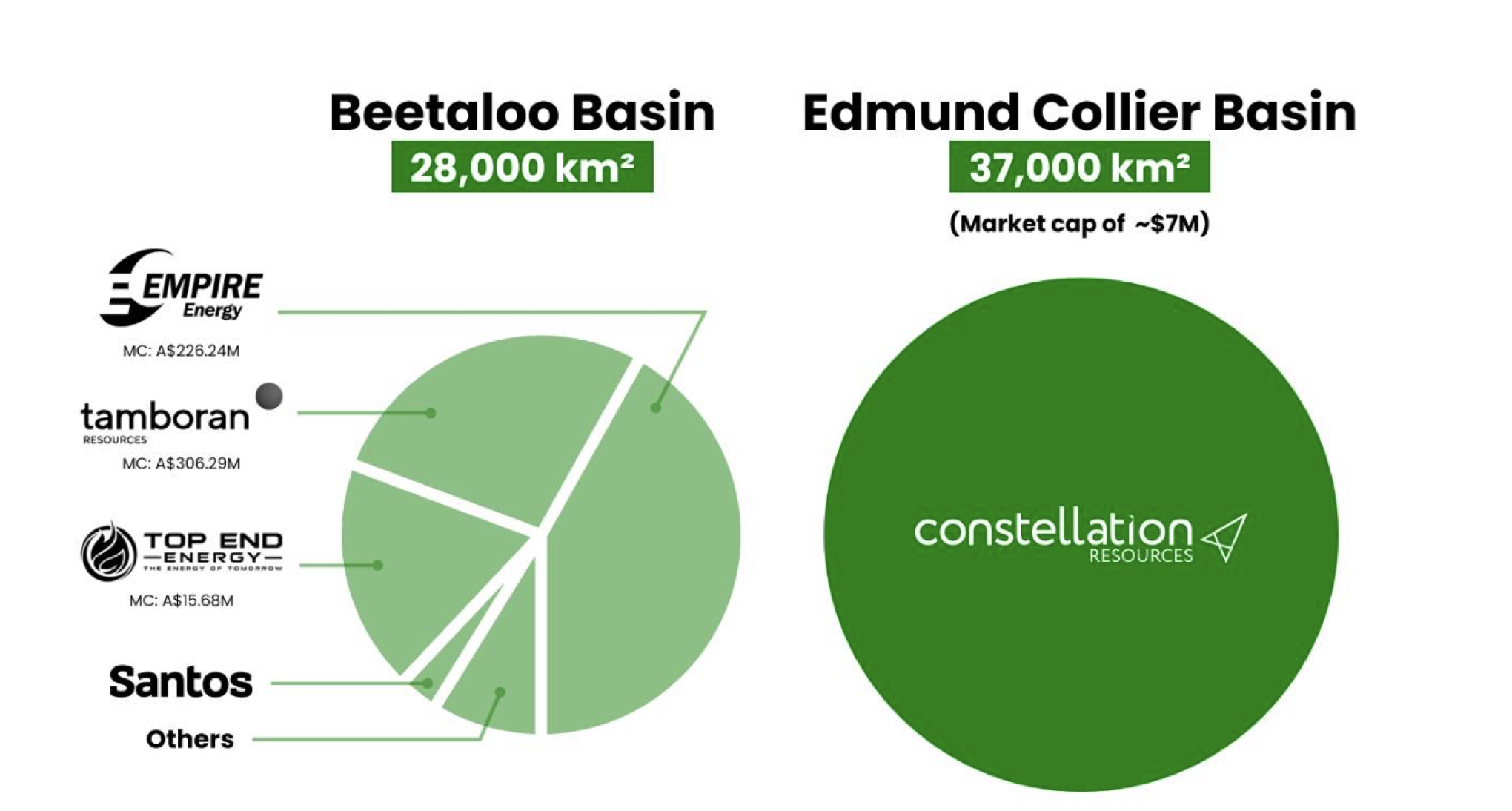
Technical confirmation at Edmund-Collier
In May 2025, Constellation confirmed thermogenic hydrogen potential at Edmund-Collier following analysis of drill samples. Thermal maturity testing conducted in partnership with the Commonwealth Scientific and Industrial Research Organisation (CSIRO) revealed that organic-rich shale units had reached temperatures between 250°C and 450°C, optimal for thermogenic hydrogen generation. The Total Organic Carbon (TOC) values from multiple core samples ranged from 3.08% to 5.76% – well above the 2% threshold typically used to assess source rock quality.
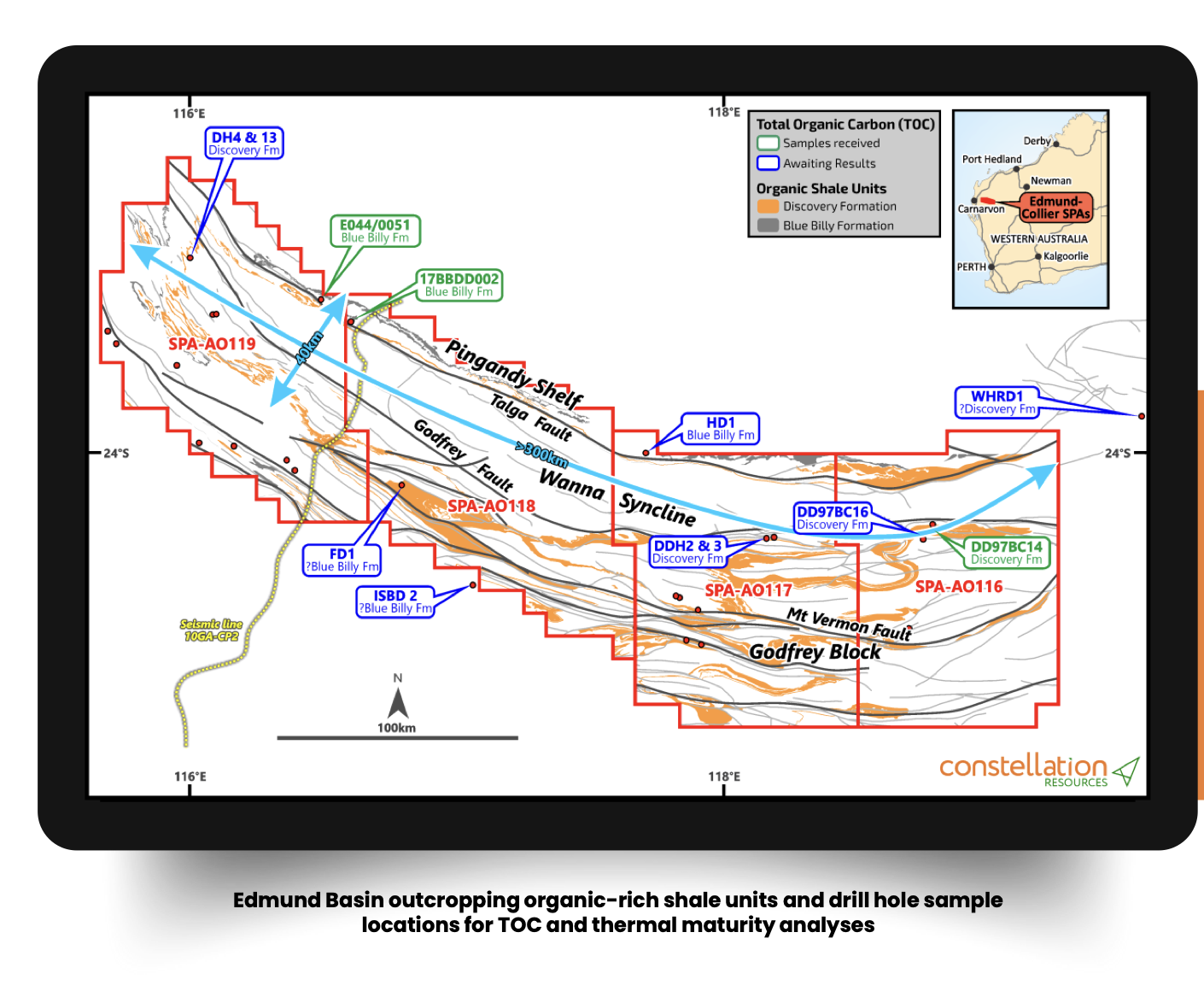
These results are derived from only three of eleven planned drill holes, with the remainder still pending. The shales were found to be laterally extensive, stretching over 300 kilometres east-west and 40 kilometres north-south. Importantly, the company believes that the deeper sections of the Wanna Syncline within this basin may yield even more prospective hydrogen accumulations once drill-tested.
Exploration program and development pathway
Constellation is executing a staged exploration strategy, beginning with soil gas surveys across its Special Prospecting Authorities (SPAs). These will target surface hydrogen and helium seepages, which are low-cost and environmentally benign to detect. The upcoming Q3 2025 program is considered a major catalyst, with positive results likely to drive permitting of formal exploration licences.
Following that, the company plans infill sampling, geophysical mapping and the drilling of exploration wells akin to diamond drilling in mineral projects. The final stage involves gas reserve confirmation, feasibility studies, and construction of production wells and facilities. The small surface footprint required for a natural hydrogen project – primarily compressors, storage tanks, and a pipeline link – enhances the commercial appeal and reduces environmental impact.
Market outlook and hydrogen infrastructure
The Western Australian Government has actively promoted renewable hydrogen, commissioning a hydrogen blending plant in Jandakot in 2022, capable of mixing up to 10% hydrogen into existing gas networks. Reports from the Australian Gas Infrastructure Group (AGIG) support further integration, detailing safe thresholds for hydrogen inclusion in major pipelines like the DBNGP.
As such, infrastructure is already adapting for hydrogen transport. With Constellation’s projects situated near these pipelines, there is potential for rapid monetisation of hydrogen discoveries. Moreover, Constellation aligns with state policy to develop a competitive domestic hydrogen industry, particularly for use in steelmaking, power generation, and energy storage.
Competitive positioning and investment interest
Natural hydrogen is gaining traction globally as a cost-competitive and clean alternative to green and grey hydrogen. The resource is naturally replenishing, requires minimal processing, and produces negligible emissions. High-profile backers of the sector include Bill Gates, Jeff Bezos, BP, and Rio Tinto. In Australia, Koloma recently raised A$36.3 million for hydrogen exploration, while HyTerra Ltd secured A$22 million from Fortescue.
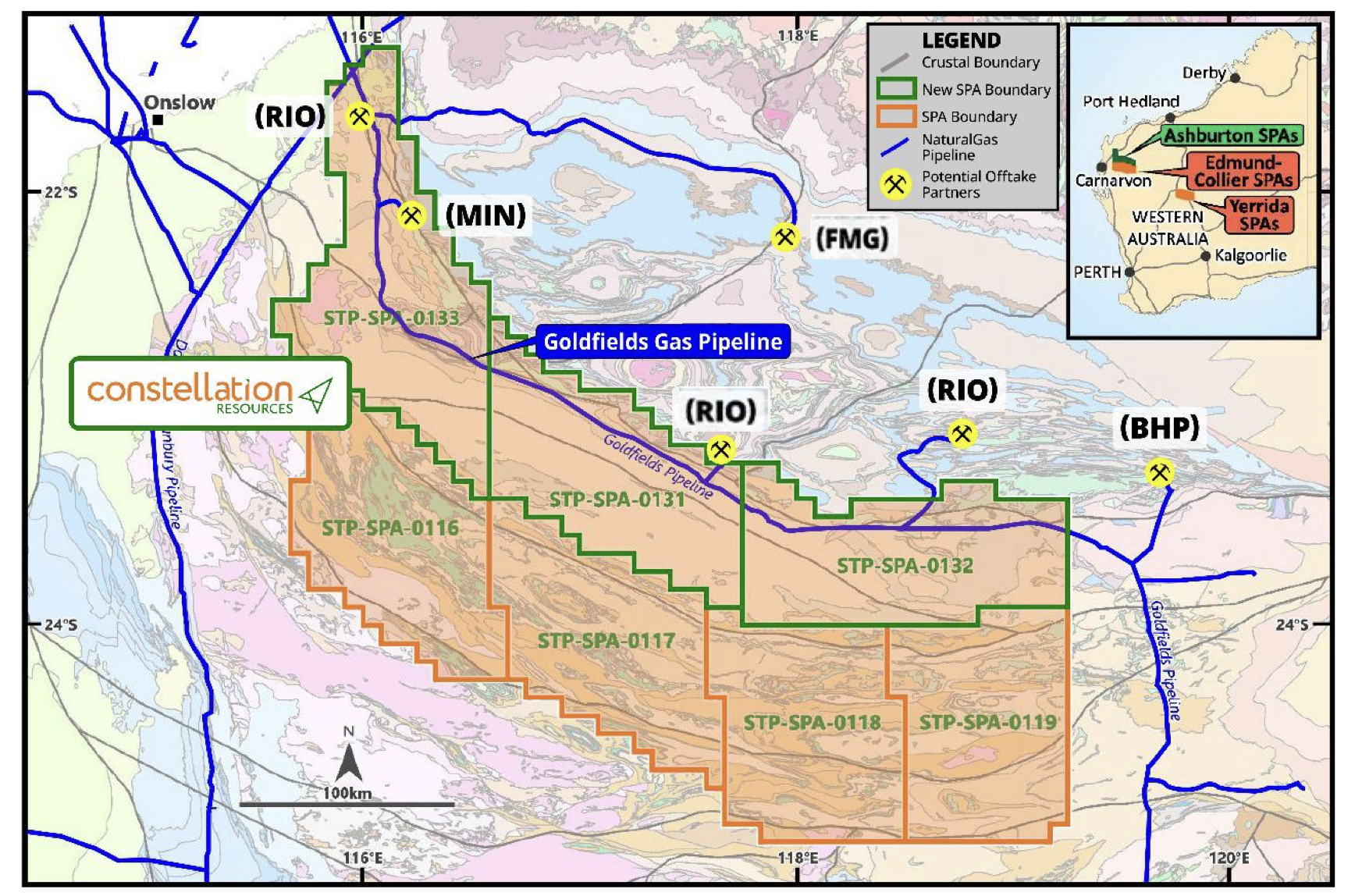
Constellation, with a modest A$7.2 million market cap and confirmed thermogenic potential, is seen as undervalued in comparison. Its 2025 research agreement with the CSIRO further legitimises its position as a technically grounded early-stage explorer in an emerging resource class.
Hydrogen competitiveness and environmental advantage
Natural hydrogen offers a distinct competitive advantage over green and grey hydrogen based on cost, energy intensity, carbon footprint, and water usage. According to comparative data sourced from Koloma, the carbon intensity of natural hydrogen is 0.1 kilograms of CO₂ equivalent per kilogram of hydrogen – dramatically lower than green hydrogen (9 kg CO₂e/kgH₂) and grey hydrogen (55 kg CO₂e/kgH₂).
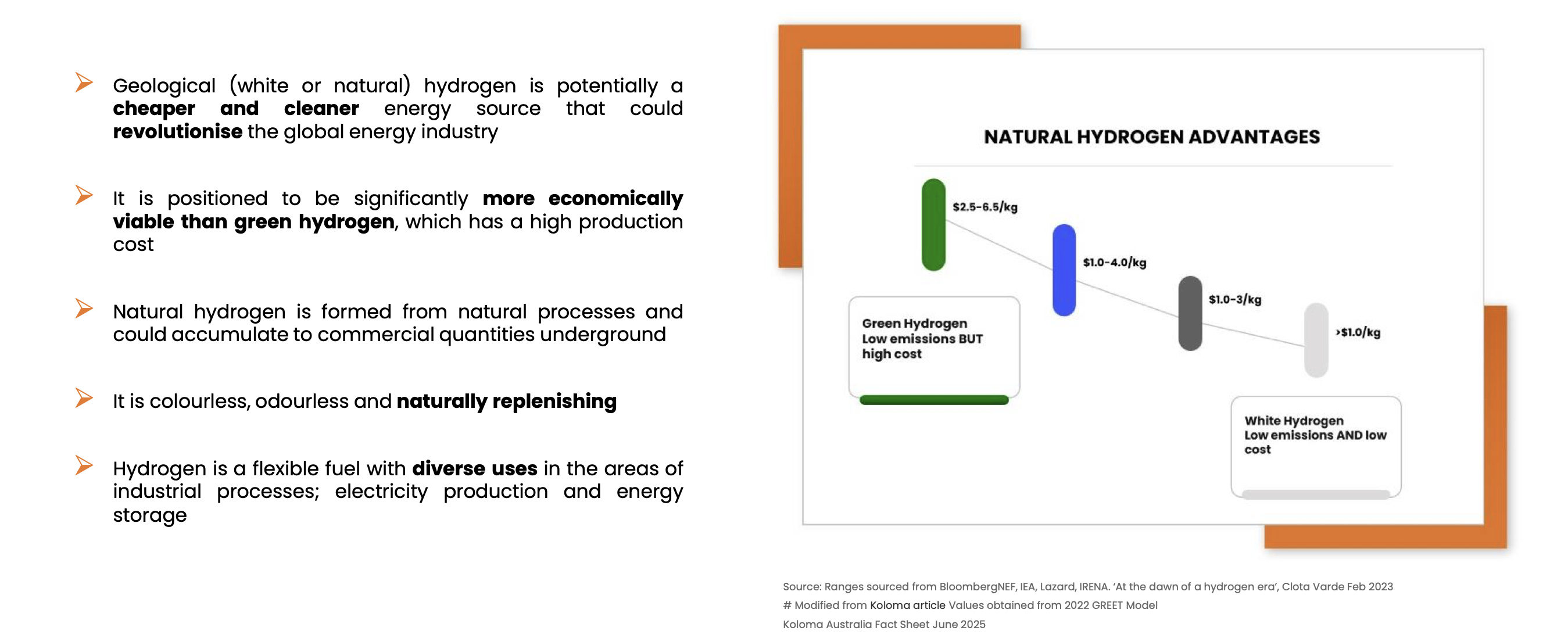
Natural hydrogen also requires only 3 kilowatt-hours of energy per kilogram of hydrogen produced, versus 46 kilowatt-hours for green hydrogen. Water usage and land footprint are similarly minimal. The combination of lower capital and operating costs with a much smaller environmental impact positions natural hydrogen as an attractive resource for future energy markets – particularly in industrial and grid-scale applications.
Global hydrogen demand outlook
The global hydrogen market is forecast to reach US$410.6 billion by 2030, growing at a compound annual growth rate of 7.8%. Demand for low-emission hydrogen grew 10% in 2023 and could rise to more than 6 million tonnes per annum by the end of the decade. Much of this growth is driven by the refining, steelmaking, and energy storage sectors – all relevant to Constellation’s proximity to Western Australia’s industrial centres.
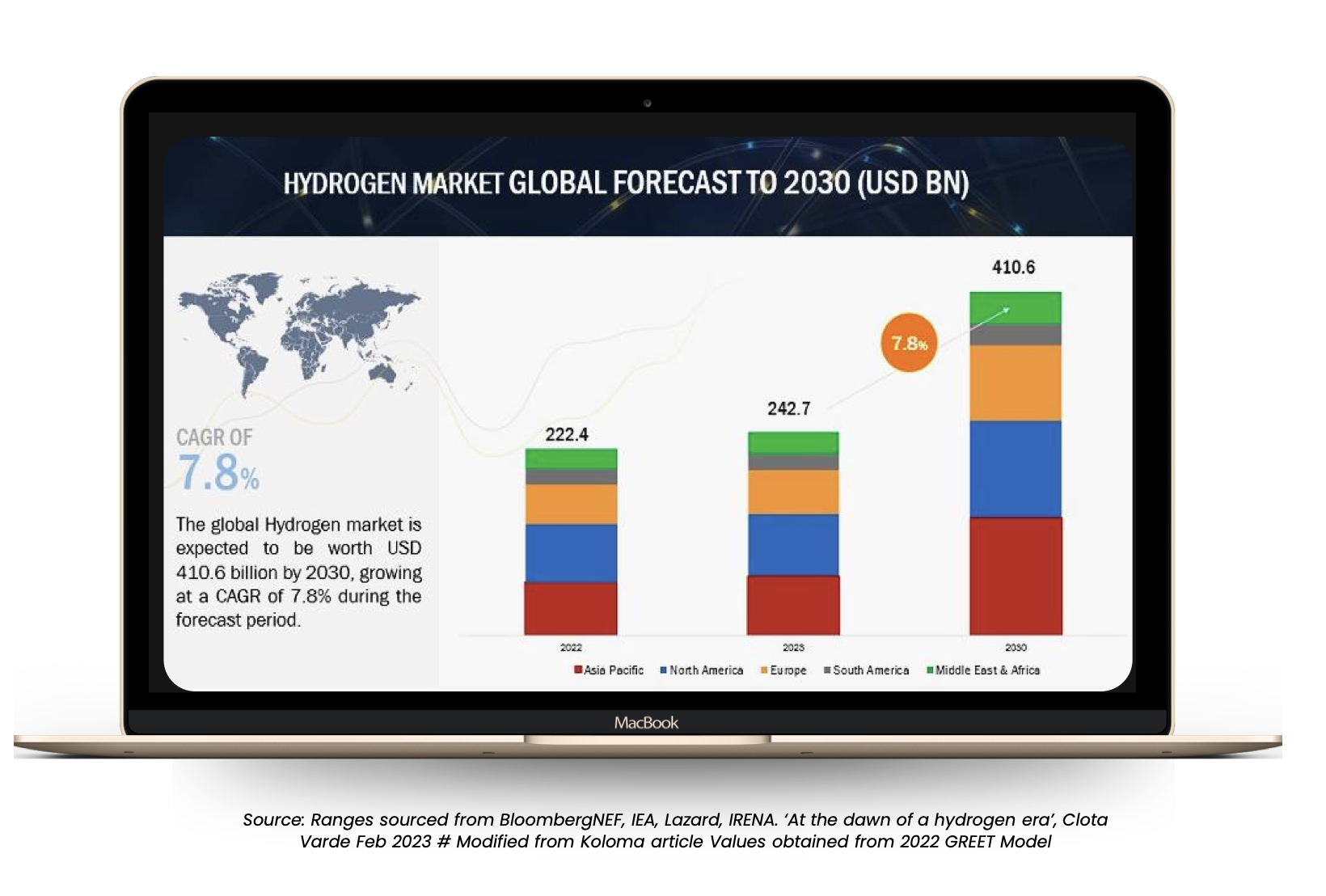
While current supply is largely derived from carbon-intensive grey hydrogen, the shift towards cleaner sources is creating strong demand for naturally occurring hydrogen. Western Australia is aiming to position itself as a global supplier through state-backed infrastructure and supportive policy frameworks, reinforcing the market opportunity for CR1’s hydrogen projects.
Board and management expertise
Constellation Resources is led by a board with extensive experience across mining, geology, finance, and project development, reinforcing confidence in its technical and strategic execution. Chairman Ian Middlemas has a notable track record, including senior roles with Normandy Mining and leadership of several ASX-listed explorers. Managing Director Peter Woodman is a geologist with over 35 years’ experience, having overseen major project acquisitions and exploration programs both domestically and internationally.
Technical Director Peter Muccilli brings 28 years of resource development experience, previously leading Mincor Resources and managing the Cassini nickel discovery. Non-executive directors Robert Behets and Mark Pearce contribute deep expertise in mineral exploration, corporate governance, and capital markets. Supporting the team are geological and geophysical consultants Iain Copp and Tony Rudge, both with more than two decades of experience in petroleum and mineral exploration. The team’s depth positions the company well for its exploration objectives and long-term project development.
Corporate structure and capital position
As of March 31, 2025, Constellation held A$800,000 in cash with no debt, and a market capitalisation of A$7.2 million based on a share price of A$0.115. The company has 63,039,225 shares on issue and 7,750,000 options. Ownership is relatively concentrated, with the top 20 shareholders controlling 57% of issued capital.
Constellation has also launched a non-renounceable entitlement offer, allowing shareholders to subscribe for one new share for every three existing shares held, at an issue price of A$0.12. The offer is expected to raise approximately A$2.52 million before costs, supporting ongoing exploration activity. This capital structure supports a lean, exploration-focused model with targeted funding to advance high-impact fieldwork across its basin-scale projects.
Milestones achieved and forward catalysts
Constellation has advanced several critical early-stage milestones. Thermogenic hydrogen potential has been confirmed at the Edmund-Collier Project. Three out of eleven diamond drill holes returned Total Organic Carbon (TOC) averages between 3.59% and 5.76%, exceeding thresholds considered viable for hydrogen generation. These results were backed by thermal maturity assessments conducted by CSIRO.
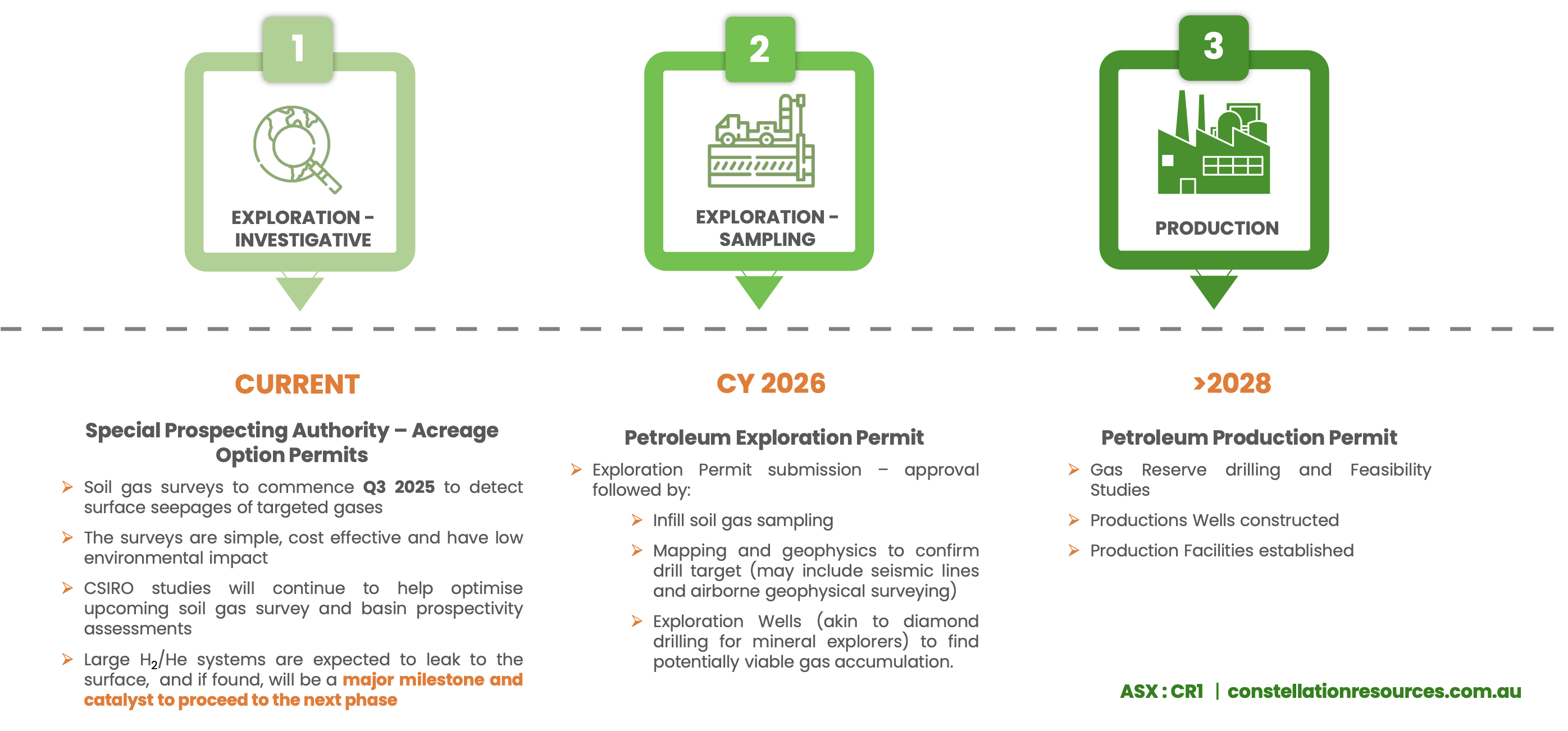
The company’s ongoing CSIRO research partnership underpins future technical validation, while government permits and landholder agreements are being finalised for expanded exploration. The Q3 2025 soil gas sampling program is a key upcoming catalyst – targeting surface hydrogen and helium seepage across the company’s vast landholdings. Successful identification of active seepage would significantly de-risk further exploration and support permit advancement to drill-ready stage.