
Prescient Therapeutics Ltd (ASX:PTX, OTC:PSTTF) is aiming to establish new frontiers in cancer care, with a focus on innovative therapies that target the most challenging and high-mortality cancers. The clinical-stage company is addressing cancers driven by rare mutations, such as RAS (a significant factor in the development and progression of various cancers, including lung, pancreatic, and colorectal cancers) — found in about 22% of all cancers.
Its flagship treatment, PTX-100, is breaking new ground in targeted therapy, while its cell therapy platforms, including CellPryme and OmniCAR, offer significant potential to enhance the effectiveness of immunotherapies. With substantial progress in clinical trials and an expanding pipeline, Prescient is positioning itself as a leader in the rapidly evolving field of personalised oncology.
PTX-100: A promising approach to cancer therapy
First-in-class enzyme inhibition
At the heart of Prescient’s pipeline is PTX-100, a first-in-class targeted therapy designed to inhibit the enzyme geranylgeranyl transferase-1 (GGT-1). This enzyme is pivotal in activating small GTPases, which include the RAS family of proteins. By blocking GGT-1, PTX-100 disrupts the RAS pathway, interfering with the growth and spread of cancer cells — making it one of the only GGT-1 inhibitors in clinical development and a promising candidate for a range of cancers, particularly those with RAS mutations.
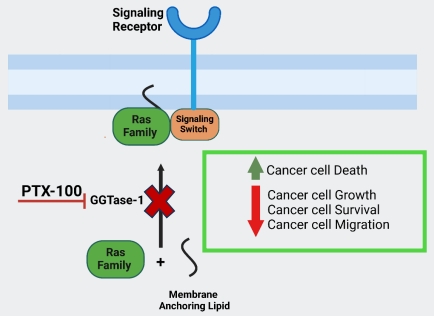
Mutations in the RAS protein family, such as KRAS, NRAS, and HRAS, are responsible for various cancers, including lung, colorectal, and pancreatic cancers. PTX-100’s ability to target these mutations represents a significant advancement in cancer therapy, offering hope for patients who currently have limited treatment options.
Clinical success and FDA designation
PTX-100 has received key regulatory designations from the US Food and Drug Administration (FDA), including Orphan Drug Designation for T-cell lymphomas and Fast Track Designation for relapsed or refractory mycosis fungoides, a common subtype of cutaneous T-cell lymphoma (CTCL). Prescient’s Phase 2a clinical trial of PTX-100 in CTCL is under way, with up to 40 patients enrolled to assess both safety and efficacy.
Encouraging early results suggest PTX-100’s potential to outperform existing therapies, with a favourable safety profile that is crucial for cancer patients who often experience significant side effects with conventional treatments. In Phase 1b trials, PTX-100 showed a 45% response rate, a 64% clinical benefit rate, and a duration of response of 10.7 months, with only 4% of patients experiencing serious adverse events.
This compares favourably to the benchmark response rate of 30%, with a 45% clinical benefit rate, response duration of 9-13 months, and adverse event rates under 30%. Citius Pharmaceuticals Inc.’s Lymphir, a treatment for CTCL, showed a 36% response rate, a shorter duration of response (6.5 months), and serious adverse events in 36% of patients.
Addressing an unmet need in T-cell lymphomas
T-cell lymphomas, including CTCL, represent a high-mortality category of cancer with very few effective treatment options, particularly for patients with relapsed or refractory cases. In the US alone, there are around 3,000 new cases of CTCL each year, and this number is rising. The broader T-cell lymphoma market presents an even greater opportunity, with more than 27,000 new cases annually across the major markets.
Despite the severity of the condition, therapeutic options are limited, creating a compelling market opportunity for PTX-100. With the eight major markets for CTCL expected to reach US$605 million by 2030, and the broader T-cell lymphoma market potentially surpassing US$1.8 billion by the same year, PTX-100 is well-positioned to capture a significant portion of this demand — particularly if the Phase 2 trials continue to show positive outcomes.
A focus on accelerated approval
Prescient is targeting an accelerated regulatory pathway for PTX-100. With FDA Fast Track Designation, the company aims to expedite PTX-100’s progress through clinical trials and potentially shorten the timeline to market authorisation.
If these efforts are successful, PTX-100 could become a key treatment option for CTCL, a largely underserved market with limited effective therapies for patients with relapsed or refractory cases.
Prescient’s ongoing engagement with the FDA also includes discussions about a potential Phase 2b registration study, which could pave the way for PTX-100’s commercial launch.
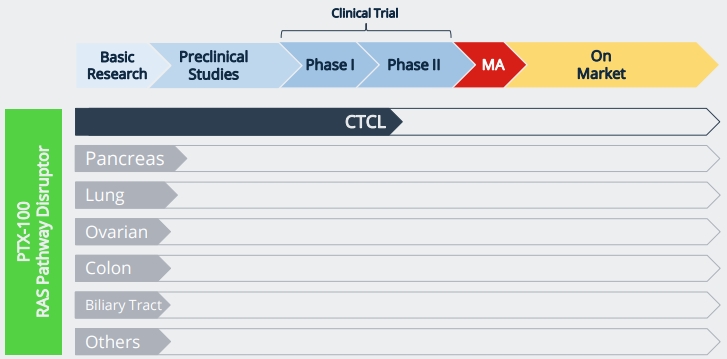
Potential for accelerated approval for PTX-100 (CTCL)
Supporting cancer therapies with CellPryme and OmniCAR
While PTX-100 is Prescient’s flagship asset, the company’s broader portfolio of cell therapies also holds significant potential. Prescient has developed two innovative technologies, CellPryme-M and CellPryme-A, designed to enhance the efficacy of adoptive cell therapies like CAR-T cells. In addition, the company’s OmniCAR platform offers a unique approach to immune cell targeting, enabling a more flexible and controlled immune response against multiple tumour antigens.
Together, these therapies aim to provide more personalised and effective cancer treatment options by leveraging the body’s immune system to selectively target and eliminate cancer cells.
CellPryme-M: Enhancing T-cell function
CellPryme-M is a novel technology that enhances the performance of adoptive T-cell therapies by shifting T-cells towards a central memory phenotype. This shift improves the persistence of the T-cells in the body and increases their ability to find and penetrate tumours.
CellPryme-M’s non-disruptive, 24-hour manufacturing process offers significant advantages in producing more potent and durable T-cells. This platform could revolutionise the treatment of various cancers by improving the long-term effectiveness of CAR-T therapies, potentially reducing the need for repeated treatments.
CellPryme-A: Overcoming tumour resistance
While adoptive T-cell therapies have shown remarkable success, they often face challenges in penetrating the tumour microenvironment. Tumours can create an immunosuppressive environment that limits the effectiveness of CAR-T cells.
Prescient’s CellPryme-A is designed to address this issue by reducing suppressive regulatory T-cells within the tumour, which in turn allows CAR-T cells to expand and function more effectively in the tumour microenvironment. When used in combination with CellPryme-M, CellPryme-A further enhances CAR-T cell activity, improving tumour-killing capabilities and overall host survival.
OmniCAR: Universal T-cell receptor platform
OmniCAR is another promising platform in Prescient’s arsenal. This universal immune receptor platform enables controllable T-cell activity and multi-antigen targeting with a single-cell product.
OmniCAR works by decoupling antigen recognition from T-cell signalling, allowing for greater flexibility in targeting a variety of tumour antigens. This modular CAR system allows for on-demand T-cell activation and can be used to target multiple antigens simultaneously or sequentially, making it a highly versatile and adaptive tool in cancer immunotherapy.
Currently in preclinical development, OmniCAR has the potential to significantly enhance the efficacy of CAR-T therapies, offering a customisable and dynamic approach to treating a range of cancers.
Strong market potential and milestones ahead
Addressing cancer’s biggest challenges
Prescient’s focus on cancers with high unmet needs, such as T-cell lymphomas, positions the company for success in the oncology market. The ability of PTX-100 to target RAS mutations opens up the potential for the therapy to be applied to a broad range of cancers, including those of the pancreas, lung, and colon. With 22% of all cancers involving RAS mutations, the market opportunity for PTX-100 is significant.
The company’s experienced management team, led by CEO James McDonnell, brings deep expertise in oncology drug development gained in global companies such as Bristol-Myers Squibb, Telix, and CSL.
Key milestones and future outlook
Prescient is progressing rapidly through its clinical development phases, with several key milestones on the horizon that will drive value and accelerate PTX-100’s path to market. Notably, the company has already completed the dosing of the first patient in its Phase 2a trial for CTCL (Q2).
Moving forward, Prescient expects to achieve several significant milestones, including:
- EU Orphan Drug Designation (Q3)
- Activation of first US site for PTX-100 (Q3)
- Activation of first European site (Q3/Q4)
- Continuous review of data during the Phase 2a trial (Q4/Q1)
- Validation of the OmniCAR receptor and targets for AML (End Q4/Q1)
- Ongoing discussions with potential channel partners for CellPryme-M
As it advances through critical clinical trials, Prescient's innovative approach offers hope for patients with cancers that currently have limited treatment options. With promising clinical results, strong regulatory support, and a growing pipeline, the company is poised to play a leading role in the future of personalised cancer medicine.