
BioHarvest Sciences Inc. (NASDAQ:BHST) earlier this week announced a new contract targeting the plant-based fragrance compound market, using its proprietary botanical synthesis platform.
CEO Ilan Sobel said the contract focuses on a rare plant under threat from overharvesting and habitat loss. BioHarvest highlighted that the market for natural, plant-derived fragrance ingredients is growing in response to increasing consumer awareness.
Proactive: Joining me now is Ilan Sobel. He is the CEO of BioHarvest Sciences. Ilan, it's great to see you again. How are you?
Ilan Sobel: It’s always a pleasure to talk with you. I'm feeling great after a very significant announcement today.
Yes, it is significant. You and I have talked about the work you're doing on the CDMO side — the services division. You mentioned several industries you wanted to get into. One you didn’t mention is what you’ve announced today: the fragrance industry. Tell me a bit about this new contract.
The fragrance industry, as we all know, is a multi, multi-billion dollar industry. What we're seeing is that the segment focused on natural plant-derived compounds is growing. People are starting to care more, not just about what topical solutions they use, but also about the fragrances they put on their skin.
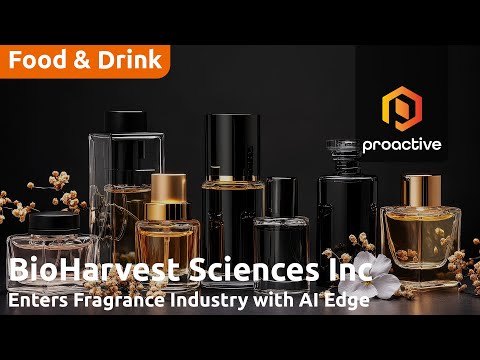
We've signed a deal with a very strategic partner for a significant opportunity in the plant-based fragrance compound market. This specific plant is quite rare and under significant threat from overharvesting and habitat loss. BioHarvest is staying true to its North Star — delivering unique, life-changing compounds while preserving the planet for future generations.
You were able to find this particular plant using your AI platform. Can you talk about that and its significance?
We've built significant AI capability across our biological ecosystem. One key area is in the discovery stage. We used AI to identify the specific plant species for this compound. It's not just about picking one plant — we used AI to compare multiple species and determine the optimal one for our tissue culture work and bioreactor-based cell growth.
This will be done in two stages. I know there’s an NDA for stage one, but can you give us a sense of the rollout and the revenue potential?
Yes, it’s a sensitive, high-value space. That’s why strict NDAs are in place. Stage one is similar to our other contracts — like those with a Nasdaq-listed pharmaceutical company and Tate & Lyle. We start by sourcing the plant and doing tissue culture work in solid media, focusing on a specific compound. Once successful, we lock the cell bank so we never need to go back to the plant.
Stage two involves growing the cells in liquid media — first in small bioreactors, then scaling to medium and eventually industrial-scale bioreactors, over 1,200 liters. This gives us the cost efficiency and scale needed to generate significant royalty margins.
Another exciting development. Thanks, Ilan, and congratulations.
Thanks, Steve. It’s great to show the breadth of our botanical synthesis platform. We can produce many types of plant-based compounds. This helps shareholders and investors understand the impact we can have on major, billion-dollar industries.
Quotes have been lightly edited for style and clarity