
Sona Nanotech Inc (CSE:SONA, OTCQB:SNANF) chief medical officer Dr Carman Giacomantonio joined Proactive to discuss a critical development in the company’s gold nanorod cancer therapy.
Dr Giacomantonio talked about the company’s progress as it moves toward its first-in-human clinical trial for patients with melanoma that has not responded to standard immunotherapy.
The company recently passed endotoxin testing, confirming the gold nanorods are free from contaminants and safe for clinical application. This milestone clears the path to begin a feasibility study involving ten melanoma patients. These individuals will have previously received, but not responded to, standard immunotherapy.
Proactive: All right, welcome back inside our Proactive newsroom. And joining me now is Dr Carman Giacomantonio. He is the Chief Medical Officer for Sona Nanotech. Doctor, how are you? Good to see you again.
Dr Carman Giacomantonio: Great. Good to see you as well.
So yeah, it's a good day today. I know we've had some recent news out regarding your gold nanorod trial. We'll get to the news in just a second, but maybe you can remind everyone what the company is trying to do here.
Yeah. So what we've done is we've used gold nanorods — nanosized rods, 60 nanometers by 50 nanometers — to generate hyperthermia in the tumor core or microenvironment. These rods are injected directly into the tumor microenvironment, distributing through it. Then we pass a near-infrared light through the tumor. The light energy is converted by the gold nanorods to heat. That thermal conversion is the trigger for immunotherapy. It creates a cell death process called apoptotic cell death. As those cells die, the immune system, which deals with cellular debris, is exposed to complex and novel antigens from the tumor. This triggers an immune response.
Okay. So you've got to get to certain stages here. You most recently announced that you've cleared endotoxin testing. Maybe explain what this is and what this step means.
Yeah. The gold nanorods are prepared here in Nova Scotia. When they're packaged, they need to be tested to ensure there's no contaminant. Endotoxin is the toxic part of a bacteria — the part that makes people sick during an infection. If the gold contained any endotoxins, it wouldn’t be safe for human trials. Our results came back clear of any endotoxins, which means we're ready to move into the next phase of research.
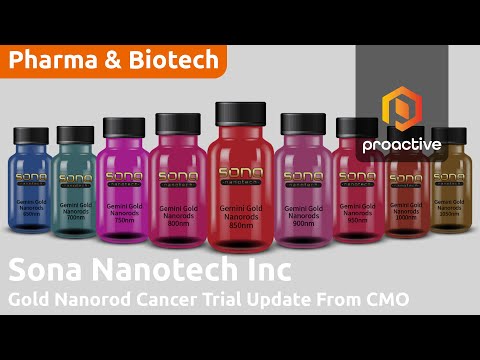
And that's the first-in-human clinical study. Maybe explain how this is going to work and the timing around it.
We're very excited. This is a feasibility study — it’s never been done before. The first study will target ten patients with melanoma that has spread to or just beneath the skin. These patients will have already been treated with standard immunotherapy but didn’t respond. A research organization will select patients. Once enrolled, we’ll inject their tumors and treat them with targeted hyperthermia. The goal is to demonstrate that the treatment is safe, well-tolerated, and feasible in a clinical setting. A substudy will evaluate the tumor response. We'll follow patients for 28 days, tracking any change in the tumor’s size or shape. We’ll biopsy tumors before treatment, during, and at the end if there’s residual tumor. This will show if we've initiated an immune response. Patients can continue their current immunotherapy during the study.
And then obviously you'll take data from there and decide on next steps.
Exactly. That data is our window to the next phase — a larger pilot study. If this initial study demonstrates safety and some efficacy in nonresponsive tumors, it gives us the runway for future development.
Quotes have been lightly edited for clarity and style