
Provaris Energy Ltd continues to take big steps into the carbon transport market. In its latest update to market, the company highlighted its partnership with energy infrastructure heavyweight Yinson Production to develop large-scale liquid carbon dioxide (LCO₂) storage and shipping solutions.
With global emissions hitting record highs in 2024—up 0.8% to 37.8 Gt CO₂—governments and industry are under pressure to invest in Carbon Capture and Storage (CCS) to meet climate targets. But while CO₂ capture tech has improved, getting that captured carbon to where it needs to go remains a bottleneck.

That’s where Provaris and Yinson see an opportunity.
The two companies have signed a fully funded joint development deal to design and commercialise a new class of CO₂ tanks that can hold significantly more than the 7,500 cubic metre limit of most current vessels.
Bigger tanks, lower costs
The goal is simple: bigger tanks mean fewer trips, lower costs, and more efficient operations. Provaris is bringing its proprietary tank design and fabrication methods to the table, while Yinson—already operating nine FPSOs and reporting US$1.6 billion in revenue last year—offers capital, technical support and a fast track into the commercial CCS market.
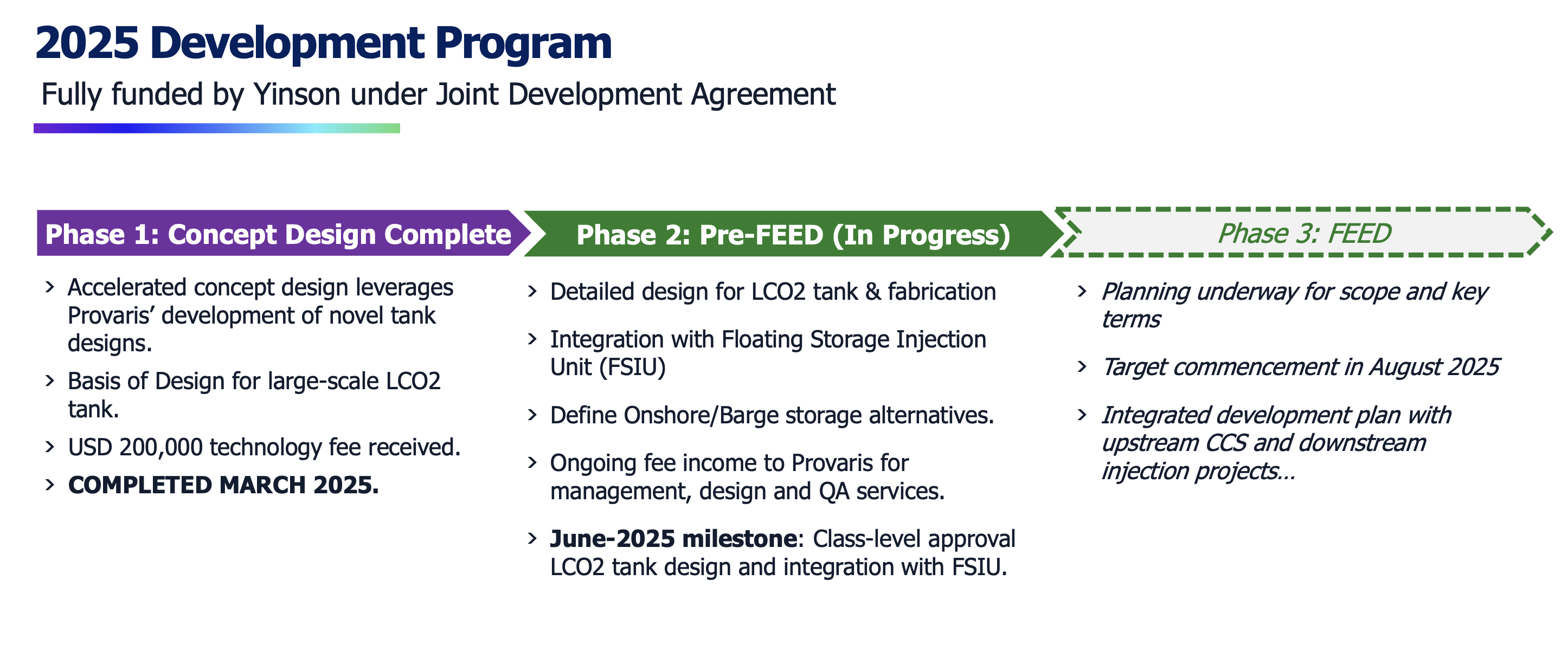
The design work is already underway, with Provaris completing the concept phase in March and pocketing a US$200,000 tech fee. The next milestone is expected in June, with class-level approvals for the tank design. That would pave the way for the Front-End Engineering and Design (FEED) phase to kick off in August.
Real-world project in the pipeline
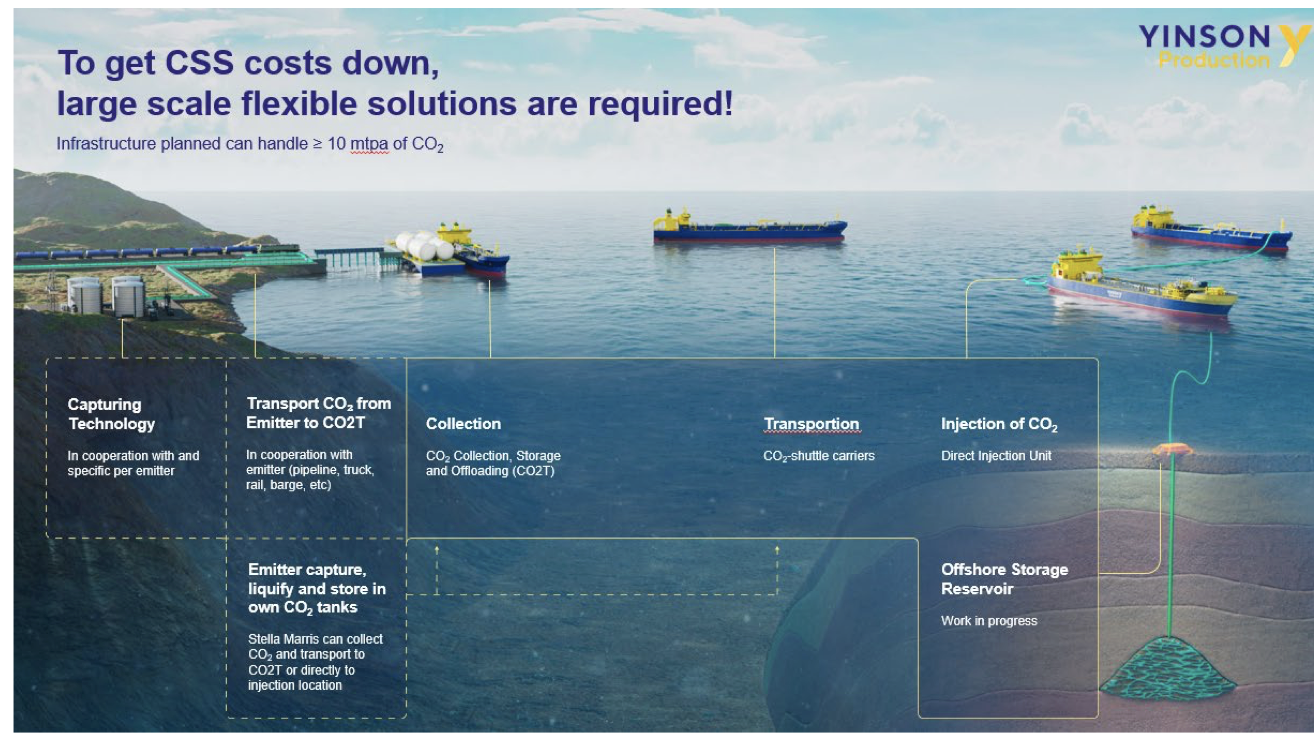
The partners aren’t just designing for the sake of it—they’ve got a real project lined up. Yinson’s Stella Maris CCS development in Norway, including the 10 million tonnes per annum Havstjerne storage reservoir, offers an early commercial use case. The project is backed by Harbour Energy and aims to be part of Europe’s growing CCS network.
That gives Provaris a clear pathway to getting its tank design into actual service.
Tackling an industry bottleneck
Current CO₂ shipping tech is based on “Type C” tank designs, which top out at around 7,500 cubic metres before steel thickness becomes unmanageable. But Provaris has invested in layered tank designs and automated manufacturing processes that could break through that barrier.
If successful, this could significantly lower both the upfront capital costs and day-to-day running costs of CO₂ shipping—an important factor as industries grapple with carbon compliance costs and new policies like the EU’s Carbon Border Adjustment Mechanism, due to kick in from 2026.
Long-term play in a fast-growing market
From 2026, Provaris plans to offer the tank designs for floating, onshore, and ship-based storage applications, giving it access to a wide range of customers across the CCS supply chain.
Analysts expect the CCS market to grow at more than 20% annually, driven by industrial decarbonisation in sectors like cement, steel, ammonia and power generation. As more projects move into detailed engineering and final investment decisions, the need for large-scale, low-cost CO₂ transport will only grow.
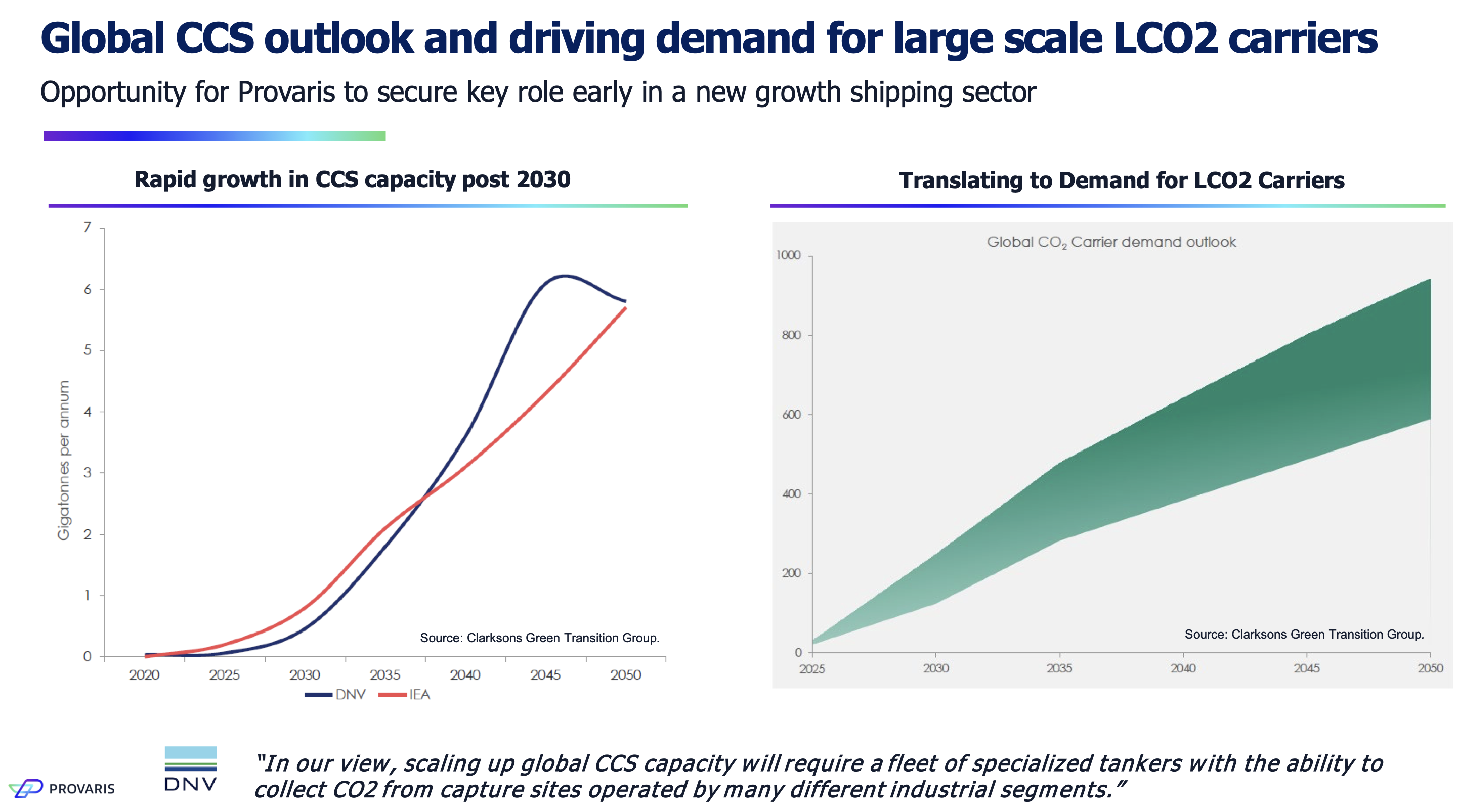
With the backing of Yinson and a direct link into an early commercial CCS project, Provaris is positioning itself as one of the few players ready to meet that demand.
As the company puts it: the bigger the tanks, the bigger the savings.