
AstraZeneca PLC (LSE:AZN) has once again shown why it sits at the top table of global pharmaceuticals.
Although first-quarter sales missed City forecasts by a whisker, profits came in well ahead of expectations, keeping the company firmly on track for a year of solid growth.
For private investors, the story is one of resilience. In a tough environment marked by drug pricing pressures in the United States and softer conditions in China, AstraZeneca managed to grow earnings while investing heavily for the future. That is not easy to do.
The good news
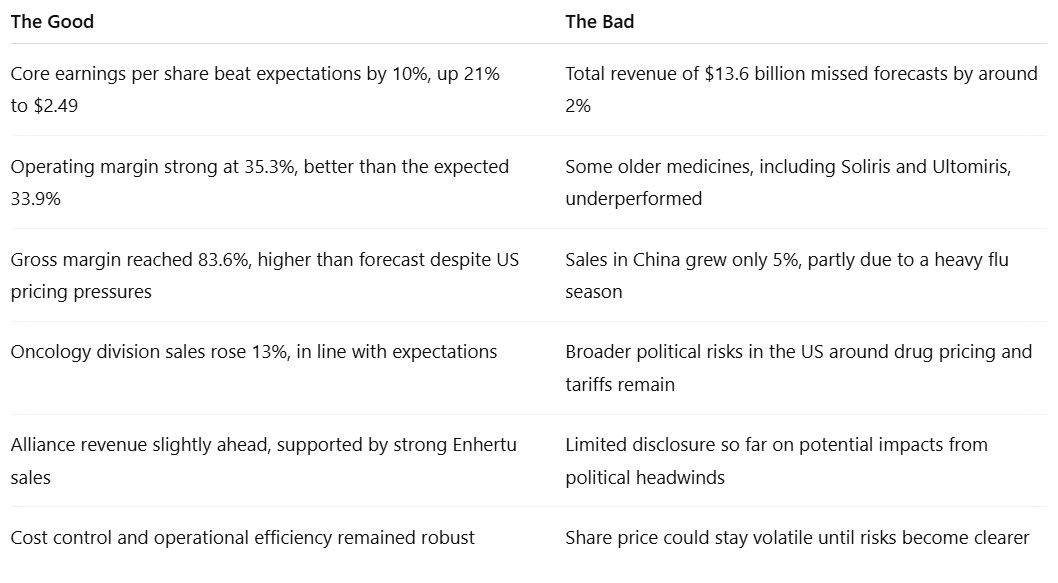
Core earnings per share, a measure that strips out one-off costs and charges, rose by 21% to $2.49. That beat analysts' expectations by about 10%. Operating margins also came in stronger than predicted, hitting 35.3% compared with forecasts of just under 34%.
Margins were helped by a better-than-expected gross margin, the percentage of revenue left after the cost of making the products, which hit 83.6%. That is impressive given headwinds from US healthcare reforms that are putting pressure on drug prices.
AstraZeneca’s oncology division, the beating heart of the business, grew sales by 13% to $5.23 billion. That was in line with expectations, even with the drag from lower US prices on key cancer drugs such as Tagrisso, Lynparza and Calquence.
Elsewhere, diabetes drug Farxiga posted strong numbers, while alliance revenues, income from partnerships like the one for breast cancer drug Enhertu, also came in slightly ahead.
China, often seen as a growth engine, delivered a modest 5% sales rise. That may look soft, but management blamed an unusually heavy flu season that hurt sales of respiratory medicines, rather than anything more worrying like the ongoing anti corruption campaign.
The softer spots
Sales overall were a touch light. Total revenue of $13.6 billion was about 2% below consensus. Some older medicines, including Soliris and Ultomiris, missed their sales targets.
And while AstraZeneca reaffirmed its full-year guidance, there is no escaping the wider political noise. In the United States, the Inflation Reduction Act is starting to bite into drug prices. Meanwhile, with an election looming and protectionist rhetoric on the rise, drugmakers like AstraZeneca could face fresh challenges from tariffs and price controls.
Management did not give much away on these risks in the results statement, but investors should expect more questions on these issues as the year rolls on.
The outlook
AstraZeneca kept its full-year guidance unchanged. It expects revenue to grow by a high single-digit percentage at constant exchange rates, which translates to around 7 to 9%. Core earnings are expected to rise by a low double-digit percentage, somewhere between 10 and 12%.
The shares now trade at about 13.5 times forecast earnings for 2026. That is a little higher than the sector average, but still well below the 17 times multiple AstraZeneca used to command before the pandemic.
Shore Capital thinks a target price of 15,000p is justified, implying there is scope for the shares to rerate higher as new drug launches and clinical trial results come through in 2025.
That said, political risk will continue to hover over the share price. Any fresh moves to curb drug prices or impose tariffs could create bumps along the way.
Bottom line for investors
This was a classic AstraZeneca performance: operationally strong, financially robust, but still navigating external headwinds. For long-term investors, the growth story remains intact. Management is investing today to deliver a bigger business tomorrow, while still maintaining healthy margins and a dependable dividend.
The shares are unlikely to shoot the lights out in the near term, given the political noise. But for those willing to take a patient view, AstraZeneca still looks a high-quality name to have in a diversified portfolio.