
Graphene Manufacturing Group Ltd (TSX-V:GMG, OTCQX:GMGMF) CEO Craig Nicol talked with Proactive about the company's latest performance testing results for G Lubricant, a graphene-based engine oil additive.
Nicol explained that testing conducted with the University of Queensland has demonstrated an 8.5% fuel efficiency improvement in high-load conditions.
The interview also covered GMG’s commercial rollout strategy, initially targeting the B2B trucking market in Australia before expanding into larger diesel fuel markets globally
Proactive: Graphene Manufacturing Group Ltd CEO Craig Nicol is in studio with me now to discuss the results of the company's multi-year performance testing of G Lubricant, as well as the company's recent $5 million capital raise. Craig, it's good to see you.
Craig Nicol: Thanks for having me on again.
It's a pleasure. Now, let's talk about these results. They enhance the performance and fuel efficiency of diesel and gasoline engines, particularly under high-load conditions. Can you talk us through those results and what they mean for the company?
Yeah. So, here's a G Lubricant pack. It's a bit dirty—I’ve just been putting it into my own car. It's an additive that you add to engine oil. It's best to use it in new oil at about a 1% ratio. A 500-milliliter pack treats 50 liters of engine oil, so a small amount goes a long way.
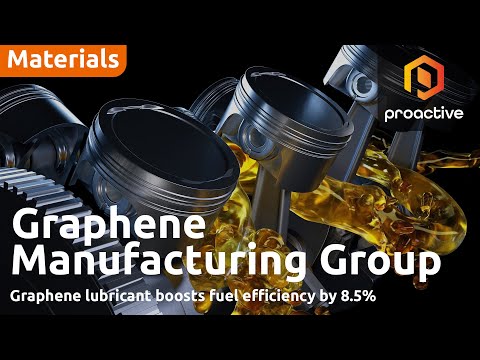
This additive improves lubrication around the piston, where about 30% of fuel is wasted due to friction. Engine oil alone struggles in that area. Our graphene fluid, made in Brisbane, reduces friction, lowering the force required from fuel and improving efficiency.
We've been producing this for eight years and testing it globally for four years. We recently summarized two years of testing with the University of Queensland, showing an 8.5% fuel savings under high-load conditions. Our product works best when the engine is under strain—accelerating from a stop, high speeds, or pushing against air resistance.
Some customers have seen even greater savings in real-world conditions. The University of Queensland has validated the results, and we believe this is a low-risk, high-reward product. For now, we're targeting post-warranty engines, but we are confident about going through approval processes for wider use. After years of testing, I use it in my own car. It’s now available for purchase online.
That’s extensive testing, and now the product is commercially available. What does that rollout look like, and what markets are you targeting?
I spent 20 years at Shell as a fuels and lubricants engineer and later as a marketing manager for Shell Oceania. I’ve learned that the diesel engine market is a business-driven fuel market, worth about $1.7 trillion worldwide.
We’re targeting 34 key markets where diesel fuel sales exceed $10 billion. We're launching in Australia, focusing on the B2B trucking sector. Our advertising is ready, the product is easy to purchase online, and the margins work for us.
Most trucking businesses are small, owner-operated, and don’t have the leverage to negotiate fuel discounts with major suppliers. Diesel prices are high, and costs keep rising. We estimate our product can save truck drivers around $8,000 per year in fuel costs. It’s a simple pour-in solution with immediate benefits.
Diesel prices aren’t dropping anytime soon, and we have extensive scientific data backing our claims. We’re world leaders in this space. If you search for graphene in engines, you’ll see we’re at the forefront of this technology.
In today’s economic climate, that $8,000 savings is substantial. I also want to touch on your partnership with the Battery Innovation Center in Indiana. How did that come about, and how does it fit into your work on graphene aluminum-ion batteries?
We’ve been developing graphene aluminum batteries in Brisbane with the University of Queensland and working with Rio Tinto, which is paying us $3 million annually to develop batteries for its mining trucks. We’re progressing through Technology Readiness Level 4, optimizing our designs for scaling up.
Instead of immediately building a $10–20 million facility, we sought a cost-effective scaling partner with experience. The Battery Innovation Center in Indiana was a great fit. They’ve completed over 500 battery development projects, and one of our directors, Bob Galyen—formerly of CATL—has strong ties there.
Our graphene aluminum-ion battery uses existing lithium-ion manufacturing equipment but is simpler to produce. The Battery Innovation Center allows us to scale efficiently while maintaining our own battery development center in Brisbane. This partnership also opens doors to U.S. customers.
Finally, your recent $5 million raise—where will the funds go, and what’s next for the company?
We have three main priorities. First, we’re scaling up sales and production. Three of our products are now available, and large global companies are testing them. We’re hiring sales staff and expanding production capacity to meet demand.
Second, we’re advancing our next-generation graphene production technology. With about $1 million in investment, we expect a major increase in production efficiency.
Third, we’re preparing to up-list to a major U.S. stock exchange. We’re currently listed on the TSX, OTCQX, and Frankfurt Exchange, but the U.S. market provides deeper capital pools. We’ve already had positive discussions with key financial institutions in New York.
Quotes have been lightly edited for clarity and style