
Firebird Metals Ltd has passed a major milestone on its commercialisation path by producing button batteries using lithium manganese iron phosphate (LMFP) cathode material.
Early testing of LMFP cathode material is underway at Firebird’s state-of-the-art R&D centre in Jinshi, Hunan Province, China, with five batches completed and LMFP button batteries produced.
In a program as part of a binding strategic collaboration agreement with Central South University (CSU) of Hunan, 100 batches are expected to be completed, and each batch will be turned into button batteries for full evaluation and analysis.
Transformative step
The production of LMFP fits within Firebird's growth strategy of becoming a near-term, low-cost manganese-based cathode material business to deliver products into the growing electric vehicle battery market.
“The commencement of test-work and first production of LMFP batteries with CSU is an exciting and transformative step forward for Firebird in the commercialisation of our LMFP cathode materials, which will ultimately be distributed directly into global battery markets," Firebird managing director Peter Allen said.
“This achievement places Firebird in a very small select group of non-Chinese owned companies (first Australian company) to have produced LMFP batteries.
Superior quality
"Manganese sulphate is a critical element within LMFP and our manganese processing knowledge and IP enables Firebird to drive significant value by co-precipitation.
“We expect our process to translate into substantial cost advantages in sulphate production by bypassing the manganese sulphate crystallisation process, which is the largest component of our operating cost.
"This streamlined approach not only reduces costs but also results in a superior quality LMFP product, strengthening our position as a cost-effective, high-quality leader in the market.”
After entering a binding strategic collaboration agreement with CSU in October 2024, Firebird and CSU have started testing a combination of solid and co-precipitation methods for the production of LMFP cathode active material (CAM).
Testing of batteries
Five batches have already been completed and through this, LMFP batteries have been produced through manganese sulphate in solution, which was then processed into LMFP CAM.
In turn, the CAM has been made into button batteries for analysis and testing. The battery industry standard involves testing cathode chemistries using button-sized batteries to evaluate performance, charge/discharge cycles and degradation.
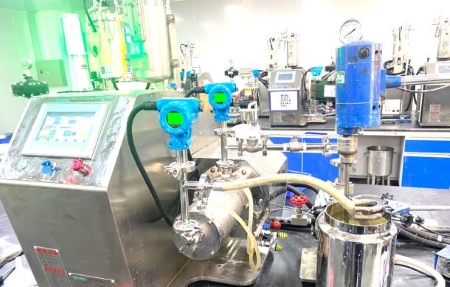
Testing facility at grinding mill manufacturer.
Upon successfully completing these tests, the company will proceed to larger-scale pouch battery testing.
Firebird expects the complete program to test 100 batches overall with each batch to be turned into button batteries for full evaluation and analysis.
These insights will prove critical for potential cell manufacturing clients, providing valuable data to optimise battery performance.
Potential to be a leader
The collaboration with CSU has potential to position Firebird as a global leader in the evolving Li-ion battery market, addressing the growing demand for cost-effective, high-performance energy storage solutions.
“The progress we have made in a short period of time is testament to our dedicated and innovative team and partners who have been instrumental in fast-tracking our journey toward becoming a leading manganese chemical business,” Allen said.
“The production of LMFP batteries is aligned with our growth strategy of establishing Firebird as a leading and low-cost manganese-based cathode material business.
"We are well-positioned to deliver on this strategy and through our sector-leading manganese team and proposed, tier-one manganese sulphate plant, the company is fully focused on establishing operations and continuing to innovate through our leading technology processes to generate strong stakeholder returns.
Next steps
Results from the test-work program will be used to undertake a scoping study on LMFP production.
Once completed, Firebird will assess the results and opportunity to expand the current pilot plant to produce approximately one tonne per day of LMFP.
The CSU professors and their team have already established a strong foundation in the LMFP production process.
Lab testing with Firebird’s Chinese technical team will refine this process, which will differ from mainstream production methods.
To maintain confidentiality and protect IP, Firebird intends to lodge patents domestically and internationally.
All necessary equipment has been ordered to enable Firebird to complete future test-work at its own R&D lab facilities.
Battery experts
CSU has a strong reputation for developing world-leading battery material processes. CSU staff include global experts in the Li-ion battery supply chain, with alumni including the founders of BYD and Rongbay Technology.
The university is leveraging in-house and third-party laboratories to convert the LMFP into button batteries for comprehensive performance testing.
Firebird’s long-term strategy is to grow into a low-cost manganese-based cathode material business, leveraging its world-class team, unique processes and technology and location in China.
By executing this strategy, Firebird aims to secure a natural cost advantage in LMFP cathode production, particularly by integrating manganese sulphate from its proposed production plant in China.
Additionally, Firebird’s technology is easily transferable to locations outside China, positioning the company as a global leader in LMFP cathode manufacturing.
“The future for Firebird is very exciting and we look forward to delivering on a busy 2025,” Allen concluded.