
hVIVO PLC (AIM:HVO) chief executive Yamin ‘Mo’ Khan talked with Proactive about the company’s latest contract win—a human challenge trial deal with Inhalon Pharma for an RSV antiviral.
Khan explained that the study, set to begin in the second half of 2026, will assess Inhalon’s mucosal RSV antiviral. The drug, delivered via inhalation, is designed to trap the virus on the mucosal lining, preventing it from reaching the lungs. He noted the broader implications of this technology, which could extend to other viruses such as influenza and coronaviruses.
Despite speculation that RSV research might slow down following vaccine approvals, Khan emphasized that the need for antiviral treatments remains. He highlighted that hVIVO has continued to expand its RSV challenge models and recently signed multiple contracts, reinforcing its position in this market.
Discussing broader trends, Khan noted that the challenge trial market remains strong despite previous slowdowns. He attributed recent delays to a single contract issue but confirmed that the company has seen an uptick in new signings. He also provided an update on the integration of CRS following its acquisition, stating that the transition is progressing well.
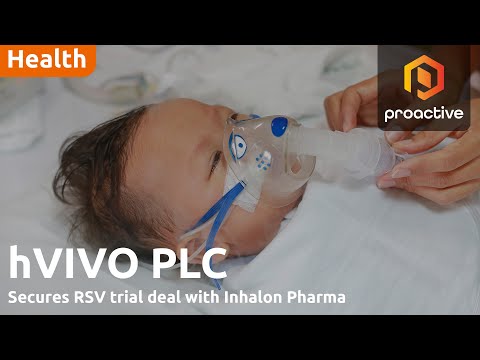
Proactive: Joining me is hVIVO chief executive Yamin ‘Mo’ Khan. Mo, exciting news for hVIVO this morning. You've announced a new human challenge trial contract with Inhalon Pharma. Tell us more about that.
Mo Khan: Yeah, thank you, Stephen. I'm seeing a lot of you lately. Very pleased to speak to you again so soon. We've signed a significant contract for an RSV antiviral human challenge trial with Inhalon, a biotech company based in the US. We've been in discussions with them for a while, determining the study design and timeline.
We’ve agreed on a three-arm study, making it a good-sized trial. This also highlights that human challenge trials can do more than just determine whether a drug works or not. The study is scheduled to start in the second half of 2026, which is when we expect to recognize most of the revenue from this contract. It’s great news, and we’re excited to support Inhalon in advancing their inhaled antibody program.
Proactive: Inhalon’s drug candidate is a mucosal RSV antiviral. What does that mean?
Mo Khan: The route of administration is key in any infection. For example, young, healthy people like you and me may have had RSV without realizing it because our immune systems fight it off. But for infants, the elderly, or immunocompromised individuals, it can be a serious disease.
Inhalon’s approach makes administration easier for these patients. Instead of injections, their technology delivers the drug via inhalation, trapping the pathogen on the mucosal lining before it reaches the lungs. Once trapped, the virus can be easily excreted.
The potential of this technology is significant. If we had an inhaled vaccine during the pandemic, lockdowns might not have been necessary, as transmission could have been reduced. This approach could also be used for other viruses like influenza, HPV, and coronaviruses. If this trial is successful, Inhalon may return for more studies.
Proactive: There was speculation that RSV research might slow down after vaccine approvals last year. But you’ve mentioned before that RSV antivirals remain a key growth area for hVIVO. What are some other drivers?
Mo Khan: We don’t agree with the view that RSV research will slow down. Just because vaccines exist doesn’t mean R&D stops. Researchers are always looking to improve vaccines—whether by enhancing durability or making administration easier. Plus, as viruses evolve, vaccines will need to be updated.
On the antiviral side, there is still a need for treatments targeting severe RSV cases. At the moment, there isn’t an RSV antiviral that effectively addresses these severe impacts. We signed a large RSV antiviral contract late last year, and we’ve invested in upgrading our RSV challenge models. We wouldn’t have done that unless we saw a mid-to-long-term market for RSV research.
Proactive: This is your fourth new study in under two months. Does this mean you’re seeing an increase in conversions from your sales pipeline into signed contracts?
Mo Khan: Yes, absolutely. In the second half of 2024, contract signings slowed, even though interest in human challenge trials remained strong. There were several factors at play—market conditions were tough, and uncertainty around the US elections made biotech companies cautious about committing.
However, in the last 4–6 weeks, we’ve signed multiple new contracts. This isn’t just my opinion; the data supports it. The challenge trial market remains strong. The slowdown was due to the delay of a single contract, but with the recent signings, we’re seeing momentum return.
Proactive: A quick note on CRS. It’s been just a few days since the acquisition. How are things progressing?
Mo Khan: We completed the acquisition this week, and everything is going well. We’ve already held internal town halls with both the hVIVO and CRS teams. Everyone is excited and eager to collaborate.
We’ve already identified new opportunities where we can integrate hVIVO and Venn’s services with CRS to offer a more comprehensive service to CRS clients. Both teams are enthusiastic about the investments and system implementations we have planned. So far, so good.
Proactive: Mo, it looks like a very busy year ahead for the company. I’m sure we’ll have plenty more conversations.