
Millennial Potash Corp (TSX-V:MLP, OTCQB:MLPNF) is heading into 2025 on a high note following a string of positive news from its Banio project in Gabon.
With ambitious goals for 2025, including a substantial resource expansion, completion of a bankable feasibility study, and progress on environmental and social impact assessments, the company’s chairman Farhad Abasov outlines the company’s strategic approach to advancing the project.
Abasov also discusses the company’s choice to use solution mining, the advantages of Banio’s location, and the evolving dynamics of the global potash market.
Proactive: A big goal for the early part of 2025 is to double that resource estimate, which, from what I’ve heard, you’re planning to achieve with just a few additional drill holes. Looking beyond that, do you have plans to explore the rest of the property in 2025, or will the focus remain on delineating the southern part of the project?
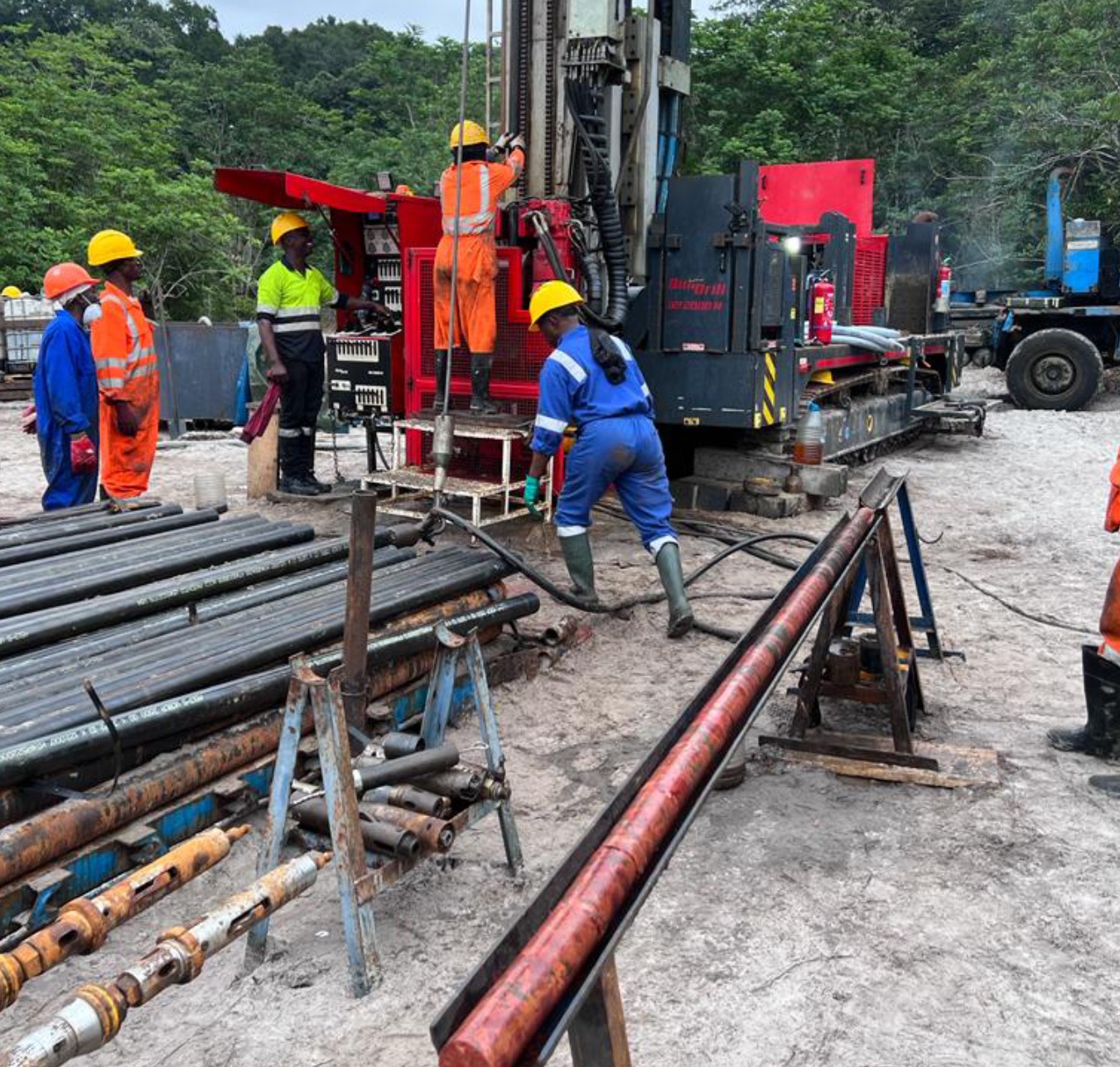
Farhad Abasov: Our immediate plan is to drill a couple of additional holes, likely starting in January or early February. By the end of the first quarter, we aim to release a revised and updated resource estimate that we hope will be substantially expanded.
From there, the plan is straightforward. Once we’ve expanded the resource—ideally to include enough Measured and Indicated resource—we’ll proceed with a bankable feasibility study. Concurrently, or just prior to that, we’ll also initiate Environmental and Social Impact (ESI) studies, as they are an essential part of the permitting process. We aim to complete those by the end of next year or early 2026.
In terms of further exploration beyond the expanded mineral resource estimate (MRE), we don’t have concrete plans at this point. If additional drilling is required during the feasibility study, we might sink a couple more holes in that section of the property. However, our focus remains on the southern part of the project.
The two planned drill holes will step out about half a kilometer to a kilometer from the existing ones. Beyond that, we still have roughly 20 kilometers down to the southern tip of the property left to explore, but we don’t see a need to address that at this stage. The two or three holes we’re planning for 2025 should be sufficient to support the bankable feasibility study.
You also mentioned the environmental assessment process as a key milestone for 2025. How confident are you that this can be wrapped up by the end of the year?
What we’re planning here is solution mining as our extraction methodology for potash. We’ve had experience with two previous potash projects—one in Ethiopia and another in Saskatchewan, Canada. Both were amenable to solution mining, so our team is very well-versed in this approach.
There are two main reasons we prefer solution mining. First, it keeps costs down. By definition, solution mining doesn’t require moving earth—you don’t need to sink a shaft or create an open pit. Instead, you drill into the ore body, pump saline solution into it, dissolve the potash underground, and pump the brine back to the surface for processing.
Second, it has a minimal environmental impact, which is a significant advantage. This reduces the complexity of the permitting process and avoids the high capital expenditures associated with traditional mining methods—costs that are not manageable for a junior company like ours.
Because of the low environmental impact and the way we’ve structured this project, we anticipate a relatively straightforward and faster permitting process. For instance, our processing plant and storage facilities won’t even be located on the property—they’ll be at the port, which minimizes the project’s overall footprint.
Regarding the environmental assessment, we plan to start as soon as possible, beginning with baseline studies. We’ll need at least 12 months of weather and climate data, but the rest of the process will run in parallel with the bankable feasibility study. At this point, we don’t foresee any significant issues.
We also prioritize building strong relationships with the local community. While the nearest community is about 70 kilometers away, we hire primarily from there and maintain excellent relations. Mining jurisdiction in Gabon resides at the central government level, but we understand the importance of local engagement and strive to keep those relationships strong.
What about the potash market in general? What are some key catalysts we should look out for in 2025?
The potash market is largely driven by three major countries: Canada, Russia, and Belarus. Between Russia and Belarus, you’ve got almost 30% of the world’s potash supply. The war in Ukraine has constrained production from those two countries to some extent, but we never relied on that factor for our project. Currently, their production levels are basically back to normal, including exports. The main change is in the direction of those exports—they’re no longer going to Western Europe or North America, particularly the United States. Instead, they’re being sold to markets like India, China, and Brazil.
For us, our location on the western coast of Africa is a significant advantage. Not only can we supply Brazil—the largest potash importer, at nearly 13 million tons per year—but we’re also well-positioned to serve India and China. The shipping distance from our location is shorter than from most other potash production centers.
However, our primary focus is on Africa. The African market has been growing substantially over the past five to 10 years. Currently, Africa consumes about 2 million tons of potash annually, all of which is imported, as there is no domestic production. Our goal is to ensure that most of our potash stays on the continent, supplying Western Africa as well as countries like Morocco and Egypt.
As for the overall supply and demand dynamics, they’ve remained relatively stable. There haven’t been many new entrants into the potash market in the last 10 to 15 years, but demand has been growing at a steady rate of 3% to 5% per year. This creates a positive outlook for the market.
Is there anything else you’d like to add that shareholders should look out for in 2025?
A couple of things. First, we recently raised over $3.7 million, with the majority of it coming from our existing shareholders, including a strategic family office based in the Far East that has strong connections in the fertilizer sector. This is a significant step forward for us as it demonstrates strong confidence in both the project and the management team.
Looking ahead to next year, we’re planning to assemble additional financing packages and bring more strategic investors into the company. We’re in discussions with a range of potential investors, including private equity funds and development financing institutions, primarily West-based organizations. We’ve had great success with this approach in the past with Allana Potash, where we secured support from the International Finance Corporation (IFC) in Washington DC for our Ethiopian project. That kind of partnership doesn’t just bring substantial financing but also significant political backing, both with local governments and within the industry.
We’re optimistic that by the first half of next year, we’ll have positive news on this front. This will position us well for securing construction financing following the completion of the feasibility study.