
Fine Wine emerged as one of the worst-performing asset classes in 2024, with the Liv-ex 100 industry benchmark for monitoring fine wine prices falling 9.2% as of 6 December.
However, data provided by fine wine investment platform WineCap showed that market activity rose by 7.9% compared to the previous year.
This suggests that flailing prices were not the result of falling demand. Rather, WineCap pointed to an ongoing market correction and broader economic uncertainty that impacted all regions.
Italy emerged as the most stable region in 2024, with only a 6% price decline, supported by high-scoring releases and increased investor interest. Burgundy experienced the largest readjustment, with prices falling 14.4%.
But amid these plummeting prices, the experts at WineCap see “opportunities in uncertainty” heading into 2025.
“Below the surface of the downturn, 2024 presented great buying opportunities, making it a pivotal year for investors, whether looking to enter the market or enhance their existing portfolios,” said WineCap.
“The market downturn has presented opportunities to acquire premium wines at more accessible price points, offering a chance to diversify portfolios with an asset known for its historically strong long-term performance,” the company added.
In 2024, investors demonstrated a preference for older vintages from 2010–2014, which offered proven track records and immediate drinkability, while newer vintages and recently released wines struggled unless correctly priced.
Looking ahead, the 2025 outlook is “cautiously positive, driven by optimism for premium regions such as Piedmont, Champagne, and Burgundy”.
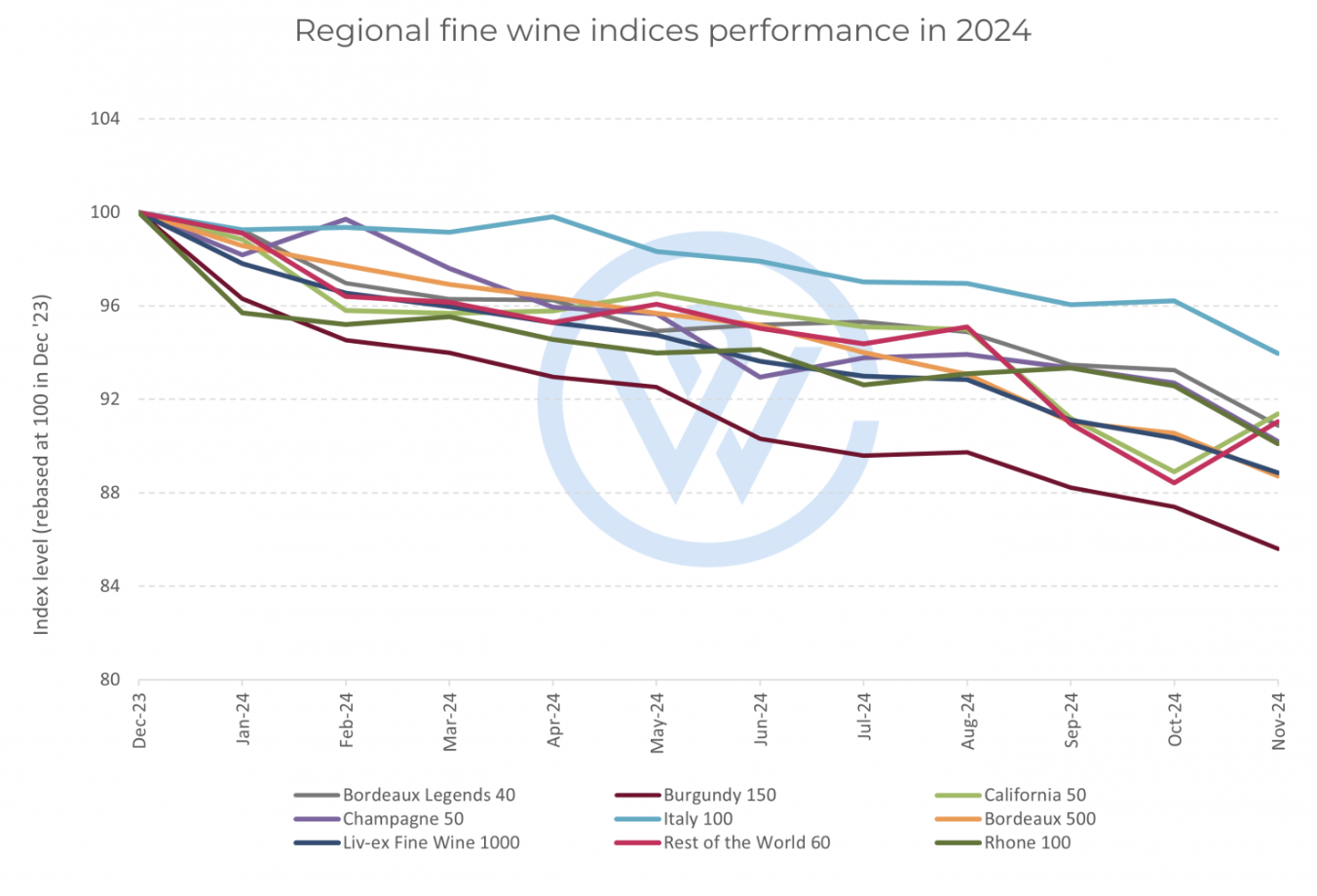
Credit – WineCap
A painful year for whisky
Fine wine was not the only sippable asset to fall in value in 2024.
Noble & Co's Whisky Intelligence Annual Report for 2024 highlighted a big downturn in the secondary whisky market, describing it as a "painful" year for the industry.
Over the 12 months to September 2024, the market saw a 16% decrease in transaction volumes and an 18% drop in value.
These declines accelerated in the second half of the year, underscoring a challenging landscape for buyers and sellers alike.
Premium whiskies faced the brunt of the downturn. Bottles priced above £10,000 experienced sharp reductions in value as sellers delayed sales in anticipation of a market recovery, and buyers hesitated to invest in falling prices.
“Declining volumes, falling prices, and a cautious approach from both buyers and sellers have been defining characteristics of the past year,” said Duncan McFadzen, head of food and drink at Noble & Co.
This, according to McFadzen, was a reflection of the broader luxury goods sector.