
Telecom operators worldwide are under pressure to modernize their networks while managing legacy systems. Industry leaders, including Vodafone and BT, have acknowledged the strain of monetizing these investments, highlighting the need for innovative solutions to unlock growth and improve efficiency.
Synchronoss Technologies Inc (NASDAQ:SNCR), a long-standing partner to telcos for over two decades, initially built its reputation by delivering solutions for device activation, messaging, and cloud services. However, in recent years, the company has undergone a significant transformation, refocusing its business exclusively on cloud-based solutions.
This strategic shift, initiated three years ago, saw Synchronoss divest its activation and messaging businesses to prioritize its Personal Cloud Platform, enabling telecom providers to streamline operations and enhance customer loyalty. Today, Synchronoss stands as a cloud-only provider, leveraging its expertise to deliver innovative solutions that meet the evolving needs of telecom operators.
Proactive spoke with CEO Jeff Miller and CFO Lou Ferraro to explore the challenges and opportunities of this transformation and how Synchronoss is uniquely positioned to support telcos in the competitive digital landscape.
Proactive: Vodafone’s Chief Network Officer spoke of the challenge to "unburden themselves" from their legacy systems in order to move on to newer technologies. How would Synchronoss assist telcos in doing this?
Jeff Miller (JM): For over two decades, Synchronoss has provided software solutions to telecom providers worldwide, including playing a key role in the 2007 iPhone launch. We specialize in seamlessly integrating into providers' operations with white-label services like messaging, activation, and cloud platforms. Our cloud solutions are rebranded by companies like Verizon and AT&T, enabling them to offer their own services.
Providers choose us for our expertise, proprietary technology, and adaptability. We help them launch new services that drive customer loyalty and create revenue, as seen with Verizon Cloud and AT&T Cloud. Recent positive quarterly results are driven by subscriber growth on these branded cloud platforms powered by our technology.
As the subscriber base grows, our customers' revenue streams expand, and so do ours. This growth was a key factor in our reported 5.1% subscriber increase in Q3, marking 18 consecutive quarters of 5% or higher growth. This consistent performance contributed to an 8% year-over-year increase in top-line revenue for the quarter.
Lou, what were some of the standout highlights from the balance sheet in Q3 that caught your attention?
Lou Ferraro (LF): One of the key achievements in the second quarter, which benefited us in the third quarter, was negotiating a new term loan. This significantly reduced our interest expenses. Previously, we had a 14% preferred obligation, but the new term loan was negotiated at SOFR plus 550 basis points. This change has resulted in substantial quarter-over-quarter savings in interest expenses. Additionally, it positions us to consider reclassifying our capital structure as we look ahead to 2025.
Over the past year, Synchronoss has shifted its business model by divesting the network and messaging businesses to focus solely on the Personal Cloud Platform. What was the driving force and impetus behind this decision?
JM: It's been a very intentional transition, and honestly, it started over three years ago. We evaluated all the products in our portfolio, considering the scale of each business and their growth prospects. We determined that the cloud business offered the best potential in all categories—better financial metrics, long-term customer contracts, and a more predictable revenue stream due to its high recurring revenue component.
As a result, we made a deliberate decision to divest three businesses over a two-year period and wind down another IoT business entirely, putting all our resources and focus into the cloud. This strategy is paying off. We now have a simplified business model that investors can more easily understand, with clear drivers for our future success. Our operating performance has dramatically improved: we've moved from negative growth to positive growth at the top line, and profitability has significantly increased, reflected in both adjusted EBITDA and operating performance. This shift has given us a clear and focused path for the future.
The company raised its full-year outlook due to subscriber growth. Can you elaborate on the main drivers behind this and what it means for the company's trajectory? How do you plan to sustain this growth moving forward?
JM: We’ve raised our full-year revenue and adjusted EBITDA guidance for the second consecutive quarter, while also increasing margin expectations. As a subscriber-driven business, each new subscriber is highly profitable, supporting strong recurring revenue and healthy margins.
To sustain growth, we’re launching initiatives with existing customers. For example, our October retail promotion with Verizon led to strong early results, including higher adoption and take rates for our cloud solution. We’ll continue such efforts to drive growth.
Additionally, we’re focused on expanding our customer base, including prospects like SoftBank, to further revenue growth and improve retention. We’re confident that this strategy will lead to continued success with operators over time.
LF: The key growth drivers are continued subscriber growth and a high percentage of recurring revenue, resulting in adjusted gross margins of 70-80% and operating margins of nearly 30%. This has contributed to $15 million in cash from operating activities year-to-date. Despite debt obligations, Synchronoss remains highly profitable, generating substantial cash flow. This will strengthen the balance sheet over time and support the company's long-term financial stability.
As you shift towards a cloud-only business model, it places you in competition with major players like iCloud, Google Photos, and Dropbox—well-known, recognizable names. What are some of the key advantages that Synchronoss can offer in this highly competitive market?
JM: Synchronoss benefits from the strong brand recognition of its major customers—Verizon, AT&T, and SoftBank—which serve a combined 250 million subscribers. This allows Synchronoss to position its cloud services as trusted solutions from companies that customers already rely on for their data and voice needs. Technologically, Synchronoss is agnostic to iCloud and Android, seamlessly supporting various devices including iPhones, Androids, Dell computers, and Apple Macs. This flexibility makes the company a comprehensive backup and storage solution for families. Additionally, by safeguarding digital assets like photos, Synchronoss helps service providers retain customers long-term. Statistics show higher loyalty rates among users of cloud services from their mobile providers compared to non-users, supporting this retention strategy.
How are AI and machine learning being integrated to enhance the Personal Cloud Platform, and what new features might subscribers expect in the future?
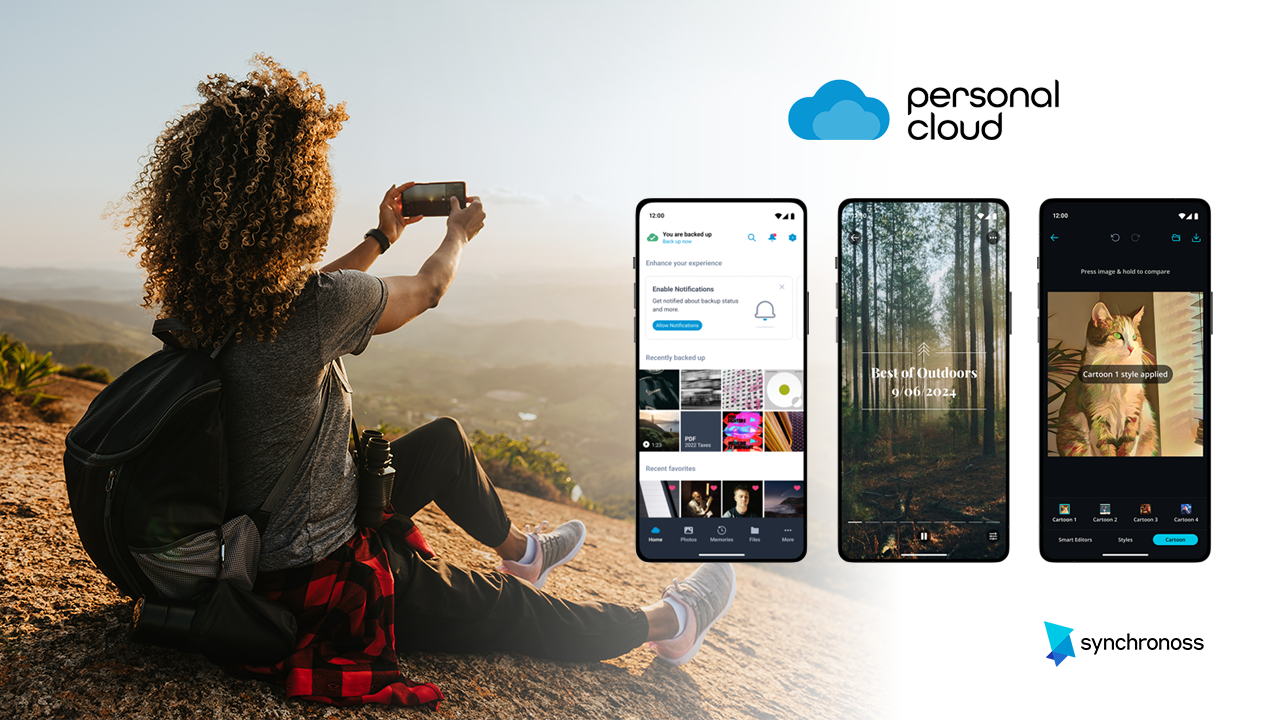
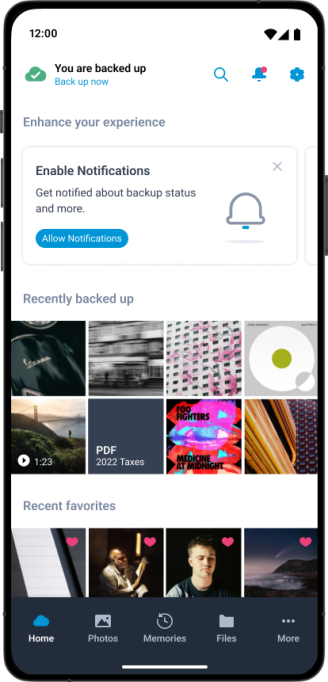
JM: As more people capture and store photos, our focus is on using machine learning to help users find content intuitively. We leverage algorithms to predict and present memories proactively, so users don’t always need to search. Our latest update includes AI-driven tools to edit photos, like colorizing old black-and-white images or applying filters like watercolor or sketch effects. These generative tools allow for creative engagement with content. Machine learning and AI are key to our tech stack, and we continue to enhance our ability to help users easily find specific content, like all photos of a loved one at the beach.
How has Synchronoss's transition to a cloud-only business model simplified its operations, and what opportunities does this focus create for growth in the cloud services market?
LF: Being a cloud-only provider has given us a highly effective business simplification model. We are now a company that is much easier to understand. We no longer operate across five different platforms; instead, we provide value-added services to tier-one and tier-two carriers worldwide. This value proposition is clear and transparent, benefiting both our shareholders and employees, as well as delivering tangible results for our customers.
What are some of your individual priorities for the company in the near term?
JM: We're excited to focus on a large but underpenetrated market, with only 34% of subscribers currently having a cloud service subscription. Many people either back up content elsewhere or leave it unprotected, presenting a significant opportunity for service providers to securely store subscribers' content. We believe this creates strong growth potential, and we're optimistic that our performance and growth trajectory will continue for years to come.
LF: Two key points to highlight: First, our carrier customers view Synchronoss as a trusted, secure service that provides incremental revenue opportunities while helping reduce churn. This positions us well with both existing and potential customers.
Second, we are still awaiting over $28 million in federal tax refunds related to the CARES Act. We are in the final phase with the IRS, awaiting the revenue agent report for review, which will lead to the release of funds. We've been assured the refund is intact. Once received, we plan to use 50% to pay down our term loan, reducing obligations by $14–15 million. The remaining funds will be evaluated for strategic uses, including potential investments or debt reduction, benefiting shareholders.