
Ideal Power Inc (NASDAQ:IPWR), a Texas-based company specializing in advanced power switches for electric vehicles (EVs) and other industries, announced significant progress in its commercialization roadmap during the third quarter.
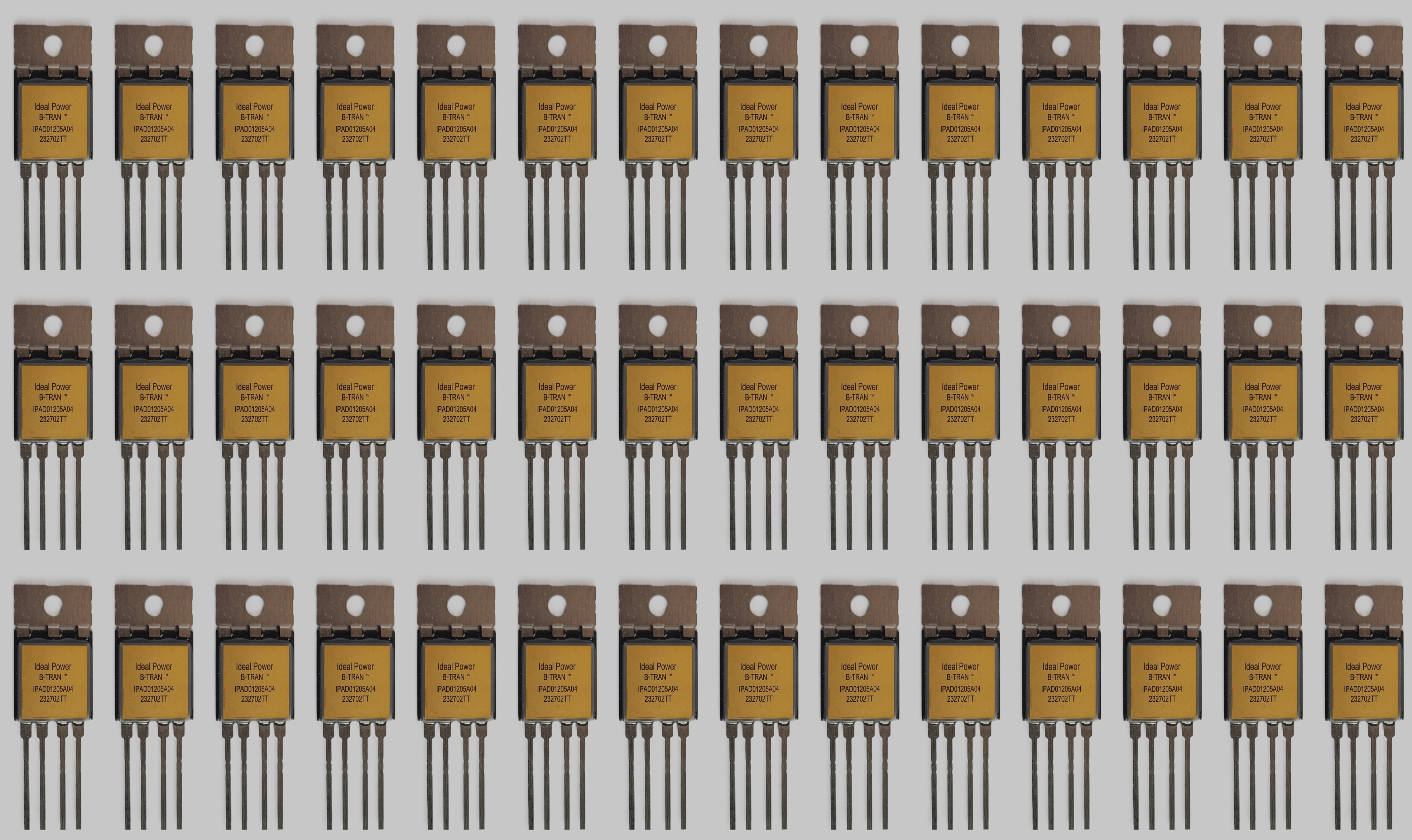
The company partnered with a third global automaker to explore B-TRAN technology in EV contactors and received initial orders from a Tier 1 supplier for discrete B-TRAN devices, a SymCool power module, and a solid-state circuit breaker (SSCB) evaluation board.
Meetings with Stellantis progressed, with Phase III expected to begin shortly after Stellantis selects a Tier 1 supplier for its new EV drivetrain inverter.
Ideal Power added distributors RYOSHO in Japan and Sekorm Advanced Technology in China, targeting automotive and industrial markets.
For Q3, the company reported a net loss of $2.7 million, unchanged from last year, with operating expenses rising slightly to $2.9 million. Cash used in operations and investments was $2.4 million, compared to $1.9 million a year earlier.
CEO Dan Brdar spoke to Proactive about the company’s momentum in advancing B-TRAN commercialization and its upcoming milestones.
Proactive: Ideal Power continued to build momentum throughout the quarter. Can you walk us through some of the highlights?
Dan Brdar: We’ve made significant strides in engaging customers with our products. Notably, we now have a third global automaker evaluating our products for use in electric vehicles, particularly for contactors. Additionally, we’ve expanded our distribution network by adding two distributors: RYOSHO, a Japan-based company with strong relationships in the industrial and automotive sectors, and Sekorm, focused on China, a significant market for power semiconductor applications.
We’ve also received orders from a Tier 1 automotive supplier interested in evaluating B-TRAN for EV contactor applications. Furthermore, we’ve started automotive qualification testing, a rigorous process tailored to automotive standards, which is progressing well.
Let’s talk about the Stellantis partnership. How does it bring you closer to EV market adoption?
Phase III of the program is to integrate our B-TRAN semiconductors into a power module for an inverter. This involves incorporating cooling systems and preparing it for integration into the drivetrain inverter. The module will undergo its own qualification process, while our device will have already completed its automotive qualification testing by that stage.
We’re aiming to complete automotive qualification testing by mid-2025. This process involves thousands of power cycles and other rigorous requirements. We expect the power module incorporating B-TRAN technology to be finalized by 2025. Stellantis has chosen an innovative company for the packaging. and everyone involved in the program is working hard to meet this deadline of 2025 despite some internal distractions at Stellantis.
Why is automotive qualification testing so important?
Automotive qualification testing is essential because automotive applications are among the most demanding environments for devices, requiring them to withstand extreme temperatures, humidity, and vibration. The testing rigorously assesses the robustness of semiconductor devices. Achieving automotive qualification is also beneficial for industrial applications, which typically face less extreme conditions. It reassures industrial partners that the technology has undergone accelerated life testing, demonstrating its reliability and exceeding their requirements.
That’s critical to B-TRAN's commercial viability, isn’t it?
Absolutely. Since B-TRAN is a new technology, it doesn’t have years of operating history. The testing we’re undergoing with a third party provides the necessary data to assure potential customers that the device will be highly reliable over the long term.
How do you envision the partnership with the Tier 1 supplier evolving from initial orders to a larger agreement?
As the Tier 1 supplier completes its initial builds, they will start ordering more parts for prototypes and testing. The process will ramp up as the product launch approaches, ensuring they have enough inventory to start production. Depending on the product, it may require additional testing for safety standards or UL certification.
Another key development this quarter was your new partnerships with RYOSHO and Sekorm. What is the significance of expanding your reach in Japan and China through these partnerships?
China is the largest power semiconductor market globally, so it’s crucial to establish a presence there. However, as a small US company, we need the right partners to navigate customer relationships and local distribution channels. Japan is similar in this regard. By partnering with distributors like RYOSHO and Sekorm, we can leverage their established relationships and technical expertise to educate customers about our new technology. This allows us to tap into the significant investments already made in semiconductor distribution without having to build a large front-end organization ourselves.
Ideal Power ended Q3 with nearly $19 million in cash and no debt. How do you plan to fund further R&D investments and support your commercialization roadmap?
Our cash balance gives us significant runway to continue executing our B-TRAN commercial roadmap, including collaborating with fabrication partners and conducting design work. We also anticipate moving into designs that will be paid for by customers requiring custom solutions. As revenue ramps up, this will help offset cash burn. We’re well-equipped to continue executing our plan and convert some of these customers into long-term partners.
As we move into 2025, what are some of your main priorities, and what can shareholders expect in terms of catalysts early in the year?
Our main priority is converting some of the large companies we’re working with into design wins, where they select us to integrate our technology into their OEM products. The next phase with Stellantis focuses on the B-TRAN power module for the drivetrain inverter. Completing our automotive qualification testing is a key milestone and will provide the data necessary to encourage broader adoption of our technology. Additionally, we aim to bring more customers into the pipeline, helping them understand the technology and how they can incorporate it into their products.