
Scientists have warned of drastic consequences for UK and European agriculture, energy demand and other sectors in the event of a "tipping point" for the Atlantic ocean currents that contribute to the Gulf Stream weather system, which could come sooner than previously forecast.
Winters in Europe would be much more severe, between 5ºC and 10ºC colder, with more volatile levels of rainfall, while temperatures nearer the Equator would become warmer if there is a collapse of the Atlantic meridional overturning circulation (AMOC).
Researchers from Utrecht University in the Netherlands simulated the collapse of the AMOC current, which currently brings warm water north in the Gulf Stream and keeps temperatures in Europe mild, leading to "devastating and irreversible impacts" to affect the whole globe.
“Such an ocean circulation change would have devastating and irreversible impacts, especially for Nordic countries, but also for other parts of the world,” said an open letter written by 40 leading climate scientists to the Nordic Council of Ministers this week.
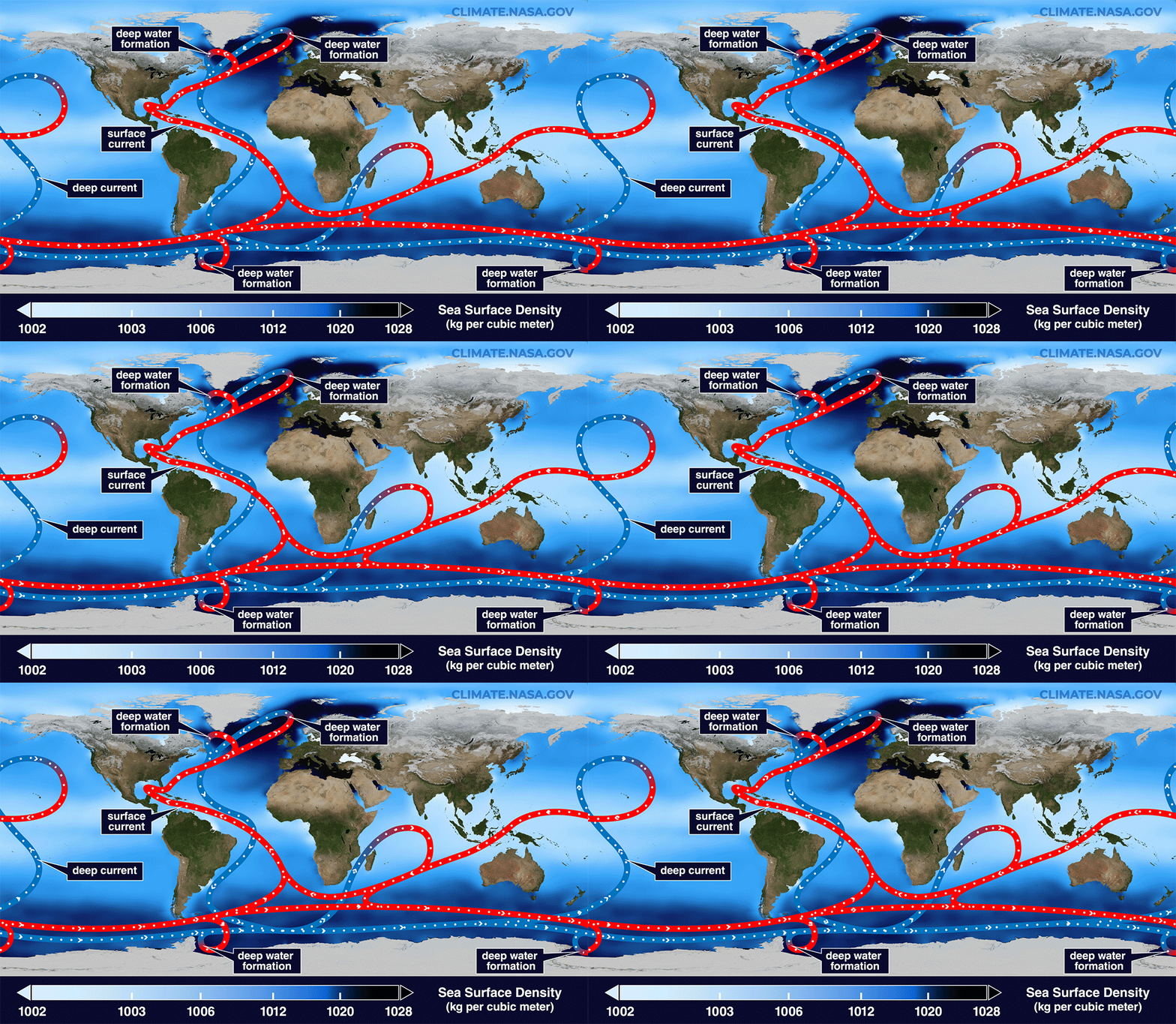
While the Intergovernmental Panel on Climate Change (IPCC) had previously put the probability of a tipping point this century at less than 10%, more recent studies have warned the danger is rising.
A University of Copenhagen study from July last year indicated that the AMOC could come to a standstill between 2025 and 2095, with a 95% chance of this happening, while the Utrecht University study published this February noted AMOC circulation has slowed over the past two decades to what they calculate is its weakest state in nearly a millennium and may come to a complete halt within a century.
A letter was sent this week by more than 40 climate scientists urging Nordic ministers to more seriously consider risks posed by an AMOC collapse and to increase pressure on international partners to stay close to the targets of the 2015 Paris Agreement, with a further clampdown on global greenhouse gas emission cuts.
The latest report by the IPCC stated "medium confidence" that the AMOC will not collapse abruptly before 2100, which the letter said "not reassuring, and clearly leaves open the possibility of an AMOC collapse during this century".
“If Britain and Ireland become like northern Norway, [that] has tremendous consequences,” said Peter Ditlevsen of the University of Copenhagen, one of the signatories of the letter.
But the collapse "can be avoided if we stop greenhouse gas emissions," said Susanne Ditlevsen, professor at the University of Copenhagen, co-author of last year's study. "It is urgent."
The UK's Office for Budget Regulation (OBR) has acknowledged AMOC collapse as one of many key uncertainties about forecasting fiscal risks for the economy.
"It is uncertain how changes in global temperature and weather patterns will affect the UK’s climate. Changes in weather patterns could lead to either more or less rain over the UK, greater wind and storm activity or calmer conditions, or even cooler winters if the Atlantic Meridional Overturning Circulation (and by extension the Gulf Stream) slows significantly," the OBR said in a report last month.
Unbelievably, there is at least a 40% chance of the #AMOC (Atlantic Meridional Overturning Circulation) collapsing within 25 years. We could be facing impacts similar to the Younger Dryas period - within the lifetimes of most people alive today. #Climate #Mitigation is Urgent. pic.twitter.com/FUA1DkKkoN
— Peter Dynes (@PGDynes) October 22, 2024