
Thomas Sandgaard is just getting started.
The enigmatic “rockstar CEO” of pain management company Zynex Inc (NASDAQ:ZYXI) has worn many hats throughout his career: Sales leader, lead guitarist, football club owner (pro tip: dealing with shareholders is much easier than dealing with sports fans). From the boardroom to the stage, Sandgaard is building a legacy for forward thinking and plain speaking. Just don’t ask him to reflect on it yet.
In this wide-ranging interview with Proactive, Sandgaard shares how he was able to build Zynex from a small state operation to a NASDAQ-listed medical technology firm using his guiding principles: vision and team.
Proactive: Let’s start with your early experiences and how they shaped your approach to business. Is there a common thread in your passions that informs your business life? What do you consider your achievements, and have you thought about what you’d like your legacy to be?
Sandgaard: I’m still just getting started, so I’m not really thinking about legacy just yet. For some people in my position, legacy is a big thing, but I’ll think about it tomorrow.
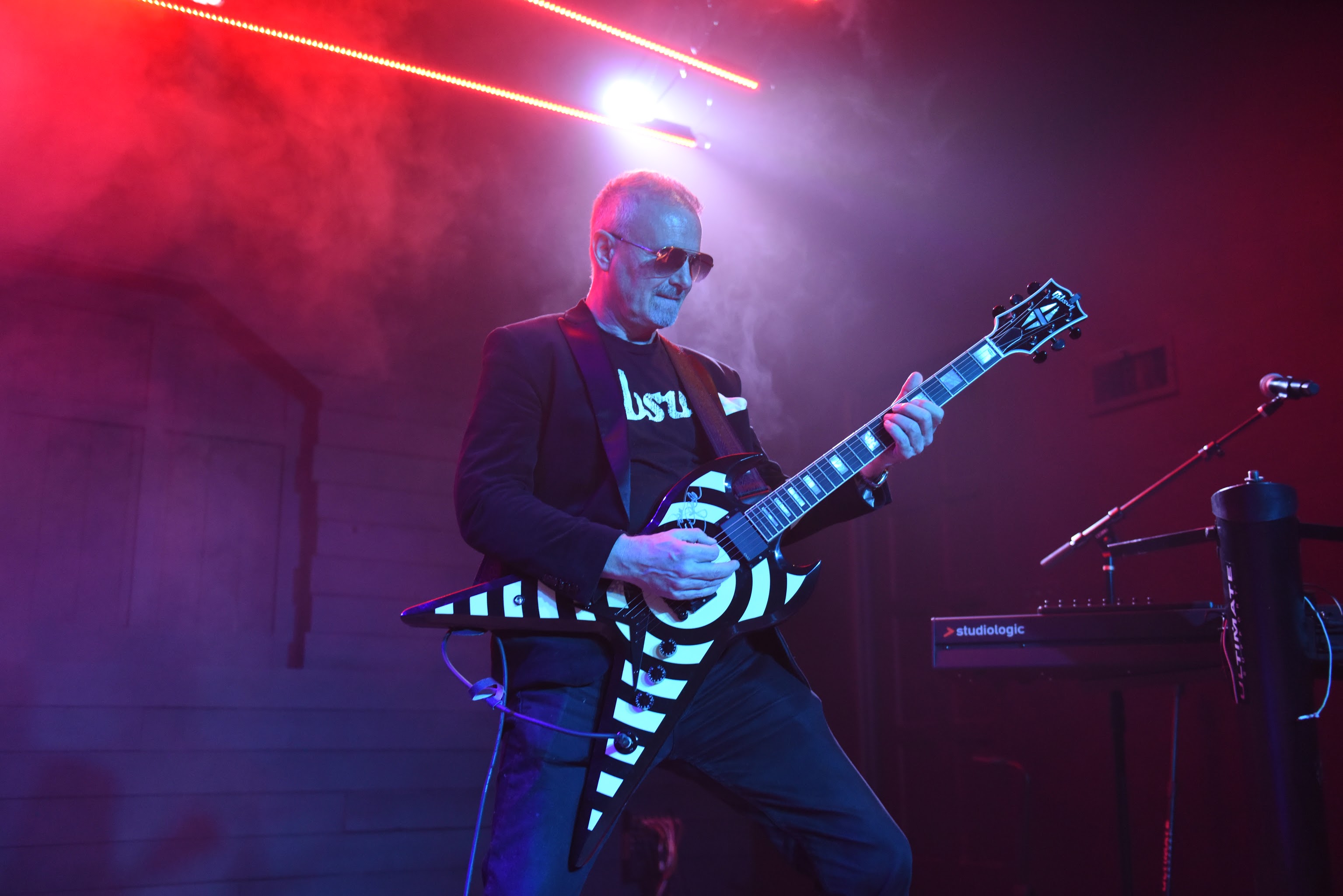
Looking back, my early years were definitely shaped by a mix of passions. I was a total nerd, winning a European contest for young inventors at age 12 and excelling in math and science. But I realized it was more important to be cool than to be a nerd, so I tried to balance both. That’s when I started playing guitar, got involved in a band, and experienced life in a different way—performing live, working with people, and developing another side of my personality.
Sports were a big part of my teenage years too. I excelled in track, winning state championships, and played soccer at a decent level. Those experiences gave me confidence and a competitive edge, which became part of my business personality.
My education also played a significant role. I earned degrees from top schools in Europe in both engineering and business, and that foundation has served me well. It’s given me the confidence to hold my own in technical and business discussions.
I started my career as an engineer at a hearing aid manufacturer in Denmark, where I worked on developing the first in-ear hearing aid. I was able to bring it to production in less than half the scheduled time, even though I was green in the industry. That early success showed me that I wasn’t just a 'nerd' anymore.
From there, I moved on to Siemens, where I worked in technical sales and product management. This role was a mix of hardcore technical work and customer-facing responsibilities, which helped me develop a well-rounded skill set. I later joined Philips, where I worked on their early cell phone efforts and traveled the world, negotiating with governments and learning the politics of business at a young age.
My experiences at Philips, especially the responsibility I was given at such a young age, shaped much of my business approach. I was involved in strategic decisions, like moving production facilities and entering new markets, which taught me invaluable lessons in leadership and business strategy. After Philips, I transitioned into a VP role at a tech company that worked on integrating mainframe systems, where we consistently captured significant market share, often outperforming IBM in key markets.
We're talking about your experiences in very diverse industries, and we haven’t even touched on the medical technology field yet. What’s been the common thread that’s guided your approach to these new opportunities and projects?
What I learned when I moved to ITT, where I worked for eight years in the semiconductor division, was crucial. I quickly got promoted to a global role, working in a hardcore group to develop the business. I learned a lot about managing sales forces, and during mergers and acquisitions, I also got experience in how people behave in those situations. It was high-level work, including some political aspects, like working with general managers to ensure financial targets were met.
My role involved strategic problem-solving, and I gained a lot of experience dealing with both internal and external politics.
At one point, I was spending most of my time in Germany, and that division had just been acquired by a British company. Out of the ten people in the headquarters, suddenly it was just my boss and me left, and I was faced with the possibility of moving to England. But I had two small kids in Denmark, so I decided to find a job back home. That’s when I became VP of Sales for a small medical device manufacturer, which is how I got into the medical device industry.
I worked there for a few years, setting up distribution all over the world, including in the US. I realized we needed a subsidiary in the US, so I found a company in California to set up a joint venture with. But at the last minute, the Danish company’s owners backed out, fearing the Americans would steal their money and they'd end up on the front pages. I got into an argument about it, and eventually, someone said, 'Why don’t you do it yourself, since you’re so confident it’ll work?' So, I made one of those life-changing decisions. I got on a plane, moved to the US, and started importing devices, bootstrapping the company from scratch.
For the first few months, I stayed with a friend, who had agreed to be CEO of the joint venture. He offered me a small room in his house, and I lived there while getting the business off the ground. It was tough—I was personally bankrupt for over 20 years. I scraped by, often just a day away from foreclosure or missing payroll. But here we are today, with nearly 1,200 employees, a NASDAQ listing, and a rapidly growing, highly profitable company.
.jpg)
What would you attribute that growth to? From taking Zynex from a very small operation to where it is today, what are some of the core values or business principles that have really driven your success?
Business principles are crucial, and for me, a lot of it revolves around sales. You can’t build a business without sales—things don’t sell themselves. In the first four or five years, I was the only employee, doing everything myself, traveling all over the country to sell to clinics or find small dealerships or distributors. After the first few years, when my main manufacturer threatened me, I realized I had to build my own products. After two and a half years, I started developing my own, and that's been our focus ever since. But everything still revolves around sales.
When I hired my first salesperson, I started applying all the things I’d learned in the past—how to build a sales force, what kind of incentive models actually work. You want long-term solutions, not short-term fixes where the benefits are fleeting and, soon after, people are upset and want to leave. That’s something I learned from personal experience.
One of my core business principles is never to apply short-term solutions. You see that a lot with traditional salespeople, so I help sales managers make sure we’re building for the long term. Another key principle is to always stay true to your strategy. Your strategy shouldn’t change easily. Sometimes you get great ideas that worked in another business, but if they don’t fit with your strategy, you have to say no, even if it’s not politically correct. It’s not always easy, but staying aligned with the strategy is essential.
So, the core principles are: everything starts with sales, make sure your structures are built for the long term, and always remain true to your strategy. Of course, treating employees well is another fundamental. For instance, we provide free breakfast and lunch for all employees.
Creating a good culture where people are genuinely happy to work is crucial. It puts a lot of pressure on recruiting, because I believe that’s where the culture starts—with the people you hire. People don’t change, so make sure you’re hiring individuals who are a good fit for the organization. We focus on hiring people who are reasonably smart and have good common sense. By focusing on these traits, we’ve built an amazing organization where people are naturally happy and have a smile on their faces.
Could you point to one of your greatest achievements or perhaps one of the most important lessons you've learned?
Well, if you listen to my business background before Signa, it was a rude awakening to suddenly find myself sitting on the floor of a one-bedroom apartment, staring at the wall, with literally no money to build a business in the medical device industry. I had to learn to become an entrepreneur, something I had no experience with. I’d never even flown coach before, to put it into perspective. For the first few months, I couldn’t even buy a car. Eventually, I bought an old, beat-up Ford Probe for $1,000 in 1996, after months of bootstrapping and robbing Peter to pay Paul—all things that were completely foreign to me. I had to learn the hard way. That’s probably why it took me more than two decades to get to a point where I was financially secure.
Because of that long learning curve, I don’t think I’ll ever consider myself a 'serial entrepreneur.' I might end up better off in the long run than some serial entrepreneurs, but it’s just been a very different path, learning all those lessons the hard way.
Does the US feel like home now?
Absolutely. There's a reason why I made the decision to move here so easily, even though it seemed like an impossible one to some people. My personality, as you've probably gathered, doesn't quite fit with Danish culture. I actually tried to start a couple of companies in Denmark, and while the business ideas were great, there's just no real venture capital environment there. There’s more of a mindset like, 'Oh, you think you want to be somebody?' Even friends and family can have that attitude. It just didn't work for me—the environment where no one is really supposed to get ahead.
Denmark is great for social security, and there are some very successful businesses that pay for that system. That’s just how taxation and everything works in Denmark. It’s part of the culture—no one is really supposed to get ahead.
I tried, without even having a specific goal, to build a great career, and eventually realized I needed to become an entrepreneur. Ultimately, I made the move to the US. Once I reached that point, my tenacity kept me from giving up and going back. I just pushed through.
Before we wrap up, I want to quickly touch on the Sandgaard Foundation, which has made significant strides in combating the opioid crisis. What inspired you to take on this particular cause?
About six or seven years ago, when things started improving for me financially, I realized we were in a unique position to make a difference. Our main business is pain management, and at that time, we were witnessing the early stages of the opioid crisis. Our primary pitch for selling one of our devices at Zynex was to help doctors provide alternatives to opioids, so patients wouldn’t become addicted. It was a topic that kept coming up, and all I was doing was ensuring our sales force could get prescriptions and, in turn, help more people avoid opioids. That felt great, but then it dawned on me that maybe I could do more.
Early on, I traveled to give speeches, and we supported causes—primarily in Colorado and across the US—financially, using mostly my personal funds. Lately, we’ve focused on efforts that I believe are having a more tangible impact. One initiative is the distribution of Narcan and naloxone, with around a million doses now available on the front lines—at police stations, hospitals, schools, and other places where people can access them without waiting for insurance approval. It’s saving lives in real time. We estimate that hundreds of thousands of lives have been saved thanks to these efforts.
Another project I’m proud of is the movie we made called Junction, which addresses the opioid epidemic. That film communicates the crisis far better than I could in a speech.
What’s important to me is finding initiatives that have a real impact, rather than just feel-good efforts or political gestures that don’t change much. A lot of people talk about the opioid crisis, but not enough are doing something about it. That’s key for me—in business and in my personal life—if something isn’t making a real difference, I’m not interested.