
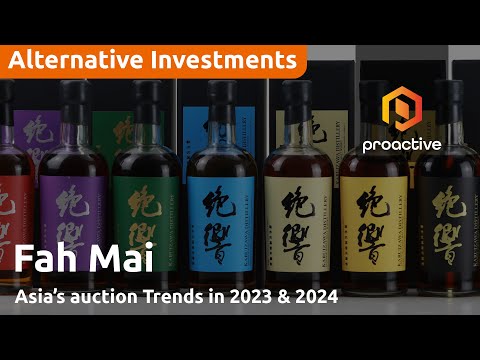
Fah Mai Holdings Group Inc (OTC:FMHG)’s UK head Jacob Carter recently caught up with Proactive's Stephen Gunnion about the current state of the Asian whisky market and emerging trends for 2023 and 2024.
According to Carter, while whisky volumes have increased by 10%, the overall value of rare bottles, especially those priced over £1000, has seen a decline. He shared insights into how ultra-high-end bottles still achieve record-breaking prices, but the market dynamics are shifting toward lower-priced bottles, where volume is growing by 18%.
Carter also touched on the rise of premiumisation in the market, where buyers are willing to pay more for single malts and aged whiskies from brands like Macallan, Glenfiddich, and Springbank.
Proactive: We’re here to discuss whisky cask investments today. Why should someone consider investing in whisky casks?
Jacob Carter: There are a few key reasons why whisky casks are such a compelling investment. First, they have a strong track record of historical returns. We’ve seen annual appreciation rates of 10% to 20%, with rare casks appreciating even higher, up to 30%. Casks from iconic distilleries like Macallan, Glenfiddich, and Dalmore consistently perform well on secondary markets.
Second, whisky typically increases in value as it ages. The longer it’s left to mature, the more complex and desirable it becomes, which in turn drives up its value—especially at key aging milestones like 10, 12, or 18 years.
Third, whisky production is limited. Many distilleries only release a small number of casks each year, and this scarcity helps drive prices higher, especially for rare or highly sought-after brands. Finally, there’s growing global demand for high-quality whisky, particularly in emerging markets like Asia and the Middle East. This demand looks set to continue rising.
Proactive: Can you estimate how many casks were sold globally in 2023?
Jacob Carter: Based on data from auction houses, private sales, and direct transactions with distilleries, we estimate that around 12,000 to 15,000 casks were sold in 2023. This marks a 20% to 30% increase in volume compared to 2022, driven by rising interest from both institutional investors and private collectors. Everyone seems to want a piece of the action, especially in emerging markets across Asia and North America.
Proactive: What was the estimated value of those sales?
Jacob Carter: The total revenue from whisky cask sales in 2023 is estimated to be between £200 million and £250 million. The average price for a whisky cask ranged from £15,000 to £20,000, though it can vary significantly depending on factors like the age of the cask, the distillery it comes from, and whether it was aged in sherry, port, or another type of cask.
Proactive: Are there any tax benefits for investors in whisky casks?
Jacob Carter: I’ll preface this by saying I’m not a tax expert, so it’s always good to consult a professional. That said, in the UK, whisky casks are classified as a "wasting asset"—an asset with a lifespan of less than 50 years. This classification means they are exempt from capital gains tax, which can significantly enhance net returns for investors. Additionally, the ongoing costs to maintain casks are generally low, and some investors opt to bottle their whisky, which can add further value to the investment.
Proactive: Why do you think whisky casks make a great addition to an investment portfolio?
Jacob Carter: There are several reasons. One big one is resilience. Whisky investments have historically performed well during economic downturns. For example, during the COVID-19 pandemic, while many traditional assets faltered, whisky prices continued to rise.
Whisky also has global appeal. It’s collected and enjoyed worldwide, which creates a stable market for buying and selling casks, helping to cushion against regional economic fluctuations.
It’s a great alternative investment to traditional assets like stocks and bonds. Adding whisky to a portfolio offers diversification and can hedge against market volatility. Whisky casks also serve as a hedge against inflation. As the whisky ages, its value tends to appreciate, making it a tangible asset that generally increases in both quality and price over time. Quite simply, you can't rush the aging process. If you want a 20-year-old whisky, you either wait for it—or pay a premium.
Proactive: Are there any other reasons you’d like to highlight for investing in whisky casks?
Jacob Carter: Definitely. One often-overlooked reason is passion. Whisky cask investments appeal to enthusiasts who love the spirit. As an investor, you get to build a personal connection with the product—whether through tastings, visiting distilleries, or even bottling your whisky. There’s an emotional element to this investment that you don’t get with stocks or real estate.
Then, there’s the luxury status. Whisky, especially premium or rare whisky, is increasingly seen as a luxury good—on par with fine wine or art. Investing in high-quality whisky can align you with that growing market of luxury and collectible items.
Stephen Gunnion: Looking ahead, what do you think the rest of 2024 holds for whisky cask investment?
Jacob Carter: I believe the whisky cask market will continue its upward trajectory for the rest of 2024 and into 2025, driven by global demand, particularly from emerging markets in Asia and North America. We’re seeing growing interest in sustainable distilling practices and rising value in older and rare casks. Plus, whisky from non-Scottish regions, like Japan and the US, is gaining popularity.
Another exciting development is the integration of technology, like blockchain and digital trading platforms, which will enhance transparency and boost investor confidence. Overall, whisky cask investments offer high potential returns, portfolio diversification, and the security of owning a tangible asset. It’s an exciting time to be involved in this space.