
Zynex Inc (NASDAQ:ZYXI) CEO Thomas Sandgaard recently sat down with Proactive to discuss the medical device company’s innovative solutions and impressive growth trajectory.
Sandgaard highlighted how Zynex has expanded from a one-person operation 28 years ago to a company with 1,200 employees and revenues reaching $200 million. It focuses on two sectors: hospital monitoring and pain management.
Proactive: I’m excited to learn a bit more about the company and what you're up to. Tell me a little bit about Zynex.
Thomas Sandgaard: Zynex is a medical device company, and we make devices for two sectors: pain management and hospital monitoring. The company is 28 years old. I founded it in a one-bedroom apartment 28 years ago. This year, we'll see $200 million in revenue. Just seven or eight years ago, we only had $11 million in revenue.
So, we've been growing fast, and we continue to grow at a double-digit percentage. We pay very close attention to always being profitable and having a positive cash flow along the way. We've been very successful in doing so, so much that we've been able to buy back stock and invest tens of millions of dollars in our hospital monitoring division so far.
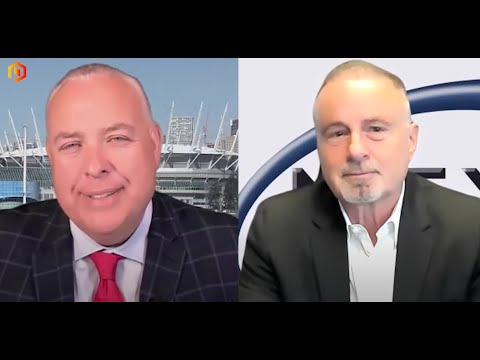
Let's talk about those two divisions. Let's begin with hospital monitoring. Tell me a little bit about that particular division and the successes you’re seeing.
In hospital monitoring, we have four game-changing products on the way. There's no revenue in that division yet, but one of them is very close to launch. We expect to submit an application to the FDA in the fourth quarter of this year and hopefully get clearance early next year.
The product is a much better mousetrap in the biggest medical device market in the world: pulse oximetry. We have a product that will try to gain as much market share as possible. Not only are we able to more accurately detect oxygen levels in the blood using the same method, typically with a finger clip, but we will also accurately detect carbon monoxide levels, reduced hemoglobin, and myoglobin.
These days, it resonates a lot with people that we can accurately measure oxygen levels even in individuals with darker skin pigmentation. That’s a significant flaw with the devices currently on the market. Beyond that, we have three other products on the way: a non-invasive blood volume monitor, early detection of sepsis, and a device that can detect total hemoglobin levels without the need for a blood sample.
And then, on the other side, you have pain management. Millions of people suffer from pain worldwide, and you’ve come up with some pretty interesting products to help with that.
Yes, I’m proud to say we have the best-in-class devices in that division, and we’ve helped more than a million patients so far. This is especially important given the opioid crisis. We continue to grow, and not only do we have great products, but we also have a strong sales force that covers every corner of the country to get prescriptions from physicians treating patients in pain. All insurances generally cover our devices. We expect long-term revenues to eventually hit or exceed $800 million.
And this is all powered by your NextWave devices, right? Tell me a little about those products. They go down and really pinpoint pain relief, correct?
That's right. The NextWave devices, which I consider our flagship products, generate the most revenue for us. It’s an easy sell to physicians. The device primarily uses electrotherapy around the area of pain, and it's often prescribed by orthopedic surgeons, especially after surgeries like knee, hip, elbow, or shoulder procedures.
It helps relieve pain so patients take less or no medication, and it also increases blood circulation, promoting faster healing. That leads to better outcomes, faster recovery, and happier patients and physicians, who continue to prescribe it because of the results. We also have other products like cervical traction, braces, cold therapy, and compression, all of which are widely used after orthopedic surgeries.
I imagine research and development is a big part of what you do at Zynex. Is that an accurate statement?
It certainly is, especially in the monitoring division. We have ongoing R&D efforts in pain management too, but on a different level—it’s more about maintenance. Occasionally, we release a new iteration of a product. We recently received FDA clearance for the TENSWave, a product derived from the NextWave. This broadens our offering in pain management.
You mentioned starting the company 28 years ago in one room, and now here you are. You've been recognized numerous times as one of the top workplaces in the US. That must be exciting for someone who began with such humble beginnings.
Yes, for the first four years, I was the only employee. I did everything—traveling around the country, handling customer service, developing the first products, dealing with the FDA. Now, we have 1,200 employees and a great culture. People enjoy working here, not just because of the purpose of helping patients but also because of the culture we've built.
Culture isn’t something you create by sending motivational emails or putting up posters. It’s about the people who walk in the door every day. People don’t change, so it’s all about hiring the right people. We've been very successful in doing that and building a great company with great people.
Lastly, 28 years ago you had a vision for the company. Has that vision changed today, or is it still what you envisioned back then?
That’s a good question. I’d say it’s mostly the same. Things don’t always happen in a straight line. We’ve had ups and downs and tough times, but looking at the big picture, it turned out a bit better than I originally thought. In the next two years, we should hit $800 million in revenue in the pain management division, and there’s huge potential in the monitoring division.
Quotes have been lightly edited for clarity and style