
The gaming industry is capital-intensive. Discover how industry giants contribute to the development of the industry through investments in smaller developers.
Industry Giants Investing in Small Game Developers
The gaming industry is experiencing rapid growth and technological changes, characterized by the rise of new platforms. These new game developers need money to run effectively regardless of the company's size or the size of the team.
Founders and creators often seek external investment to support their operations, as relying solely on personal funds or trying to find out 100 free spins at Slotozilla is appealing but not always viable. Partnering with larger companies can provide the necessary financial backing to drive their initiatives forward.
Surprisingly, many investors in small game studios are more prominent or more established companies in the game. In this article, we’ll explore the phenomenon of industry giants investing in small game developers. We will also provide some notable examples of companies providing much-needed funds for startups in the game development space.
Do Gaming Industry Giants Invest in Smaller Development Companies?
Yes, they do. In fact, some of the biggest investors in small game development companies are more established players in the industry. This makes sense when you examine it from the point of view of the investors.
Gaming industry giants understand what it means to invest in smaller companies. As operators in the same industry, they understand the nuances, challenges and hurdles of operating a game development studio. This puts them in a much better position to evaluate companies looking for funding and providing the investment they need.
Why Do Industry Giants Invest in Smaller Companies?
The idea of a game development company investing in a competitor (regardless of how small the competitor is) sounds a bit counterintuitive. Yet, there are several reasons why gaming industry giants may consider investing in small game studios. In fact, bigger game studios stand to gain a lot from such investment deals, so they make them in the first place. We have highlighted a few of these reasons below.
Access to Fresh Talent and Ideas
Gaming industry giants may seem to have it all, but they'll always need fresh talents and new ideas. Smaller studios are often breeding grounds for such innovation and creativity, which is why it makes perfect sense for bigger companies to invest in them. By investing in smaller game studios, larger companies can gain access to new ideas and talents that they can leverage for future projects.
Securing Promising Intellectual Property (IP)
Sometimes, smaller game studios are on the verge of unlocking new technologies or gaming concepts. Such innovations will be locked behind complex IP laws, which will make them out of reach for other companies. By investing early in these small companies and all the innovation they’re working on, larger companies get to secure rights to their IP before it becomes a major hit.
Expanding the Portfolio
Investing in smaller developers is some investor’s way of venturing into new markets or expanding their current portfolio of games. Gaming giants looking for ways to diversify their current offerings may invest in smaller studios already working on the genre of game category they’re interested in. This simplifies their expansion plan significantly and may also help the bigger company save on resources.
A Precursor to M&A
More prominent companies in the gaming industry often absorb smaller ones through mergers and acquisitions. Sometimes, investing in these smaller companies is a vital step towards full acquisition. The larger company can invest in a promising studio, help it grow, and then eventually buy it out entirely.
Industry Giants Investing in Small Game Developers - Examples
Larger companies in the gaming industry are always actively investing in smaller ones, either through partnership deals or full-on acquisitions. Some of the biggest gaming companies known for their active investment in smaller studios include:
- Microsoft
- Sony
- EA
- Tencent
Here is an overview of these gaming giants and their investment activities:
Microsoft
Although Microsoft is best known for its operating systems and software products, it is also quite active in the gaming industry with its game consoles and controllers line. The tech giant invests in small game developers such as Bethesda, inXile Entertainment, 343 gaming and up to 20 other studios. These investments and acquisitions help Microsoft to keep the Xbox game library fresh with exclusive titles.
Sony
Like Microsoft with Xbox, Sony is the company behind PlayStation. Some of Sony's most recent acquisitions for its Playstation division include Neon Koi, Haven Studios, Firewalk Studios and Valkyrie Entertainment.
Electronic Arts
EA is no doubt one of the biggest names in the gaming industry. The company actively invests in other game studios to diversify its portfolio beyond its core franchises. EA currently works with more than 20 game studios and over 6,000 creators.
The company also has a partnership program known as EA Labels, which funds Independent game studios' development efforts. Once EA recoups its investment, all additional revenue earned from the games goes to the studio that created it. The studio also gets to keep its IP rights to the game.
Tencent
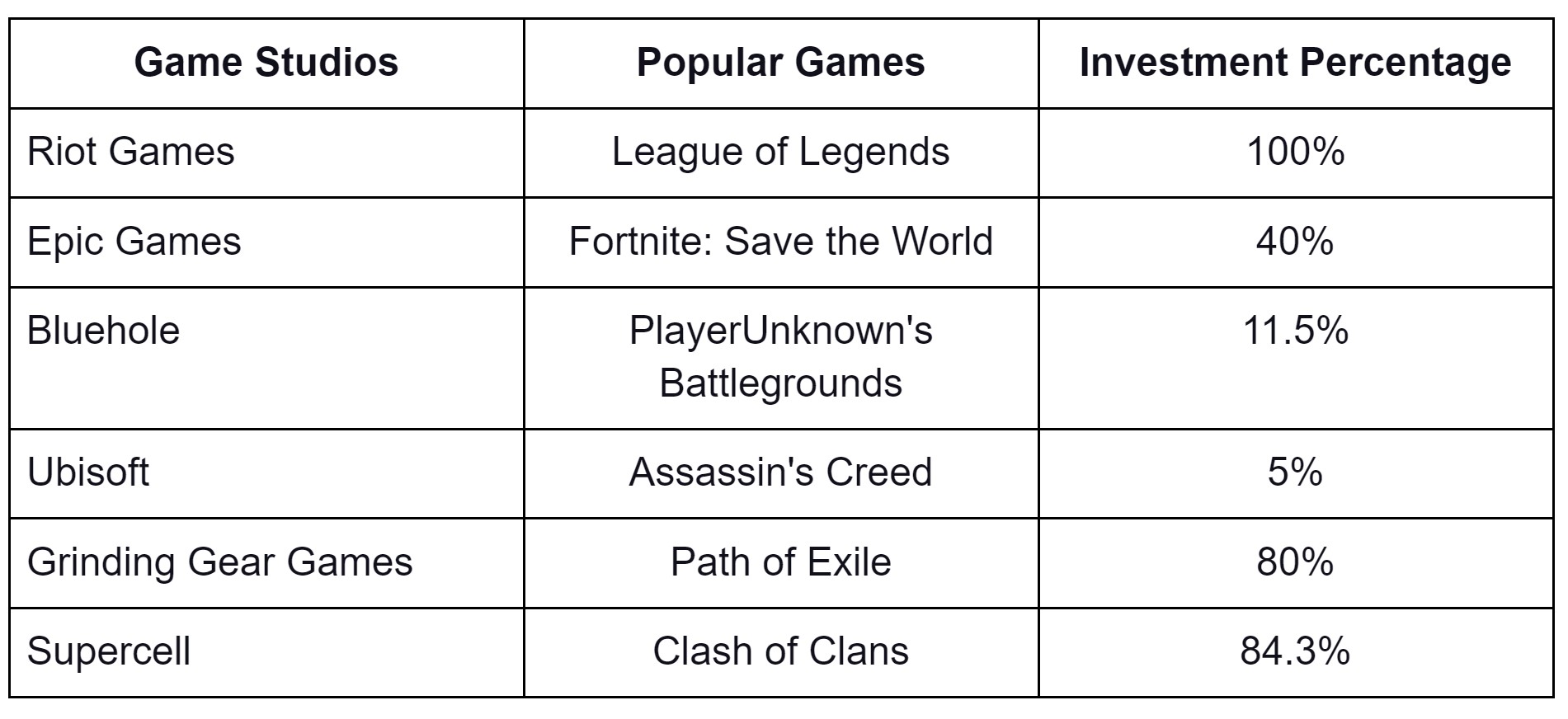
Tencent is a Chinese tech giant that invests actively in smaller gaming companies (particularly mobile developers) globally. The company has partnered with several game developers and publishers over the years and currently has over 300 investments in its portfolio. Some of the company’s most significant assets are highlighted in the table below:
Conclusion
The gaming industry is extremely capital-intensive. Game development can cost millions of dollars. Fortunately, larger companies like Microsoft, EA, Tencent and Sony have the resources to invest in the development of these high-cost games and are helping smaller companies keep up through their active investments.