
The growing push for electrification in transport, specifically through electric vehicles (EVs), is highlighting critical limitations in current grid infrastructures, often exacerbated by their reliance on fossil fuels and lack of capacity.
Mika Takahashi, a technology analyst at IDTechEx, recently took a deep dive into how off-grid solar charging stations could play a pivotal role in this transition.
According to IDTechEx's recent report, Off-Grid Charging For Electric Vehicles 2024-2034: Technologies, Benchmarking, Players and Forecasts, this market could surge to an estimated US$2.5 billion (A$3.8 billion) by 2034.
Unreliable electricity grid energy mix
The electrification of transport through EVs significantly reduces CO2 emissions at the usage point but remains dependent on the electricity grid's energy mix. According to IDTechEx's report, more than 180 million EVs are predicted to be sold annually by 2044, promising reduced tailpipe emissions.
However, this positive shift faces challenges due to the reliance on grids often powered by fossil fuels like coal and natural gas, particularly in economies like South Africa.
South Africa, where the grid includes a high percentage (70%) of coal-generated electricity, faces frequent load-shedding issues due to grid capacity constraints. This results in significant blackouts affecting all sectors, including the transportation sector.
“For commercial EV fleet operators, unpredictable grid reliability can disrupt charging schedules crucial for operational efficiency. Instances like California's 2022 heatwave, which led to requests for EV owners to limit charging to conserve energy, underscore the potential global impact of increasing EV reliance on already strained grids,” writes Takahashi.
How renewable microgrids support EV infrastructure
Vrendal-based company Zero Carbon Charge is implementing a promising solution in South Africa to address the reliability issues of the national electrical grid by creating a network of renewable, grid-independent microgrids for electric truck charging.
This initiative involves integrating solar farms, large-scale energy storage (ES) and high-powered charging outlets, thus ensuring that the charging infrastructure is not reliant on the traditional power grid.
This approach not only circumvents the need for grid reliance but also avoids the additional demand on utilities and the costly expansions of existing grid infrastructure. It offers an environmentally friendly charging option with 100% renewable energy, contributing to zero emissions from truck operations.
This model of distributed renewable microgrids is gaining traction in other regions as well, particularly in the USA where numerous companies are developing portable, smaller-scale solar-powered charging products that allow for flexibility and ease of use. This caters to EV owners seeking quick and convenient charging solutions without depending on the grid.
This development is part of a broader trend towards sustainable and reliable energy solutions in the face of growing EV adoption and grid limitations, providing a scalable model that could be replicated in other markets facing similar challenges.
Future of off-grid EV charging
The main challenge with utilising distributed solar generation for EV charging is the low power output from photovoltaic panels, which typically produce about 250 Watts per square metre.
To achieve a charging rate of 22kW, recognised as Level 2 fast charging, a substantial solar canopy of at least 10 x 10 metres is required, posing difficulties in urban settings due to its large footprint.
Additionally, the inconsistency of solar energy necessitates on-site battery storage to manage periods without sunlight, such as during inclement weather or overnight, enabling continuous charging capabilities.
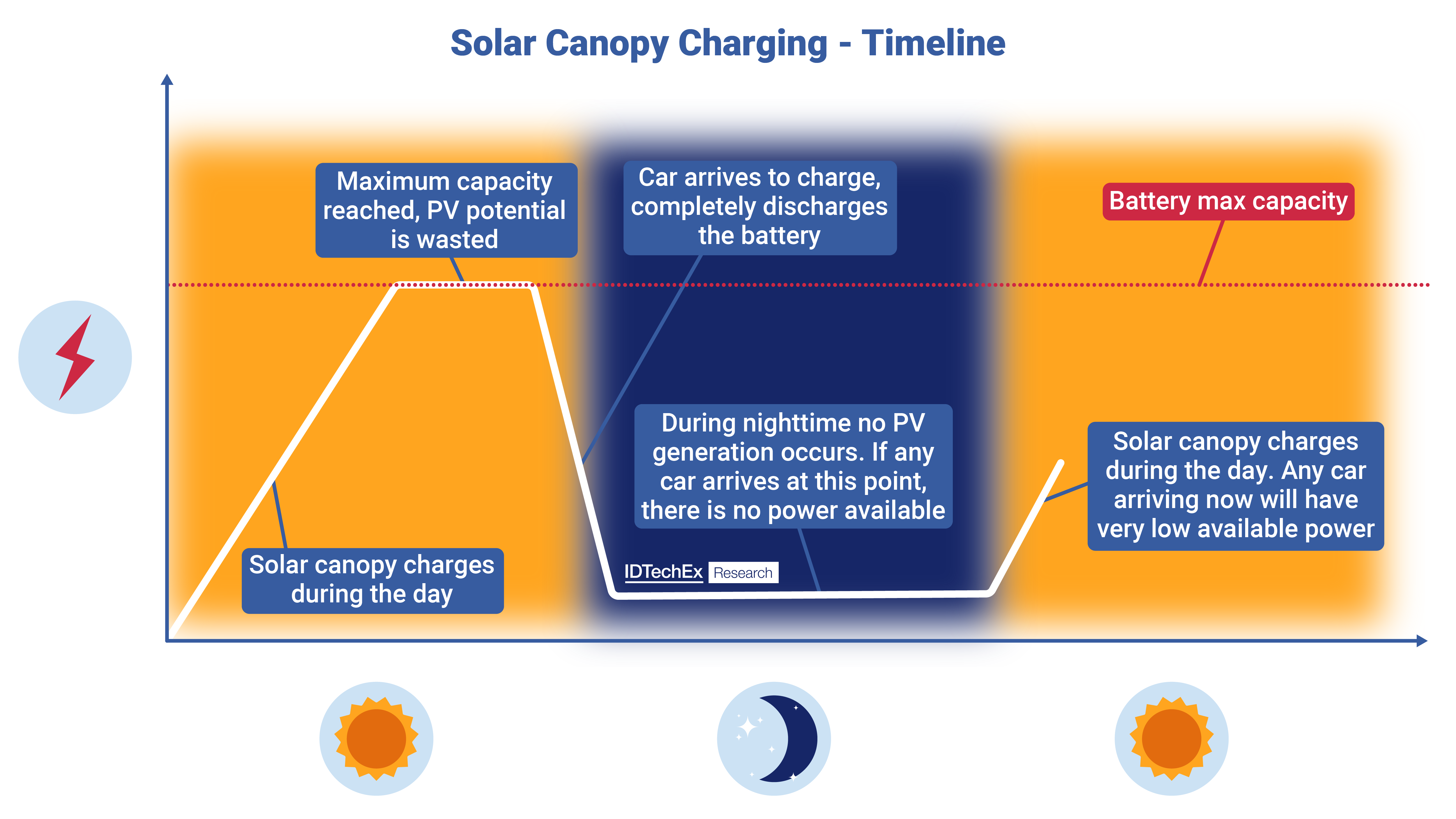
Larger solar farms paired with sufficient energy storage can form islanded microgrids that provide grid-independent fast charging, as proposed for South Africa’s electric truck charging network.
However, the viability of purely solar charging stations is largely dependent on geographical location, being most suitable in regions with high solar exposure, such as parts of the USA and South Africa. Beam Global's expansion into the European market, specifically to a sun-rich military base in Cyprus, underscores this geographical preference.
Despite these technical challenges, the need for innovative charging solutions is highlighted by the ageing and fossil fuel-dependent nature of current electrical grids, especially in regions with significant EV uptake.
According to IDTechEx, solar charging systems are expected to form a significant part of the burgeoning US$16 billion off-grid charging infrastructure hardware market by 2034.
The report also notes the potential rise of alternative technologies like hydrogen fuel cell charging and airborne wind energy (AWE), which may offer solutions for high-power demand scenarios, such as electrified construction sites.