
Rakovina Therapeutics Inc (TSX-V:RKV), a Canadian biotechnology company focused on developing innovative therapies for the treatment of cancer, experienced a sharp increase in its stock price, rising almost 16% before the Easter weekend, following its announcement of a strategic shift towards AI-powered cancer drug development.
Teaming up with Dr. Artem Cherkasov from the University of British Columbia, Rakovina Therapeutics gained exclusive access to the Deep Docking AI Platform, enabling rapid analysis of molecular structures for identifying DNA-damage response targets, potentially expediting drug discovery across various cancer types. The collaboration enables Rakovina to analyze molecular structures swiftly, potentially expediting drug discovery by focusing on vulnerabilities common across various cancer types.
In this Q&A interview, Rakovina Therapeutics’ executive chairman Jeffrey Bacha and the Company’s president & chief science officer Mads Daugaard shed light on the transformative potential of the collaboration, leveraging AI-driven precision medicine to accelerate drug discovery research, validate lead candidates, and advance them to human clinical trials in collaboration with pharmaceutical partners.
Proactive: Can you elaborate on how Rakovina's collaboration with Dr Cherkasov and the Deep Docking AI Platform will revolutionize cancer drug development?
Mads Daugaard (MD): Traditionally, drug development has been a trial-and-error process where educated chemistry estimates are being functionally validated in an iterative process. This is a very costly and time-consuming process. With integration of the Deep Docking AI platform, we can evaluate billions of drug candidates in a matter of weeks-to-months, something that previously would have taken years to accomplish.
Jeffrey Bacha (JB): Actually, the concept of screening billions of candidates in a traditional wet lab would simply be impossible even in a lifetime of medicinal chemistry efforts. Historically, Big Pharma companies typically synthesize and assess tens of thousands of potential drug candidates, while smaller enterprises with limited resources were confined to producing several hundred to a few thousand.

Rakovina CEO Jeffrey Bacha
Although combinatorial chemistry introduced the possibility of generating millions of related chemical structures, its efficacy is hindered by the requirement for compounds to adhere to plastic beads, thereby excluding many molecular structures from consideration. Furthermore, even with high-throughput screening techniques, the evaluation process spans years.
Viewing drug discovery as akin to finding a needle in a haystack, the advent of the Deep Docking platform heralds a paradigm shift. For the first time, we have the capability to survey the entire haystack comprehensively.
How does the Deep Docking AI Platform enable Rakovina to quickly analyze molecular structures and identify potential targeted cancer drugs?
MD: You have to imagine a computer that has all available information about chemistry and what effect a chemical modification would have on any given molecule. Then you add information of target structure (e.g., PARP proteins) and through virtual screening of billions of theoretical chemical backbones and structures, the AI creates a shortlist of molecules with a high probability of having the desired capabilities, such as strong and specific target inhibition, blood-brain-barrier permeability, and low side-effects.
JB: Giving the computer all of the information to “train” the AI requires access to that information. That is why DNA-damage response targets are such a promising opportunity for us.
There has been substantial interest and research in the DDR field for decades. The first PARP enzyme was discovered in Paul Mandel’s laboratory at the University of Strasbourg more than 50 years ago. The first PARP-inhibitor didn’t gain FDA approval until 2015 for the treatment of BRCA mutated ovarian cancers. From there, the field has exploded, so there is a wealth of information available in the public domain that can be used to train the Deep Docking algorithm to design novel best-in-class drug candidates.
What specific advantages does Rakovina anticipate gaining from leveraging AI-driven precision medicine in its drug development research?
MD: Rakovina has exclusive rights to the Deep Docking AI platform within the DNA Damage Response inhibitor (DDRi) space. This is a tremendous advantage that allows our R&D activities to skip many of the time consuming and costly steps in traditional lead drug candidate selection and therefore move much faster than otherwise possible. The AI also allows us to dial-in specific capabilities in the molecules that can attenuate where a molecule accumulates in a human body, and thereby better predict how it will affect a patient under treatment.
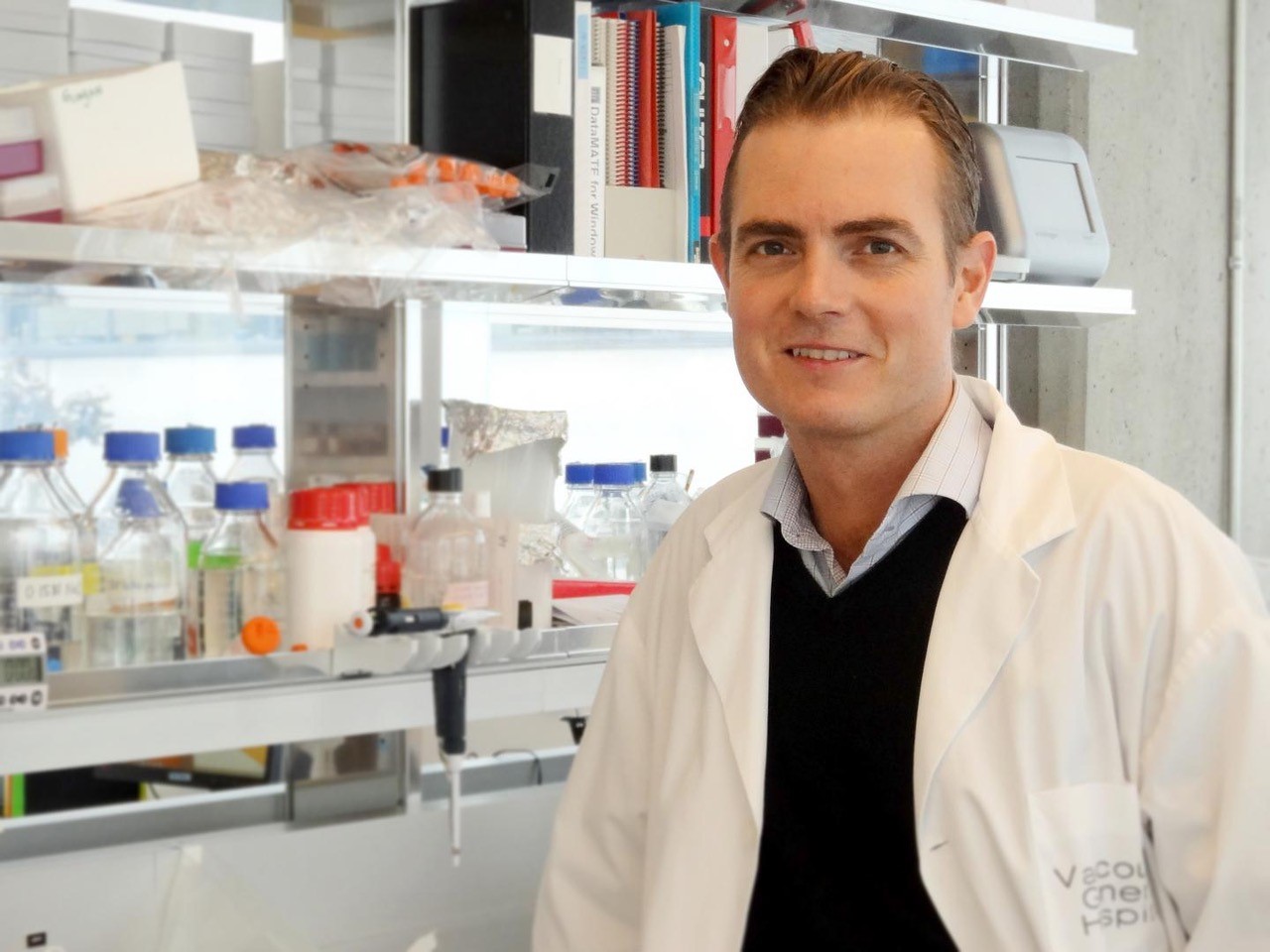
Rakovina chief scientific officer Mads Daugaard
JB: Currently, Professor Cherkasov indicates that the Deep Docking platform is orders of magnitude more robust (6000x) than other AI discovery engines. The world may catch up, but for now this provides a significant competitive advantage toward finding the next DDR drug candidate that will be game changing in the lives of patients.
Could you provide more insight into how Rakovina plans to validate the activity of the identified drug candidates and advance them through human clinical trials?
MD: Aside the unique assess to the Deep Docking platform, what sets Rakovina aside from other companies, is the direct integration of AI with the analytical laboratory. Over the past year, we have established a highly effective drug qualification infrastructure through our collaborative research agreement with the University of British Columbia and the Vancouver Prostate Centre. This infrastructure allows us to functionally validate all lead drug candidates in established analytical assays, in the laboratory and in animals, within 3-5 weeks of receiving a new compound. This workflow dramatically shortens the ‘time-to-qualify’ a lead drug candidate and reach the decision on advancing towards clinical trials and partnering with big pharma collaborators.
How does this strategic evolution align with Rakovina's overarching mission and commitment to transforming cancer treatment?
MD: For every month a cancer patient does not receive treatment, it increases the likelihood of death by approximately 10%. By incorporating AI into our workflows, Rakovina enhances and accelerates its drug-development capabilities, adhering to our commitment to advance best-in-class drugs to cancer patients in need.
JB: Agreed, 100%!
How does Rakovina foresee the integration of artificial intelligence (AI) in drug development enhancing the efficiency and success rate of identifying novel therapies for cancer patients?
MD: We have only seen the tip of the iceberg. The integration of AI in drug development will revolutionize how we create how we make medicines in the future. It will not only cut development timelines and cost. It will enable us to make better and safer drugs to be used in precision medicines for treatment of cancer and other diseases. While the AI knows what to do to improve specific capabilities of our drugs, it also knows what to avoid. In that way, multiple levels of improvements can made simultaneously, which will greatly increase success rates of identifying novel best-in-class cancer therapies.
JB: As technology continues to advance, we anticipate that AI will become integrated into all aspects of a drug’s lifecycle. This integration is poised to impact not only compound discovery and drug design but will also extend its influence to clinical trial design, patient selection and the emergence of new treatment strategies once a drug is on the market.
As Rakovina progresses with this innovative strategy, we are dedicated to advancing the discovery and implementation of these lifesaving drugs. Our mission has never been clearer.