
Rail Vision Ltd (NASDAQ:RVSN) CEO Shahar Hania delves into the world of rail innovation as he shares insights into the company's unique AI and electro optics technology tailored for the rail industry. From enhancing safety to improving operational efficiency, discover how Rail Vision's solutions are reshaping the landscape of train transportation.
Proactive: Shahar, let’s start with an introduction to Rail Vision.
Shahar Hania: Rail Vision is a company that developed AI technology and electro optics technology solely for the train industry. The reason for that is that the train industry range and requirements are completely different from automotive and other industries. Our technology is about getting the detection and classification of objects that are on the tracks. By providing an alert, the driver can respond accordingly. The train driver can see and classify 200 to 300 meters, but our system can see 24/7 day and night, and provide more than a mile pacification, which leaves the driver enough time to respond and stop the train to prevent an accident.
Is it accurate to say that there have been minimal advancements in the rail system, potentially throughout history, despite the clear value of technology in preventing accidents?
Yes, that's correct. The rail industry tends to be relatively conservative, especially considering its emphasis on safety in every aspect. Any new system must undergo rigorous testing and validation to ensure compliance with industry standards, akin to processes in the military and civilian sectors. We've successfully completed this certification process, which has motivated us to make our product available for installation.
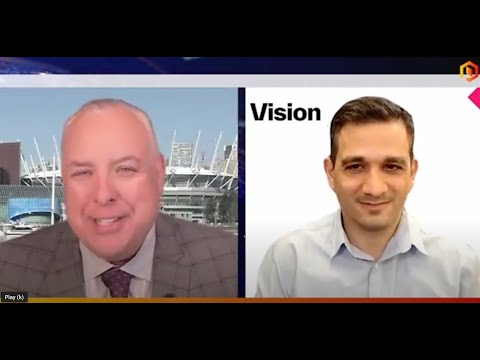
Rail Vision recently secured some notable wins and contracts, particularly one in North America, a significant market where you aim to establish a strong presence. Could you please share some insights into this particular contract with the Class One freight rail company in North America?
We've successfully completed our initial product life cycle, or PLC, and are now moving on to another phase. In fact, they've purchased our product and are currently in the testing phase. The potential here is tremendous, given the size and importance of the train and freight industries in the US. Safety and efficiency are paramount, driving the increasing demand for our technology to enhance safety and streamline operations within this sector.
You also mentioned another partnership with Loram. It seems like much of the increase in demand will come through word of mouth. Is that accurate?
Every satisfied customer serves as a reference for the next one, a principle recognized worldwide. Take our deal with Loram, for instance, which paves the way for another Proof of Concept (POC) with significant potential in the US and globally. Our system has been thoroughly tested in numerous scenarios, consistently demonstrating its effectiveness as the best available solution. It's this track record that continues to earn us repeated selection and propels our momentum forward. We're optimistic about achieving deeper penetration into the US industry as a result.
Is the primary focus for the remainder of 2024 to aggressively expand into the US market, while also considering opportunities around the world? Or are you planning to pursue a strategy that combines efforts in both regions?
We have customers across the globe, but we've observed that the US market is particularly adept at recognizing the immediate benefits of our technology and products, leading to quicker decision-making, especially in privately-owned companies. This ease of demonstrating return on investment (ROI) facilitates smoother progress with them. On the other hand, in state-owned companies, the process tends to be slower, a common occurrence worldwide. However, in the Israeli market, where our first deal for the mainline system was executed, despite being state-owned, they recognized the significant benefits after a year-long pilot. This led to our first commercial contract for 10 systems on the mainline locomotives.
Shahar, thank you so much.
Thanks, it was a pleasure for me. Thank you very much.