
The time has come for 'value' stocks, in other words stocks that appear to be trading for less than their intrinsic or book value, after 'growth' stocks, led by the 'magnificent seven' US tech megacaps, have dominated for several years.
Growth stocks are characterized by rapid earnings growth, which means their high valuations are ignored, while value stocks are typically undervalued on old school metrics like price-to-book ratios, dividend yields, and price-to-earnings ratios.
Super-low interest rates have led to the outperformance of growth stocks over the past 15 years, while artificial intelligence (AI) has added an extra boost for many in the growth category in the past year.
Even before central banks like the US Federal Reserve, Bank of England or ECB move to cut rates, strategists are saying that now could be the time for value.
In a recent cross-asset note, Deutsche Bank expressed a bullish stance on equity markets for 2024, contradicting the prevailing scepticism after the rally in the first quarter.
Similarly, Liberum strategist Joachim Klement noted factors that indicate a potential turnaround for value stocks after a prolonged period of underperformance (see chart) and that the shift suggests value stocks "have started to form a bottom versus growth stocks".
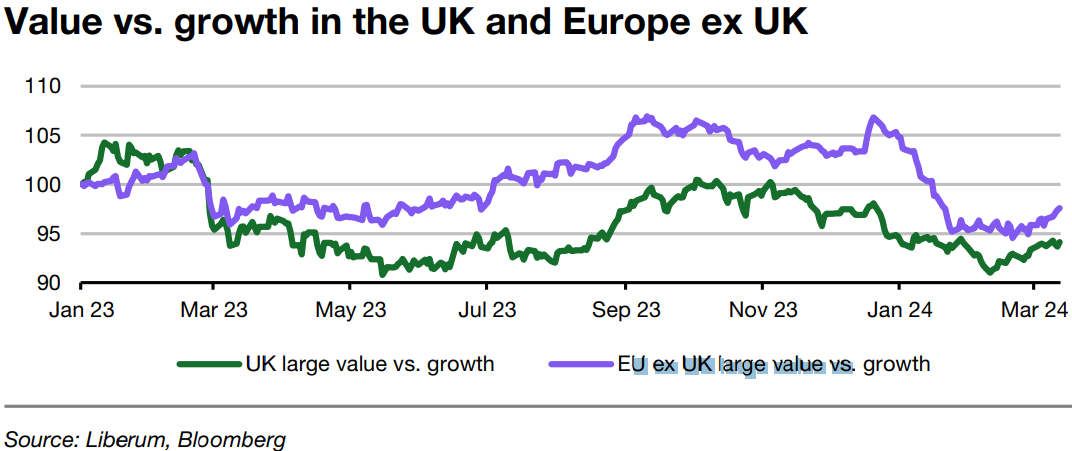
He said: "We think investors should focus on construction and precious metals miners for now to benefit from the bounce in value stocks, which may only be starting."
"We expect value to increasingly accelerate vs. growth as the year progresses. This value outperformance is in our view driven by expectations of imminent rate cuts and will accelerate once the economy starts to accelerate again."
Meanwhile, Deutsche Bank said that while the FTSE 100 lacks some of the best performers, "this trend might soon end".
It projects a 5% growth in Euro STOXX 600 earnings, significantly above the consensus estimate of -2%, and highlighted small caps as investment, noting that they "offer higher long term earnings growth at a discount".
On a regional basis Deutsche's strategy favours European equities over their US counterparts, driven by an optimistic outlook on the European economy, undervalued STOXX 600 earnings forecasts (23.7% of the index is made up of London-listed companies), and the significant valuation discount compared to the S&P 500.