
Energy prices are set to fall in April but consumers could find themselves seeing little in the way of savings.
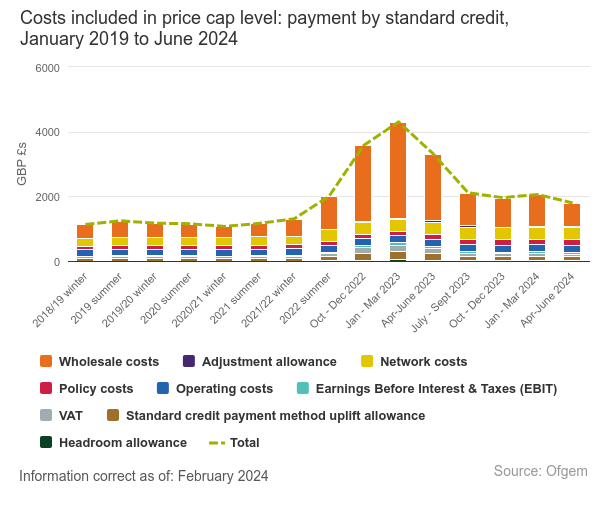
This is because daily standing charges are set to increase to a combined 91.35p per day for standard variable tariff holders, compared to around 50p at the start of the energy crisis in early 2019, as Ofgem’s new price cap allows energy suppliers to recoup debt.
From April 1, electricity will cost 24.50p and gas will cost 6.04p per kilowatt hour for those on standard variable tariffs, down from 28.62p and 7.42p currently.
Standing charges though, which remain the same regardless of usage, will climb to 60.10p a day for electricity, compared to 53.35p currently, and 31.43p for gas, from 29.60p.
According to Ofgem, this is due to an increase in distribution costs and higher charges for direct debit customers to bring them in line with those paying through other means.
A “temporary adjustment” of £28 on an annual basis is also set to be introduced though, which will be paid by direct debit and standard credit customers and help cover supplier bad debt.
“Allowing suppliers to generate this reasonable return is vital to ensure a stable and well-functioning energy sector for consumers that can cope with a volatile market and generate investment,” an Ofgem spokesperson commented.
Ofgem opened a consultation into the use of standing charges in November on the back of criticisms that such costs made it difficult for households to save money by cutting usage.
Indeed, some 20,000 people were said to have responded to the call for feedback before the consultation closed, reflecting mass discontent towards the fixed costs.
However, the use of such a mechanism reflects a wider issue within the energy market, with larger companies, such as British Gas, materially benefitting by being allowed to charge consumers more through bills.
Centrica PLC (LSE:CNA)-owned British Gas reported a tenfold increase in profits over the course of last year to £799 million thanks to the allowances, for instance.
Given such companies have taken to using the price cap as more of a guide on prices, rather than an absolute maximum as originally intended, the government is said to be in discussions over a wide-ranging reform of the market’s regulatory landscape.
“There are big questions to be answered about the entire energy system which has seen many people priced out of servicing a basic need,” AJ Bell analyst Danni Hewson commented.
“Inequity must be stamped out and huge levels of debt weighing down the system have to be clawed back, even if there will undoubtedly be debate around where that money should come from.”
Ofgem’s own chief executive, Jonathan Brearley, himself noted the “limitations” of the current system as the regulator announced the latest £1,690 cap on Friday, meanwhile.
That is, the likes of record supplier debt of over £3 billion and a lack of competition in terms of energy deals from suppliers, meaning customers are prices of £552 more now than in mid-2021, despite wholesale gas costing the same.
“As we return to something closer to normality we have an opportunity to reset and reframe the energy market to make sure it’s ready to protect customers if prices rise again,” Brearley said.