
Gold's enduring allure and fundamental role in global markets have kept it on top through the centuries as both a financial asset and a cultural emblem.
As a commodity, the precious metal’s unique properties and limited supply have cemented its status as a cornerstone of wealth and financial stability – perhaps never more so than at times of unease and instability.
Gold's pricing dynamics are shaped by several key factors, including central bank activities, the strength of the US dollar, economic uncertainty and demand in the jewellery sector.
Central banks' net purchases or sales of gold can significantly impact its global price, while the value of the US dollar inversely affects gold's pricing. No wonder, then, that the gold price is in the spotlight as we start 2024.
A safe haven in uncertain times
In times of economic uncertainty, gold's appeal as a safe-haven asset intensifies, with investors turning to it as a wealth preservation tool amidst volatile market conditions.
Moreover, the demand from major jewellery markets such as China, India and the United States contributes substantially to its global consumption, further influencing gold's market dynamics.
The London Bullion Market Association (LBMA) plays a pivotal role in establishing gold's spot price, which is the global benchmark for traders and investors worldwide.
The spot price is determined twice daily, reflecting gold's ongoing relevance in the financial ecosystem.
The gold trade spans across over-the-counter (OTC) markets to futures contracts on platforms such as the London Metal Exchange (LME) and the CME Group – it is continuously traded across international platforms, a testament to its broad influence and liquidity.
In Australia, gold is widely traded through various Exchange-Traded Funds (ETFs) listed on the Australian Securities Exchange (ASX), such as the ETFs Physical Gold (GOLD), Perth Mint Gold (PMGOLD) and Betashares Gold Bullion (QAU). These instruments offer investors direct exposure to gold's price movements, highlighting the commodity's integral role in diverse investment portfolios.
Gold's role as a diversification tool and safe-haven asset, amid fluctuating demand and valuation influenced by external economic factors, cements its role as a central commodity in the investment portfolio.
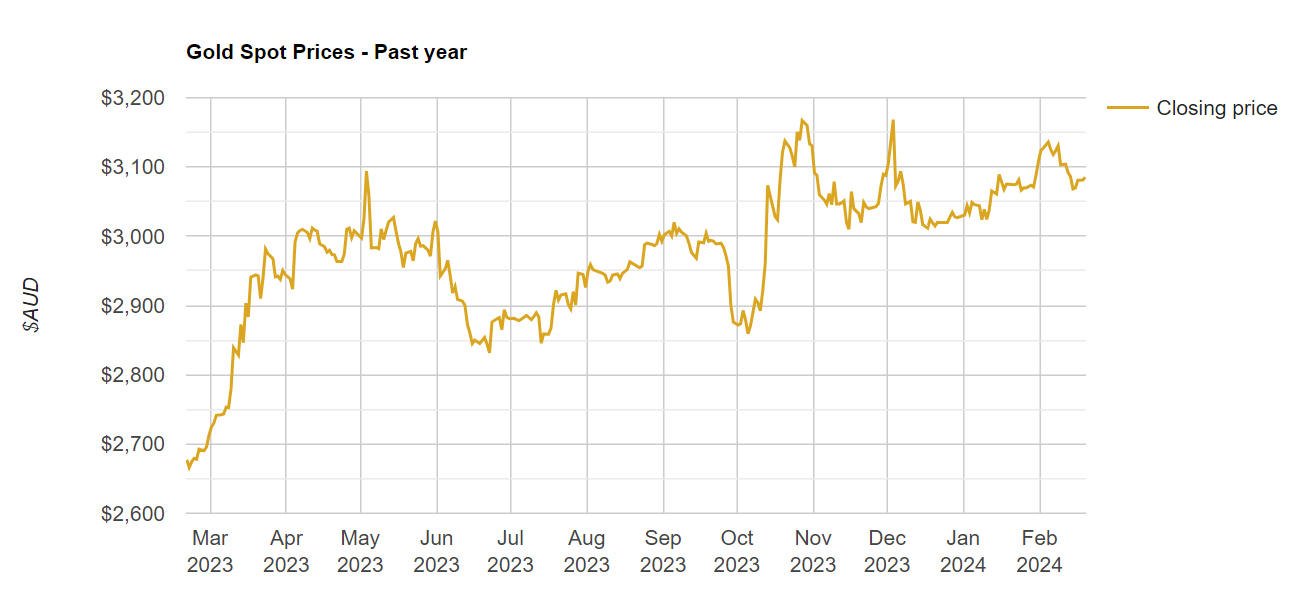
Source: Market Index.
Small cap gold miners making a mark in the quarter
Ora Banda
The quarter of Ora Banda Mining Ltd (ASX:OBM) was marked by a robust increase in gold production and sales, with the Davyhurst plant processing 16,340 ounces of gold and selling 15,837 ounces. This represents a 15% increase in gold sold compared to the previous quarter.
The All-In Sustaining Cost (AISC) was pared back by 15% on the previous quarter, averaging $2,499 per ounce. The months of November and December saw an even more impressive decrease in AISC to $2,157 per ounce, a 27% reduction attributed to improved strip ratios in open pit operations and the completion of crucial mill and crusher upgrades.
Furthermore, record mining outputs were achieved at the Missouri and Sand King open pits, where ore tonnes and gold ounces mined increased by 35% and 47% respectively, resulting in a haul of 337,683 tonnes and 21,312 ounces.
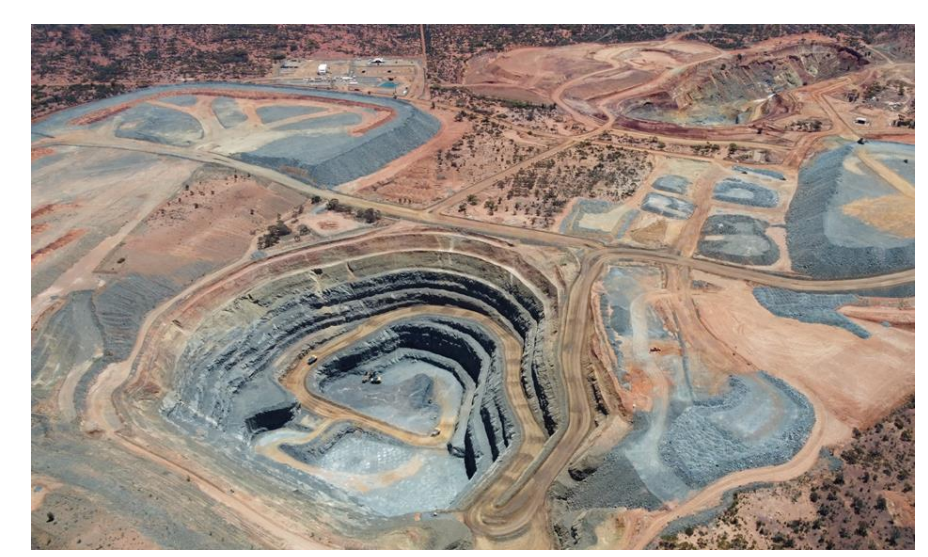
Looking north over Missouri Open Pit to Sand King Open Pit and highlighting the reduced strip ratio in the Missouri Open Pit.
Ora Banda concluded the quarter on solid ground financially, with $19.2 million in cash reserves after allocating $16.8 million towards growth capital. Investments included $11.1 million in the development of Riverina Underground, $3 million in growth infrastructure and $2.7 million in resource definition and exploration activities.
The quarter also saw the successful completion of the first stage of the WESCEF JV deal, adding $10 million to the company's finances, and the anticipation of an additional $20 million pending the fulfilment of remaining conditions by April 2024.
Kingston Resources
Kingston Resources Ltd (ASX:KSN) made progress across its Mineral Hill Gold and Copper Mine in central New South Wales and the Misima Gold Project in Papua New Guinea.
At Mineral Hill, the company generated A$24 million in operating cash flow from January 2022 to December 2023 and the quarter saw gold sales of 3,627 ounces at an average price of A$3,041 per ounce, resulting in sales revenue of A$11.2 million and an operating cash flow of A$2.64 million. This financial success was underpinned by an all-in sustaining cost (AISC) of A$2,302 per ounce.
Exploration efforts at Mineral Hill have yielded promising developments, including the discovery of a new lode underground near the mine which points to the potential for extending its operational life.
Two drilling programs at the Southern Ore Zone (SOZ) and high-grade gold intersections at the Eastern Ore Zone were wrapped up during the quarter, and an updated mineral resource and ore reserve estimate for SOZ is anticipated this year. Additionally, the mine's process plant refurbishment is on track, within budget, and set for re-commissioning by June.
On the corporate front, Kingston Resources maintains a healthy cash balance of A$10.5 million as of 31 December 2023, which will support ongoing discussions with various parties regarding potential partnerships and development pathways for the Misima Gold Project in PNG.
Horizon Minerals
During the quarter, Horizon Minerals Ltd (ASX:HRZ) showcased its six reverse circulation (RC) holes, totalling 778 metres, drilled at various prospects including Cannon North, Golden Ridge South, Kanowna South and Rundle Dam, which were aimed at expanding its resource base.
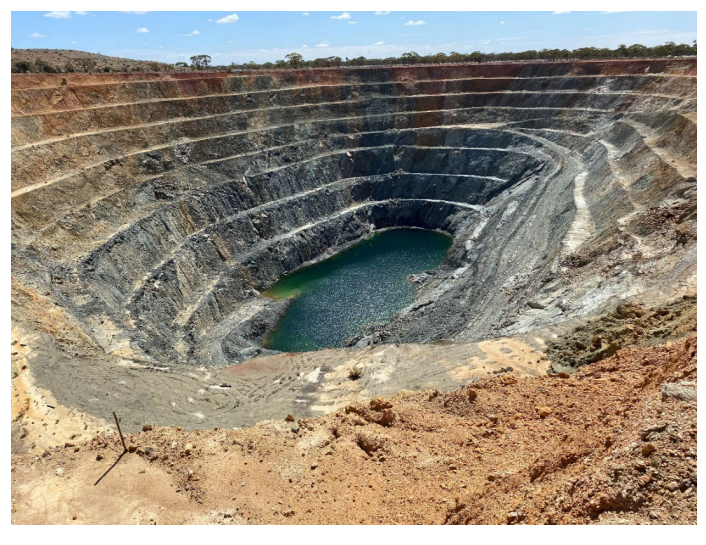
The Cannon open pit looking northeast.
A highlight of the quarter was the updated underground MRE for Pennys Find. The revised figures stand at 429 kilotonnes, grading 4.57 g/t gold, culminating in a total of 63,000 ounces of gold at a 1.5 g/t gold lower grade cut-off.
More than 80% of this resource is classified under the indicated resource category, which includes 305,000 tonnes grading 5.19 g/t gold for 51,000 ounces.
Operational highlights include the completion of the Bridgetown-Greenbushes reconnaissance, soil and rock chip sampling programs, and Aboriginal Heritage Surveys at several key sites. The construction of a dewatering pipeline between Cannon and Golden Ridge is progressing well.
The quarter also marked the initiation of the Lithium Rights divestment process, attracting significant interest and supported by advisory services from Argonaut PCF.
Financially, Horizon reported a robust position with cash at bank amounting to A$5.7 million and listed investments totalling A$8.7 million, ensuring the company is well-equipped to pursue its strategic objectives in the upcoming quarters.
Catalyst Metals
Catalyst Metals Ltd (ASX:CYL) reported that the quarter was a period of stabilisation following previous challenges, not least of which were improvements in operating performance at the Plutonic gold mine.
A highlight was the release of updated mineral resource and ore reserve estimates for the Plutonic and Trident deposits.
Specifically, the Plutonic site now boasts an ore reserve of 5.2 million tonnes at 2.9 g/t for 490,000 ounces of gold and an MRE of 17.9 million tonnes at 2.9 g/t for 1,654,000 ounces.
The Trident deposit's updated MRE stands at 4.2 million tonnes at 3.7 g/t for 508,000 ounces, a cornerstone for the upcoming definitive feasibility study (DFS).

In terms of production, Catalyst Metals achieved total gold sales of 26,336 ounces for the quarter at an average All-In Sustaining Cost (AISC) of A$2,861 per ounce.
The breakdown reveals that the Plutonic mine contributed 21,030 ounces at an AISC of A$2,713 per ounce, while the Henty operation accounted for 5,306 ounces at a higher AISC of A$3,447 per ounce. These figures underscore ongoing investments in equipment and sustaining capital expenditures, including tailings management at both sites.
On the discovery and growth front, the completion of a diamond drilling program at Trident aimed at supporting a definitive feasibility study (DFS) was a key development.
This program, focused on gathering geotechnical and hydrogeological data, is crucial for advancing the DFS, with release timelines set post the Christmas break upon finalising these and other engineering results.
Furthermore, development pipeline studies for the Plutonic belt are making progress, with a completed regional soil sampling program poised to shape future exploration efforts.
Financially, Catalyst Metals closed the quarter with available funds of A$15.4 million, alongside loan facilities totalling $30.5 million and equipment-related loans of $12.6 million.
Alkane Resources
Alkane Resources Ltd (ASX:ALK, OTC:ALKEF)’s quarter was marked by solid operational performance and progress on its strategic initiatives. The Tomingley Gold Operations produced 13,182 ounces of gold, aligning with the forecasted output for the quarter.
This production level was achieved with site operating cash costs at A$1,464 per ounce and an All-In Sustaining Cost (AISC) of A$2,200 per ounce, generating a site operating cash flow of A$16.2 million.
Gold sales for the quarter amounted to 14,507 ounces, generating revenue of A$42.4 million at an average price of A$2,926 per ounce. The full-year 2024 guidance for Tomingley remains unchanged, targeting a production of 60,000 to 65,000 ounces at an AISC of A$1,750 to A$2,100 per ounce.
Advancements were made at the Tomingley Gold Extension Project (TGEP), notably the extensive infill drilling of the Roswell orebody from underground, which saw some 17,000 metres drilled during the quarter. This drilling effort is expected to contribute to an updated mineral resource estimate in the forthcoming quarter.
Progress was also made on the surface pad works for the paste plant and the establishment of infrastructure at Roswell, with key developments such as the commissioning of the first cell of Residue Storage Facility 2 and the commencement of mobilisation activities for the process plant flotation and fine grinding circuit.
Alkane Resources updated the mineral resource for the Boda deposit, estimated at 583 million tonnes at 0.58 g/t gold equivalent (AuEq) for 10.9 million ounces of AuEq. This estimate was informed by extensive drilling and is deemed appropriate for potential open cut or underground mining.
A comprehensive metallurgical test-work program on the Boda and Kaiser gold-copper prospects was also wrapped up, with promising recovery estimates and the establishment of a viable processing flowsheet.
Gold explorers on the hunt in December quarter
Carnavale Resources
During the December quarter, Carnavale Resources Ltd (ASX:CAV) made significant progress in its exploration efforts. The company completed a comprehensive 29-hole, 4,169-metre reverse circulation (RC) drilling program at the McTavish East Prospect, focusing on infill drilling and extending the reach of previously identified high-grade gold zones.
This campaign was complemented by an additional seven holes with diamond tails, adding 356.6 metres of NQ2 core, aimed at gathering crucial data for future structural, geotechnical and metallurgical studies. The drilling is designed to support the calculation of a maiden MRE within 250 metres of the surface, laying the groundwork for subsequent economic evaluations.
The company awaits the results from the December drilling program, expected within the next two weeks, building on the promising outcomes received in October from the RC drilling conducted in August.
Earlier results underscored the potential of the McTavish East Prospect, with standout assays including 6 metres at 68.78 g/t gold from 134 metres, and several other high-grade intersections demonstrating the extensive gold mineralisation along 700 metres of strike and 250 metres down dip.
CEO Humphrey Hale said: “The company is pleased with the development of the high-grade McTavish East project. The high-grade zones have good continuity and are open at depth beyond 250 metres.
“We are keen to discover further high-grade shoots within the large-scale structure that hosts the McTavish East mineralisation. CAV will target the unexplored areas along strike from the known zones of mineralisation in our next drill program, while we undertake economic studies on the existing mineralisation.”
Flynn Gold
Flynn Gold Ltd (ASX:FG1) says the latest exploration updates from three key projects in Tasmania underscore the ongoing success and potential of the region's mineral resources. The Golden Ridge Project in Northeast Tasmania has delivered promising results from phase 2 drilling program at Trafalgar prospect.
Final assays have unveiled multiple veins of high-grade gold mineralisation, with notable intercepts including 1.1 metres at 51.3 g/t gold from 353.2 metres and several other significant gold intersections.
These results have expanded the gold system at Trafalgar to more than 400 metres in east-west strike length, with mineralisation open in all directions from surface down to a depth of 420 metres.
Initial metallurgical testing on samples from Trafalgar has achieved an impressive average gold recovery rate of 94.5% using conventional bottle roll leaching techniques.
Exploration at the Warrentinna Project, also in Northeast Tasmania, has identified multiple zones of auriferous quartz veining through its maiden diamond drilling program. The program comprised two drill holes totalling 357 metres, revealing best intersections such as 7.2 metres at 2.5 g/t gold from 69.8 metres.
The company has wrapped up a maiden drill campaign at the Firetower Project in Northwest Tasmania that uncovered significant polymetallic gold and critical minerals mineralisation. The first assay results from the program include 17 metres at 2.31 g/t gold, 0.16% cobalt, 0.38% tungsten and 0.16% copper from 121 metres.
Aurumin
Aurumin Ltd (ASX:AUN) highlighted several strategic transactions and exploration updates that underscore the company's progress in the quarter. A notable transaction was the sale of the Mt Dimer Mining Tenements to Beacon Minerals, for which Aurumin received a cash consideration of $3 million.

The sale not only strengthens Aurumin's financial position but also entitles the company to a 2% net smelter return royalty on gold production exceeding 12,000 ounces and on all other minerals recovered from these tenements.
Additionally, Aurumin used the proceeds from this sale to significantly reduce the outstanding balance of the Convertible Note held by Collins St Asset Management Pty Ltd, with an additional repayment made, bringing the outstanding balance down to $1.071 million.
Aurumin also sold its iron ore rights for several exploration licences to MinRes, receiving an initial cash consideration of $250,000, with further payments totalling up to $1 million based on the advancement of the project towards mining. This deal not only brings immediate financial benefits but also establishes a future revenue stream through a $1.00 per tonne royalty on iron ore exported.
Moreover, Aurumin has been granted four exploration licences within the quarter, expanding its operational footprint and exploration potential.
Exploration activities have also yielded significant results, particularly at the Mt Palmer project, where drilling intercepted broad widths of pegmatites confirmed as lithium-caesium-tantalum (LCT) pegmatites, albeit with low-level lithium mineralisation.
These developments, coupled with a successful placement that raised $1 million through the issue of 40 million shares, position Aurumin for further growth. The company also anticipates additional funding from a firm commitment for 10 million more shares, subject to shareholder approval, enhancing its financial flexibility for ongoing and future projects.
Great Boulder Resources
Great Boulder Resources Ltd (ASX:GBR) reported good progress in its exploration and development activities. The company announced an updated MRE for the Side Well project, which now stands at 7.45 million tonnes at 2.8 g/t gold, amounting to 668,000 ounces.
This represents a substantial increase, adding 150,000 ounces to the company’s resource inventory, with 51% of these ounces categorised under the higher-confidence indicated category. Notably, the project boasts a high-grade core of 496,000 ounces at 5.3 g/t gold.
In addition to resource updates, Great Boulder has also secured an option to acquire a 75% joint venture interest in two highly prospective projects at Polelle and Wanganui, effectively doubling its tenure in the Meekatharra region to 384 square kilometres.
Initial heritage surveys were conducted over the 14-kilometre Ironbark corridor, laying the groundwork for the commencement of drilling on new targets across this area in 2024.
The company has completed 10 RC and aircore drill holes for 815 metres, alongside initial soil sampling at Wellington and geological mapping over the Wanbanna JV tenements.
GBR's strategic focus during the quarter was on updating the MRE for the Mulga Bill and Ironbark deposits and completing Aboriginal heritage surveys over the Ironbark trend before initiating drill testing on new targets.
With approvals and funding in place for expanded exploration activities, Great Boulder is well-positioned to advance its exploration efforts along the Ironbark corridor into 2024. As of the end of December, the company reported a healthy cash balance of $4.95 million, supporting its operational and exploration activities.
Kin Mining
Kin Mining NL (ASX:KIN) reported a transformative quarter for its 100%-owned Cardinia Gold Project (CGP) in the prime Leonora district of Western Australia. The quarter was marked by two pivotal transactions that have significantly bolstered Kin's platform for future growth.
The company finalised an acceptance of the off-market takeover offer by Genesis Minerals (ASX:GMD) for its 7.34% stake in Dacian Gold, yielding a profit of $13,286,547 from the holding period of around 12 months.
Moreover, Kin announced a landmark deal with Genesis for the sale of the Bruno, Lewis, Kyte and Raeside deposits, along with associated tenements, buildings, and licenses. These assets collectively encompass 610,000 ounces of JORC-compliant Mineral Resources and were sold for $15 million in cash plus 21,917,532 unescrowed Genesis shares, valued at $38.5 million based on a 5-day VWAP.
This transaction effectively transfers just over a third of Kin's total Mineral Resource base at CGP, equipping the company with an excellent opportunity to further develop its remaining gold resources, which stand at 932,000 ounces across the Mertondale and Cardinia East areas.
An independent external review and targeting exercise across Kin's Leonora land holdings have identified several high-potential targets outside the existing resource base, indicating the presence of potentially game-changing prospects.
Post-transaction, Kin's financial position will be strengthened, with an estimated $80 million in cash and liquid assets available to fuel growth initiatives.
Adding to the quarter's successes, Kin disclosed the discovery of high-grade volcanogenic massive sulphide (VMS) mineralisation at Cardinia East post-quarter, signalling the potential for a new base metals belt within the Minerie Domain, with follow-up drilling anticipated imminently.