
With the global energy landscape on the cusp of a much-vaunted green transformation, there is a lot of interest in alternative energy sources such as uranium and hydrogen.
The two very different resources are poised to play pivotal roles in the transition towards a cleaner, more sustainable future, as nations grapple with the challenges of climate change and the need for rapid decarbonisation.
For all the controversies of the past, uranium, the dense metal used in nuclear power generation, offers a low-carbon alternative capable of producing high amounts of energy without the greenhouse gas emissions associated with fossil fuels.
This high energy density means that nuclear power plants require relatively small amounts of fuel to produce large amounts of electricity.
On the other hand, hydrogen, the lightest and most abundant element in the universe, presents a versatile and clean energy carrier.
When produced using renewable energy sources, hydrogen generates zero emissions at the point of use, emitting only water vapour when consumed in a fuel cell.
This makes it an attractive option for powering a wide range of applications, from vehicles and heating systems to industrial processes, further diversifying the energy mix and enhancing energy security.
Key alternative players
Both uranium and hydrogen are being positioned as key players in efforts to meet growing energy demands while addressing environmental concerns.
Along with their environmental benefits, the two resources contribute to the diversification of the global energy portfolio, reducing reliance on fossil fuels at an uncertain geopolitical moment when governments are recognising that there is liberty in energy security.
Moreover, the integration of uranium and hydrogen into global energy systems supports economic growth and job creation in new, high-tech sectors, fostering innovation and promoting the advanced downstream technologies that are attractive for a range of policy reasons.
Uranium market bullish
The uranium market in particular has been on a sustained upward trajectory of late, driven by a growing positive sentiment towards nuclear power as a sustainable and reliable energy source.
The trend is underpinned by a recognition of the limitations of renewable energy solutions in providing sufficient baseload energy supply for future consumption needs. The spot price of uranium has surged, reflecting a broad media acknowledgment of the increasing demand and historical supply deficits.
Several factors contribute to the optimistic outlook:
- substantial reductions in available uranium stocks;
- improved European Union (EU) sentiment towards nuclear power as a dependable alternative to fossil fuels; and
- perceived practical limitations of renewable energy sources, including significant infrastructure requirements, intermittent generation capabilities and larger land footprints compared to traditional and nuclear energy sources.
The United Nations' COP28 climate conference, held in Dubai in December 2023, marked a pivotal moment when it officially endorsed the acceleration of low-emission technologies, including nuclear energy.
This was the first inclusion of nuclear energy in the Global Stocktake by the 198 signatory countries of the UN Framework Convention on Climate Change.
Amid increasing geopolitical supply risks and a heightened focus on energy security, the US House of Representatives passed legislation potentially banning Russian uranium imports into the USA in December 2023. This can only improve the outlook for other producers, such as Australia.
At the same time, several countries, including the US, Canada, the UK, Japan and France, have committed to tripling nuclear capacity by 2050. China, in particular, plans to substantially increase its uranium consumption to support its growing reactor fleet.
A statement by producer Kazatomprom regarding potential impacts on uranium production due to acid supply shortages in 2024 and 2025 further emphasises the critical nature of supply chain stability in the uranium market.
During the quarter there was also:
- a 36% increase in spot uranium prices from US$73.50 per pound at the end of September to US$100 per pound by the end of December 2023;
- a commitment by 22 nations at the COP28 summit to triple nuclear capacity by 2050; and
- the announcement of the world's first Nuclear Energy Summit to be held in Brussels in March 2024.
Hydrogen outlook
McKinsey and Company says the global outlook for clean hydrogen is strong and anticipates a significant surge in demand by 2050, necessitating advancements in infrastructure and technology.
Demand for clean hydrogen is forecasted to escalate to between 125 and 585 million tonnes per annum (Mtpa), moving away from today’s predominantly grey hydrogen consumption, which stands at approximately 90 Mtpa.
This shift is underpinned by the transition of current applications from grey to cleaner blue and green hydrogen, alongside the emergence of new applications in sectors such as steel production, synthetic fuels and heavy road transport.
The projections suggest that by 2050, clean hydrogen could represent up to 100% of total hydrogen demand.
The landscape for hydrogen adoption is diverse, with industry initially leading the demand up to 2030, particularly in fertiliser production and refining.
Post-2030, the mobility sector is poised to become the primary driver for clean hydrogen demand, especially in long-haul, heavy-duty trucking and aviation, potentially accounting for a significant share by 2040.
This shift indicates a broader acceptance of clean hydrogen in displacing conventional fuels across various sectors, highlighting its crucial role in achieving decarbonisation.
Infrastructure scale-up and technological advancements are deemed essential for meeting the projected clean hydrogen demand.
The deployment of more than 163,000 refuelling stations and extensive hydrogen pipeline networks points to the scale of infrastructure required. And yet the progression towards a hydrogen economy mirrors historical energy system transitions, suggesting that with adequate competitiveness and support, a rapid shift is feasible.
Government and private sector coordination will be critical in ensuring the establishment of a supportive infrastructure conducive to hydrogen’s widespread adoption.
Small caps spearheading the hunt
Among the ASX-listed small caps at the forefront of future energy developments are:
Provaris Energy
Provaris Energy Ltd (ASX:PV1, OTC:GBBLF) hit a milestone in its H2Neo carrier project by achieving a key design phase for the compressed hydrogen prototype tank, set to begin construction in Norway in the first quarter of 2024.
The company has broadened its intellectual property with new small-scale hydrogen storage solutions, aiming for early revenue in 2024, and has engaged DNV for a Front-End Engineering Design Statement, which will move it towards essential approvals for the H2Neo carrier.
Provaris also signed two non-binding MoUs in Europe with Uniper Global Commodities SE and a leading German energy utility, focusing on green hydrogen supply to Germany, underscoring the growing interest in Provaris' cost-effective green hydrogen transport solutions.
The company's initiatives are backed by independent research validating that compression is a highly cost-effective method for transporting hydrogen by sea, which has caught the attention of German utilities, port owners and pipeline operators, who recognise the urgent need for affordable green hydrogen imports to support environmental goals.
In the office, the company raised $1.9 million for the prototype's construction and project development and appointed Garry Triglavcanin as product development director.
Managing director and CEO Martin Carolan said: "Our momentum across Germany and Norway surged in the quarter, reflecting the vibrant progress we're making.
“The signing of two MoUs with reputable German utilities not only underscores the growing acknowledgment of compression in the region but also positions it as a trusted and viable alternative for hydrogen supply and import.
“As Europe accelerates toward its 2030 renewables targets, there's a notable realisation among governments and major companies about the limitations of existing supply alternatives and the scarcity of gaseous hydrogen being developed for import.
“Provaris, with its innovative approach, stands at the forefront, ready to seize the opportunity presented by the pressing timeline to meet decarbonisation targets and fulfill commitments made by both industry and government for widespread adoption.
“The upcoming near-term milestones, including prototype testing and final class approvals for our H2Neo carrier, will not only enhance our credibility but also validate our business model, reinforcing our position as a key player in the dynamic and evolving landscape of hydrogen solutions."
Hyterra
In December Hyterra Ltd delivered maiden independent prospective resource estimates of hydrogen and helium within its 100%-held Project Nemaha leases in Kansas, USA, which was conducted by Sproule Incorporated, a renowned global energy consulting firm.
Executive director Avon McIntyre said: “This is a major step in quantifying the potential subsurface hydrogen resource. Additionally, we are excited to be able to add helium to our prospective resource base.
“This assessment allows us to high-grade our existing exploration lease portfolio and drilling candidate locations for a 2024 exploration program.”
The prospective resource estimate recorded a P50 net hydrogen prospective resource of 100.2 billion cubic feet (BCF), equivalent to 237,543 tonnes, with a helium prospective resource estimated at a P50 volume of 0.47 BCF.
During the quarter, HyTerra also raised $916,000 to progress its exploration activities and strengthen its position in the Mid-West, USA.
Gold Hydrogen
Gold Hydrogen Ltd (ASX:GHY) initiated Australia's first dedicated hydrogen exploration campaign during the quarter with the drilling of the Ramsay 1 well in October, reaching a depth of 1,005 metres through the fractured Parara and Kulpara limestones into the granite basement.
This exploration effort discovered hydrogen and helium within the geological formations. Continuing this momentum, the company commenced drilling at Ramsay 2 in November, achieving a depth of 1,068 metres and similarly encountering hydrogen and helium.
The drilling operations were comprehensive, incorporating downhole Modular Dynamic Testing (MDT) samples, sidewall cores, and detailed logs from both wells.
Independent laboratory testing revealed concentrations of up to 86% hydrogen and up to 6.8% helium (non-air corrected).
In a bid to accelerate the project's development, Gold Hydrogen entered into MoUs with Wasco and H2Site. These agreements aim to fast-track the establishment of a proof-of-concept pilot plant in the Ramsay project area.
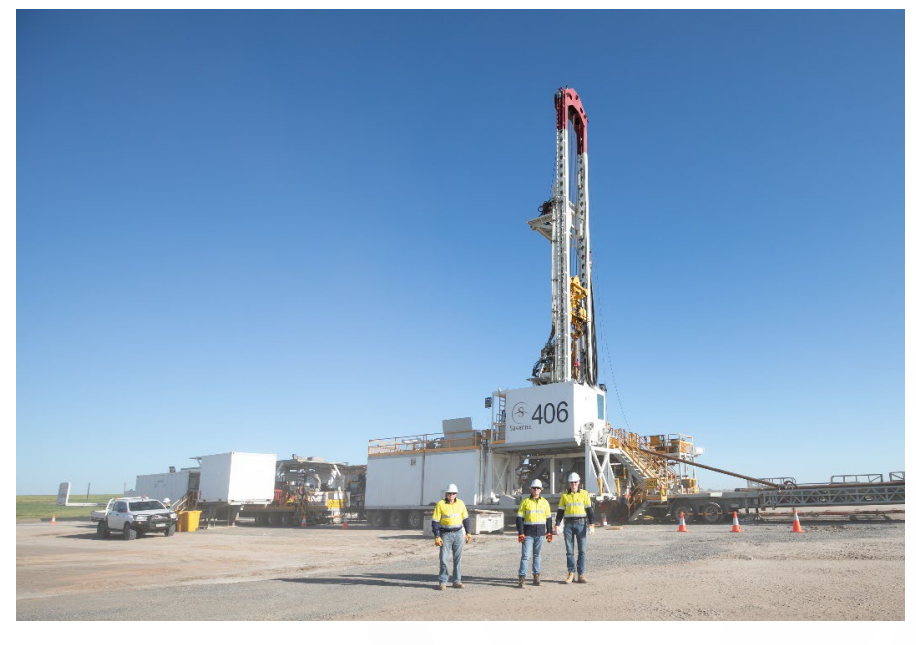
Ramsay 1 drilling operations.
Gold Hydrogen bolstered its exploration and development efforts through a capital raising, securing gross proceeds of $14.8 million from a diverse group of sophisticated and institutional investors. The company will deploy these funds in the pursuit of establishing a new natural hydrogen gas province in South Australia.
Uranium players in a favourable market
Aura Energy
During the December quarter, Aura Energy Ltd (ASX:AEE, AIM:AURA), which is poised for near-term uranium production at the Tiris Uranium Project, identified new exploration targets potentially adding up to 32 million pounds of uranium, alongside initiating drilling and applying for significant exploration tenements.
These efforts are set against a backdrop of advancing FEED studies for the project.
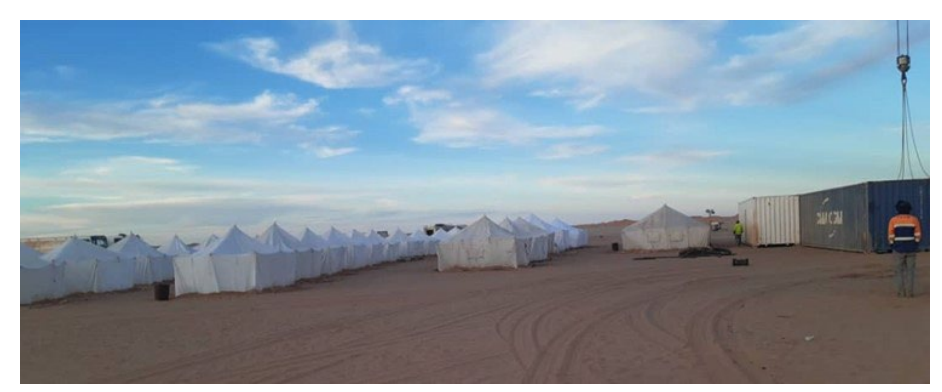
Temporary camp for the current exploration drilling campaign.
Post-quarter, Aura Energy bolstered its financial standing by securing $4.3 million through option funding and underwriting agreements, reflecting strong investor support.
The appointment of Andrew Grove as managing director and CEO on January 30 marked a strategic leadership renewal, aimed at navigating the company through its anticipated growth phases in uranium and the broader polymetallic domain.
The company’s cash position as of December 31 was $5.87 million. Major cashflow movements for the quarter included:
- investments in the company’s exploration and evaluation assets of $1.24 million;
- staff costs of A$0.96 million; and
- admin and corporate costs of A$0.70 million.
Alligator Energy
Alligator Energy Ltd (ASX:AGE, OTC:ALGEF) had steady news flow throughout the December quarter. At the Samphire Project, resource infill drilling was completed for a 2023 total of 117 holes, increasing the indicated mineral resource by 21% to 12.9 million pounds of U3O8.
The updated scoping study for Samphire indicated a 69% increase in post-tax NPV8 to A$257 million, with a projected net project cashflow of A$467 million.
The company had a quarter-end cash balance of $36.6 million, following a successful share purchase plan offer that raised $3.26 million. AGE also completed an initial investment of $900,000 in EnviroCopper Ltd, focusing on copper ISR test work.
Fabrication of the containerised FRT plant by Adelaide Control Engineering (ACE) continued during the quarter and is nearing completion with the current status as follows:
- wellhouse module construction completed;
- ion exchange (IX) columns delivered;
- pipework fitting is in progress; and
- control system programming 70% complete.
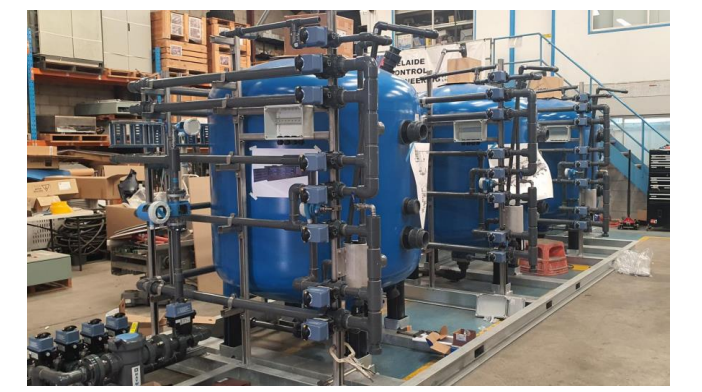
Progress of ion exchange module fabrication.
Future plans include exploration and resource extension drilling at Samphire, a 5,600-metre drilling program at Big Lake, and the review and integration of exploration data at Nabarlek North. These efforts aim to extend the life of mine and explore new prospects.
GTI Energy
In what was a busy quarter for GTI Energy Ltd (ASX:GTR, OTC:GTRIF), the company wrapped up the initial 26-hole drilling program at Lo Herma in Wyoming on time and within budget, corroborating the historical drill hole database and confirming the exploration potential of the area.

Uranium potential was identified along the trend in the Wasatch Formation and at depth in the Fort Union Formation.
In response to these promising findings, 28 new claims have been staked at Lo Herma, targeting the deeper Fort Union Formation, an area recognised for its exploration potential, as evidenced by Cameco's production some 10 miles to the east.
In parallel, the Green Mountain Project yielded positive outcomes from an airborne magnetic and radiometric survey, revealing 12 miles (19 kilometres) of anomalous uranium trends.
This survey identified six prominent uranium anomalies across the project area, leading to the staking of an additional 28 claims. As a result, the total holdings at Green Mountain have expanded to 697 claims, covering around 14,000 acres.
To spearhead these promising developments, Matt Hartmann has been appointed president of US Operations. He brings more than two decades of global mineral exploration, project development and commercial experience and boasts an extensive track record in in-situ recovery (ISR) uranium exploration across the entire project lifecycle.
Peninsula Energy
Peninsula Energy Ltd (ASX:PEN, OTCQB:PENMF) made progress on the operational and financial fronts in the quarter. The company announced a $60 million equity raise aimed at funding the restart of the Lance Projects, comprised of a $50 million placement to global institutional and sophisticated investors and a share purchase plan for eligible shareholders that sought to raise an additional A$10 million.
Peninsula Energy to be largest US-based end-to-end uranium producer | Peninsula Energy Ltd (ASX:PEN, OTCQB:PENMF), Peninsula Energy Ltd (ASX:PEN, OTCQB:PENMF) (proactiveinvestors.com.au)
Meanwhile, the flagship Lance Project in Wyoming has seen considerable advancements, with the Ross process plant's low-pH transition construction substantially completed and the final engineering work for plant capacity and capability expansion nearing its final stages.
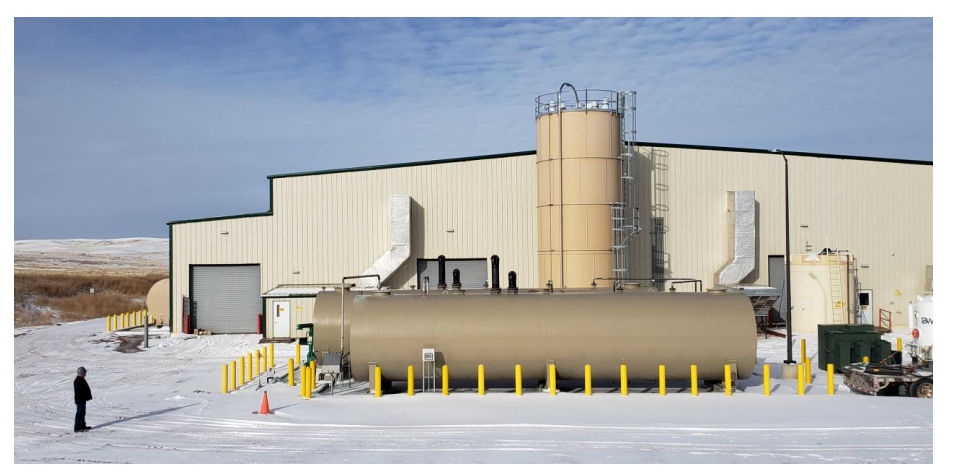
The new acid storage vessels at the Ross Plant-Lance.
Peninsula has expanded its operational footprint with the establishment of the Dagger Project, just 20 kilometres northeast of the Lance facilities. This new venture has secured approximately 4,140 acres of mineral rights, boasting an initial mineral resource estimate of 6.9 million pounds of U3O8 at an average grade of 1,037 parts per million (ppm), with a drilling program planned for 2024 to upgrade this resource estimate.
The company ended the quarter with a robust cash position of US$17.9 million, with proceeds from the recent equity raise expected to bolster its financial resources. It also fulfilled a significant delivery requirement to a current customer, dispatching 209,507 lbs of U3O8 under the terms of a sales agreement.