The landscape for cancer treatment has seen several ground-breaking advancements in recent times. From innovative therapies to diagnostic technologies, progress is reshaping our approach to cancer care.
Of course, major developments in cancer screening, diagnosis and treatment have occurred for almost 150 years. But it seems today, we are much closer to significant breakthroughs treatments and potentially cures.
The following looks at some of the great work being done across the cancer field and by several small Australian companies that are taking large steps for mankind.
Advancing treatments and technologies
CAR-T cell therapy
One of the most notable advancements is the development of personalised medicine, particularly in the field of immunotherapy.
Researchers have made strides in tailoring immunotherapeutic treatments to individual patients' genetic profiles, enhancing the efficacy and reducing the side effects of cancer treatment.
For example, new forms of CAR-T cell therapy, which involves modifying a patient's T-cells to target and kill cancer cells, have been approved for additional types of cancer, including certain lymphomas and leukemias. These therapies have shown remarkable success rates, even in cases where traditional treatments have failed.
Targeted therapies
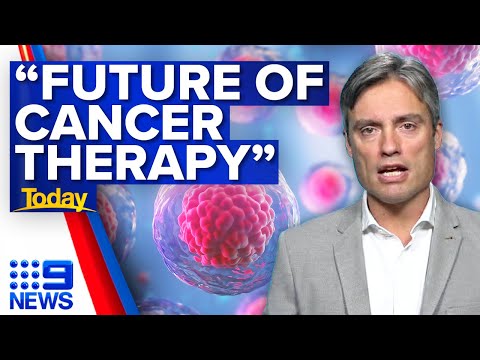
Advancements in targeted therapy have also been made. This involves drugs that target specific genetic mutations within cancer cells.
The approval of several new targeted therapies has been a game-changer for patients with specific genetic markers.
For instance, drugs targeting the KRAS mutation, a common mutation in various cancer types, have shown promising results in clinical trials, offering new treatment avenues for patients with lung, colorectal, and pancreatic cancers.
Oncology
The field of oncology has also seen significant progress in the development of cancer vaccines. Unlike traditional vaccines, these are designed to prevent cancer recurrence in patients who have already been treated for the disease.
Recent trials have shown promising results in developing vaccines against several types of cancer, including melanoma and certain types of breast cancer. These vaccines work by stimulating the body's immune system to recognise and attack cancer cells, potentially reducing the risk of recurrence.
Diagnostic technologies
Diagnostic technologies have undergone remarkable improvements, aiding early detection and the personalisation of treatment plans.
Liquid biopsy, a non-invasive method that detects cancer cells or DNA from a blood sample, has seen significant advancements.
This technology allows for the early detection of cancer and provides critical information on the genetic makeup of tumours, helping to tailor treatments more effectively and monitor response to therapy over time.
AI
Moreover, artificial intelligence (AI) and machine learning are playing increasingly pivotal roles in cancer research and treatment.
AI algorithms are being used to interpret complex medical data, including imaging and genetic information, to identify patterns that might not be visible to the human eye.
This can lead to earlier detection of cancers and more precise targeting of therapies, significantly improving patient outcomes.
The role of microbiome
In the realm of prevention, there has been a growing emphasis on understanding the role of microbiome in cancer.
Recent studies have explored how altering the composition of gut bacteria can reduce the risk of certain cancers and improve the efficacy of treatments. This research opens up new possibilities for cancer prevention strategies and adjunct therapies that could enhance the effectiveness of existing treatments.
With continued investment and focus on personalised medicine, targeted therapies, cancer vaccines, advanced diagnostics and the application of AI, the future of cancer treatment looks promising.
These advances not only offer new hope for patients but also pave the way for more effective, less invasive, and more personalised cancer care.
Cancer small caps making news
Patrys
Patrys Ltd (ASX:PAB) has begun 2024 with a new manufacturing slot for PAT-DX1.
Patrys CEO Dr James Campbell said: “It is very exciting to be going into 2024 with a new manufacturing slot for PAT-DX1 secured which puts Patrys on a clear trajectory to initiate its first-in-human clinical trial in the second half of the year.
"Following the thorough investigation and audit that was conducted around the manufacturing process, Patrys is confident that the drug material from this manufacturing run will enable the company to initiate this landmark trial.
"As the GLP toxicology studies that have been completed in rats and non-human primates have not identified any safety or tolerability issues associated with the administration of PAT-DX1, this is expected to be the final step before Patrys can commence engaging clinicians and trial sites in order to formally initiate the clinical trial process.”
PAB’s highlights for the December quarter included:
- GMP manufacturing slot for PAT-DX1 secured for Q1 CY2024 to provide drug material for first-in-human clinical trial expected to commence in 2H CY2024;
- GLP toxicology studies for PAT-DX1 have not identified any safety or tolerability issues that are likely to affect the proposed Phase 1 clinical trial of PAT-DX1;
- A Master Cell Bank (MCB) for PAT-DX3 has been characterised and validated, and an integration manufacturing run has been successfully completed;
- Cash and short-term investment balance of $4.5 million on December 31, 2023.
Imugene
It was a major quarter for Imugene Ltd (ASX:IMU, OTC:IUGNF) and its VAXINIA developments.
During November Imugene welcomed early data from the Phase 1 MAST (Metastatic Advanced Solid Tumours) trial of VAXINIA, with positive early signals reported.
In a key regulatory development that followed, VAXINIA received Fast Track Designation for bile duct cancer from the US Food and Drug Administration (FDA).
In October, the company announced the start of its Phase 1 clinical trial for CD19 oncolytic virotherapy drug candidate, onCARlytics.
Imugene also announced the dosing of the first patient with the FDA-cleared manufacturing process 1.2 in a Phase 1b clinical trial using its azer-cel technology, an allogeneic off-the-shelf CD19 CAR T cell therapy.
In December, Imugene announced the commencement of a Phase 2 neoPOLEM clinical trial for PD1-Vaxx in patients with colorectal cancer (CRC) in the United Kingdom and Australia.
At the end of the December quarter, Imugene has $139.4 million in cash or equivalents, providing a runway to support its clinical pipeline and operations.
"Following the positive news on VAXINIA's early signals and FDA Fast Track Designation to end 2023, we are pleased to start the new year by announcing the ongoing progress of the Metastatic Advanced Solid Tumours (MAST) trial as we continue to see no safety issues with the drug," said Imugene CEO Leslie Chong recently.
"We also look forward to expanding the trial to take a closer look at bile duct cancer where we've seen early encouraging results."
It should be noted, the company had a major breakthrough recently when one patient with biliary tract cancer achieved a Complete Response (CR) after being treated at a mid-dose level and has remained in remission for more than 430 days.
Prescient Therapeutics
Prescient Therapeutics Ltd (ASX:PTX, OTC:PSTTF), a clinical-stage oncology company developing personalised therapies for cancer, continues to move forward.
The most significant activity during the reporting period, and a significant milestone in the history of the company, was the announcement of results of the Phase 1b study of PTX-100 in patients with advanced malignancies, with a focus on patients with relapsed and refractory T-cell lymphomas (r/r TCL).
These results were presented at the prestigious American Society of Hematology (ASH) Annual Meeting in San Diego, California last month.
Overall, the highlights include:
- Cash balance of $18.4 million with spending in line with budget;
- PTX-100 Phase 1b study presented at major hematology conference;
- Excellent safety profile, with no drug-related SAEs;
- Preliminary efficacy observed in r/r TCL patients exceeding the threshold to advance the study;
- Cell therapy platform development ongoing;
- Presentation and participation in major scientific and partnering conferences.
Arovella Therapeutics
Arovella Therapeutics Ltd (ASX:ALA) is a biotechnology company focused on developing its invariant Natural Killer T (iNKT) cell therapy platform for cancer treatment.
During the quarter, Arovella continued to advance its iNKT cell therapy towards first-in-human clinical trials. Arovella’s technology provides key advantages over existing CAR-T cell therapies and has the potential to be applied to both blood cancers and solid tumours.
Arovella is in a solid financial position with pro-forma cash and cash equivalents of $4.76 million as of December 31, 2023.
During the last quarter, Arovella:
- Progressed its solid tumour strategy by signing an exclusive licence with Sparx Group to develop a world-first CAR-iNKT cell therapy targeting a validated target, Claudin 18.2 (CLDN18.2), which is expressed in gastric cancers (GC), gastroesophageal junction cancers (GEJC) and pancreatic cancer (PC);
- Completed GMP manufacturing and release of the ALA-101 lentiviral vector, a key component required for GMP manufacturing of its lead CD-19-targeting iNKT cell product, and continued to advance its manufacturing process development and scale-up activities;
- Received its FY23 R&D Tax Incentive refund of $1.92 million, further strengthening its cash position as it progresses development of its lead asset, ALA-101, towards first-in human clinical trials; and
- Appointed Tim Luscombe as its new chief financial officer (CFO) and company secretary.
Recently, the company executed a global, exclusive licence with University of North Carolina Lineberger Comprehensive Cancer Center to incorporate a novel armouring cytokine technology (IL-12-TM) into its CAR-iNKT cell therapy platform.
Arovella will be the only iNKT cell company working with the technology.
Noxopharm
In the recent quarter, Noxopharm Ltd (ASX:NOX, OTC:NOXOF) unveiled promising data indicating that its SOF-VAC™ mRNA vaccine enhancer substantially mitigates inflammation associated with mRNA therapies in animal studies. The introduction of SOF-VAC alongside mRNA therapies led to a significant reduction, approximately 50%, in mRNA-induced inflammation.
This discovery is pivotal, considering the inflammation linked to current and prospective mRNA treatments and vaccines often results in side effects.
Noxopharm also benefited from a financial boost, receiving a $6.052 million rebate from the Australian Government’s Research and Development Tax Incentive for the fiscal year 2023 expenditures. This funding enhances Noxopharm's financial stability, bolstering its research and development initiatives.
The company continued to prioritise the advancement of its Chroma™ and Sofra™ preclinical platforms. Notably, at the Annual General Meeting (AGM), it was announced that the skin medication for lupus and psoriasis, previously known as SOF-XX, has been rebranded to SOF-SKN™ and is being fast-tracked through development.
In additional developments, Noxopharm's CEO Dr Gisela Mautner was honoured with the STEM Champion award at the Health Industry Hub Catalysts for Change Awards in November, following an interview in August focused on innovation and the future of industries during National Science Week.
Reflecting on the quarter's achievements, Dr Mautner said, “The final three months of 2023 were important for us, as we clearly demonstrated the validity of our Sofra platform through the results of the SOF-VAC study.
“The data was very encouraging and we will continue to seek a commercial partner for this asset as well as advance SOF-SKN via a range of technical and safety studies. Along with our work on our pancreatic cancer drug, these activities position the company well as our transformation continues into 2024.
“I would also like to personally thank the shareholders who attended our AGM in November. It was a good opportunity to meet and discuss the business, and we appreciate all the feedback.”
Race Oncology
Race Oncology Ltd (ASX:RAC, OTC:RAONF) finished the quarter with cash reserves at $13.72 million.
This quarter was marked by significant milestones, including the appointment of Dr Daniel Tillett as CEO.
Race also launched a comprehensive clinical program, which is fully funded and focuses on cardioprotection, m6A RNA and Acute Myeloid Leukaemia (AML).
Additionally, the company initiated a bonus option issue with piggyback options for its shareholders, aiming to raise up to $36.6 million to support this clinical venture.
During the quarter, Race shared interim results from the ongoing Phase 2 trial of bisantrene, in combination with fludarabine and clofarabine, for patients with relapsed or refractory AML.
These findings were presented at the American Society of Hematology (ASH) Annual Conference from December 9-12, 2023.
Conducted at the Sheba Medical Centre in Israel and led by Professor Arnon Nagler, the trial reported that 40% of the 15 evaluable patients responded to the Bis/Clo/Flo regimen.
This includes five complete responses and one partial response, with three responders also presenting with active extramedullary disease (EMD).
Remarkably, five of the six patients responding to treatment were successfully bridged to a potentially curative stem cell transplant within one to three months following treatment.
“The quarter has been an eventful one for both Race and myself. I am excited to return to Race as the CEO and be involved in the development of the updated and funded corporate strategy which we released in November,” RAC CEO Daniel Tillett said.
“Our new bisantrene formulation, RC220, continues to advance through the GMP manufacturing and GLP testing process and I am looking forward to Race returning to the clinic in the second half of 2024.
"The opportunity for bisantrene continues to grow with the recent Sheba data again demonstrating that the drug can provide excellent patient outcomes in the modern clinical environment. I wish to thank all the shareholders for their kind words and support.”
Radiopharm Theranostics
Radiopharm Theranostics Ltd (ASX:RAD, OTC:RDPTF) is a developer of a world‐class platform of radiopharmaceutical products for diagnostic and therapeutic uses. It closed out the quarter with $1.89 million in the bank, increasing from $1.83 million at the end of the prior quarter.
The initiation of a Phase 1 clinical trial, known as RAD204, was designed to explore the treatment possibilities for patients with PDL1-positive non-small cell lung cancer, a condition that has long challenged the medical community. With the announcement of a second trial site, the study's reach and potential impact were significantly expanded.
Another trial started in New York, identified as RAD 301, aimed to assess the efficacy of 68Ga-Trivehexin in detecting lesions in patients suffering from Pancreatic Ductal Adenocarcinoma (PDAC), a notoriously difficult to diagnose and treat form of cancer.
The initiative represented hope for PDAC patients, offering a potential breakthrough in the early detection and management of this devastating disease.
The Australian Government, in a substantial show of support, awarded A$4.85 million under its Research and Development (R&D) tax incentive program. This financial backing underscored the government's commitment to fostering medical research and innovation, providing essential resources to propel these trials forward.
Syntara
2024 started on a strong note for Syntara Ltd (ASX:SNT). During this period, the company completed the divestiture of its mannitol business unit (MBU), rebranded the company as Syntara and raised $10 million in capital.
The exit from the mannitol business reduced its annual operating costs by more than $14 million, and together with the proceeds from the capital raise, Syntara is now positioned with sufficient funding to reach the anticipated outcomes from several clinical trials by mid-2025.
This capital raise received robust support from its existing institutional shareholders and attracted new investors from specialist funds known for their successful investments in companies developing treatments for myelofibrosis.
Additionally, Syntara offered all shareholders the opportunity to purchase Syntara stock at the same price as the capital raise through a share purchase plan.
Reflecting on Syntara's strategic position, several factors contributed to the success of the capital raise:
- A robust portfolio of clinical-stage assets, led by a promising program targeting haematological malignancies.
- Three phase 1c/2 studies addressing areas with significant unmet medical needs and promising market potential, expected to deliver data within a 9-month timeframe from Q4 2024 to Q2 2025.
- A leading science platform recognized globally, as evidenced by three recent publications in Nature.
- A streamlined and focused Board of Directors under new leadership.
- The flagship compound, the pan-LOX inhibitor SNT-5505 (formerly PXS-5505), is undergoing a Phase 2 multinational study for myelofibrosis. The company was honoured to present its findings from the monotherapy study in myelofibrosis during an oral presentation at the prestigious American Society of Hematology (ASH) conference in San Diego last December, attended by more than 30,000 professionals.
Following this recognition, Syntara initiated a follow-on study where SNT-5505 is combined with ruxolitinib, the standard myelofibrosis treatment with annual sales surpassing $1 billion.
This study, approved by the FDA in Q3 2023, has already begun with the recruitment of the first patient. Syntara aims to complete recruitment by mid-2024 and to present preliminary data at the ASH conference in December 2024.