
The race is on to find new sources of rare earths – ones that can be extracted economically and sustainably.
China currently dominates rare earth production at nearly 70%. Recently, China’s Ministry of Commerce has cracked down on rare earths exporters by enforcing new guidelines to report transactions of strategically important rare earth metals and oxide products, which has sparked fears of a trade war that could shoot the prices of rare earths to high levels.
The move has put rare earths deposits elsewhere around the globe in sharp focus as demand for end-use applications like electric vehicles skyrockets.
For Aclara Resources Inc (TSX:ARA, OTC:ARAAF), the solution lies in the geology of Latin America. The Canadian company is advancing two promising opportunities in Brazil and Chile. What’s more, it has developed a unique process that could prove to be a model for rare earths production.
Aclara has collaborated with the University of Toronto to develop Circular Mineral Harvesting, an environmentally friendly method for extracting rare earths from ionic clays. The process uses no explosives, no crushing, no milling and it does not produce any liquid residues. It recycles approximately 95% of the water used, as well as 99% of its main reagent; a common fertilizer. And no tailings dam is required in the process. Circular Mineral Harvesting not only ensures high rare earth recoveries but also prioritizes environmental sustainability.
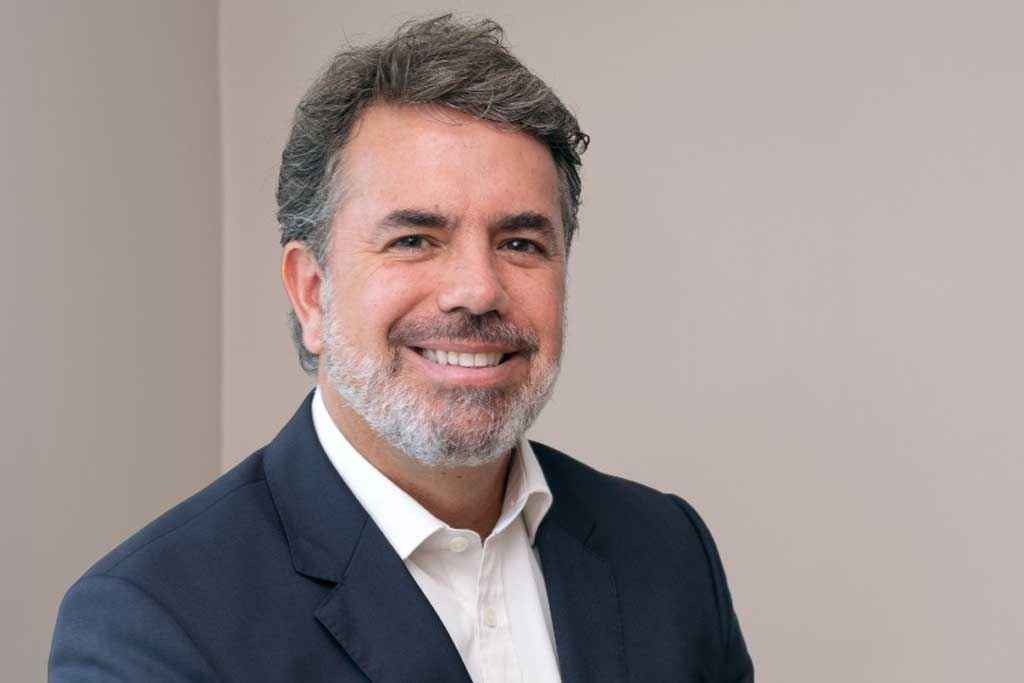
There may not be another mining company in the world that can extract rare earths with such low environmental footprint, Aclara CEO Ramon Barua told Proactive.
Sustainability at the core
Aclara is now embarking on developing its Penco Module project, spanning around 600 hectares of prospective ground in Chile. The site contains ionic clays abundant in rare earth elements. Aclara’s objective is to establish a processing plant that utilizes clays from nearby deposits to produce a rare earth concentrate.
Extensive testing in 2021 and 2022 validated water treatment for the Penco Module flowsheet, achieving a closed circuit that recycles 95% of process water. The 5% losses will be replenished using 100% recycled water from the nearby city of Concepcion. The proposed flowsheet demonstrates innovation and environmental responsibility, aligning with Aclara's commitment to leaving the project site better than found.
"Our process does not generate radioactive waste as is common in the industry,” Barua said. “We aim to produce rare earths, critical elements for the fight against climate change, in a sustainable, traceable, and green manner."
Favourable geology
The key to this sustainable extraction method is the geology of the deposit itself. Penco is an ionic clay formation amenable to a simple metallurgy with low capital and operating costs. As Barua explained, it is easier to break the chemical connection with a fertilizer, allowing the ions to flow into the solution. In contrast, hard rock deposits contain very strong bonds that require acids to break down.
Ionic clays are found in many parts of the world, but the deposits are hard to find. Aclara has amassed over 500,000 hectares in Latin America: in addition to Penco, the company recently made a new discovery at the Carina module in Brazil. Like Penco, Carina shows potential to host significant quantities of dysprosium and terbium, which are important components of electric vehicle production for hungry European, US, and Japanese automakers.
There is an urgent need amongst car manufacturers to secure a diversified and resilient supply chain. As they become more reliant on rare earth-based permanent magnets for efficient electric vehicle motors, concerns have escalated due to China's dominance in mining and processing these critical materials. Recent restrictions on gallium and graphite exports from China have underscored the vulnerability of this supply chain.
Automakers venturing into the new technology of electric vehicles while relying on a single supplier for a crucial product is a risky proposition, said Barua. “They acknowledge this risk and are actively exploring alternative supply chains.”
Aclara aims to play a significant role in certain rare earths it possesses, particularly dysprosium and terbium, which are relatively scarce and challenging to obtain, Barua added.
Global demand increasing
The company’s primary goal is to swiftly enter production, recognizing the increasing global demand for its minerals. “With governments, companies and consumers committing to early adoption of electric vehicles, our focus is on aiding this transition,” Barua said.
Aclara’s team is eyeing significant growth once its projects are in production. While the Penco Module is a crucial starting point, it is relatively small. To achieve that growth, Aclara plans to expand through additional modules, with current emphasis on Brazil following the discovery of the Carina, according to Barua.
And, as the CEO notes, producing a carbonate is not going to be enough. The company is eyeing vertical integration, either within its own business lines or through joint ventures or partnerships with original equipment manufacturers. “What the OEMs are looking for is not a carbonate of rare earths, they need a permanent magnet,” Barua said. “There’s a path to get us there and we are prepared to be a part of that value chain.”
As Aclara progresses through its developmental milestones, the company envisions a future where it not only meets the world's growing demand for rare earths but does so responsibly and sustainably.
“We plan to start growing a native forest as part of our reclamation efforts, and we've committed to planting more than 200,000 native trees in the area,” Barua said, referring to the Penco project.
In keeping with the circular mining ethos, Aclara has also established a foundation for these native forests and donate them for posterity, thus closing the cycle.
The company has developed a patented process that is unique in the world, and boasts a cash position of close to $50 million to advance its goals.
For Barua, the message is quite simple: “We are going to be producing the rare earths that are needed for the electric transition and the fight for climate change, and we will do it in a sustainable and responsible manner.”