
Greg Brockman has been reinstated as president (according to his X profile), the employee revolt has been put to bed and Microsoft’s powerhouse AI division no longer has the same appeal.
It’s almost as if everything at OpenAI has gone back to normal.
The appointment of a new board and chairman and the firing of independent directors who focused heavily on AI safety, however, leaves many begging to differ.
So who is out and who is on OpenAI’s board?
Bret Taylor – New chairman and board member
Taylor is best known for being co-chief executive officer at Salesforce.com, Inc. (NYSE:CRM), where he spent over six years in executive roles such as president and chief operating officer.
Prior to this, the 43-year-old worked as chief technical officer at Facebook and was a product manager at Google during its infancy.
He chaired Twitter for a year before Musk’s takeover and most recently took a seat on the board at Shopify.
Taylor will replace Brockman as chair.
AI is a clear area of interest for the California executive. He is supportive of language models and their adaptation into the industry and has even launched his own artificial intelligence company.
Leaving Salesforce last November, Taylor said he exited to return to his “entrepreneurial roots”.
Just how this aligns with OpenAI’s aim of being a quasi-non-profit focused on ensuring AI benefits all of humanity, not just some, remains to be seen.
Larry Summers – new board member
An economist and former Treasury Secretary, Larry Summers is not a common fixture in the inner workings of Silicon Valley boardrooms.
That’s not to say Summers isn’t well-versed in the tech industry.
He sits on the board of Twitter co-founder Jack Dorsey’s payments firm Block and the software company Skillsoft as well as working as an advisor at venture capital giants Andreessen Horowitz.
Summer, through leading the US treasury during the Clinton administration and being an economic advisor during Obama’s tenure, has strong ties to Washington and Wall Street.
Despite his capitalist links his focus and comments on AI, leading to his appointment have been largely focused on its impact on workforces, particularly white-collar workers.
Back in 2018, he disagreed with then-Treasury Secretary Steven Mnuchin that AI would not replace jobs in the US for another 50-100 years.
When ChatGPT was released to the public he was quick to sound the warning bells, comparing the move to other huge historical advancements.
“This could be the most important general-purpose technology since the wheel or fire,” he said on Bloomberg TV.
In a separate interview, he added: “ChatGPT is going to replace what doctors do, hearing symptoms and making diagnoses before it changes what nurses do…. It’s going to change what traders do going in and out of financial markets before it changes what salespeople do.”
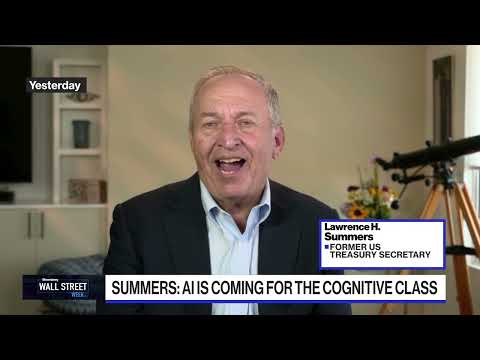
Summers is expected to be tasked with organising OpenAI’s governance and recruiting a larger board.
Adam D’Angelo – remaining board member
Founder and chief executive officer of Quora, the question-and-answer website, D’Angelo made his mark on the Californian tech scene as CTO at Facebook between 2006 and 2008.
In his years at high school, the 39-year-old worked with Zuckerberg to co-develop the Synapse Media Player, which used machine learning algorithms to produce song recommendations.
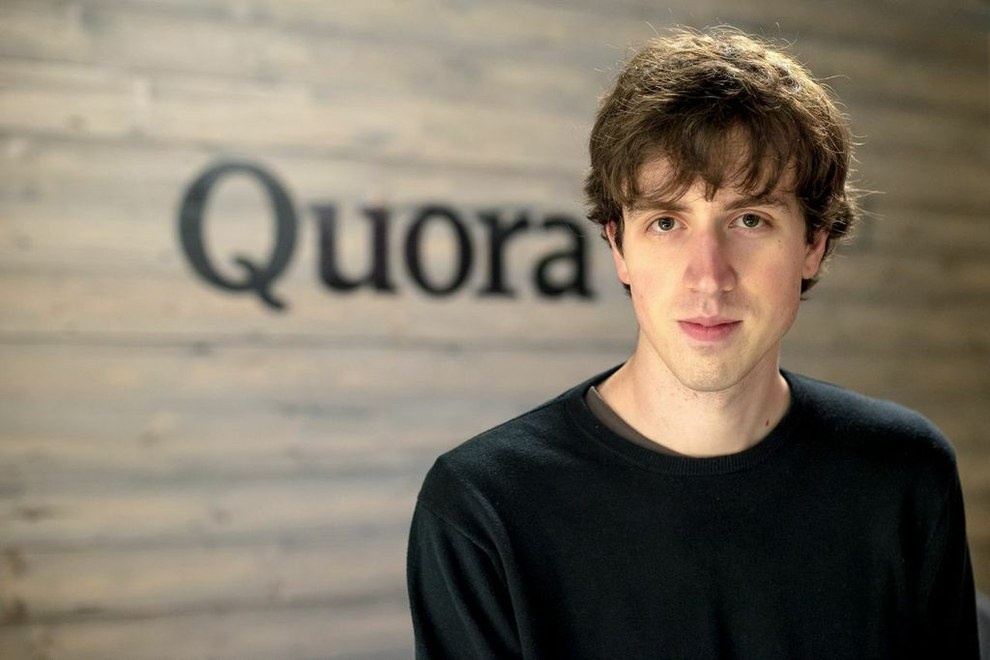
Adam D'Angelo Source:KQED
Joining the board back in 2018, D’Angelo has been an AI optimist for much of his career.
“Right now there’s a little bit of a climate of, like, if you say something that’s too positive, people need to cut you down and remind you of all the bad things that happened in the past,” he told The Information in an interview earlier this year.
“But when you look at what’s been enabled by this technology so far, it’s very positive.”
At Quora, the tech boss has been developing Poe, a chatbot, which uses a range of personalities and models to operate and works with and pays developers to help expand its functions and accessibility.
Tasha McCauley – departing board member
McCauley is a robotics engineer who is the boss of GeoSim Systems, a software company which helps develop 3D modelling systems for cities.

Tasha McCauley with husband and actor Joseph Gordon-Levitt Source:gregoreite
She helped create Fellow Robots, an AI-based inventory-management system, and is known to be a supporter of effective altruism – a movement focused on warning society of the risks of AI.
Toby Ord, a member of the advisory board of the Centre of Governance of AI Research, worked with McCauley and admired her intelligence, morality and knowledge of AI.
“[McCauley is] one of the most thoughtful people I’ve ever worked with. Even during a crisis, she’s remarkably level-headed and calm”, Ord said.
Helen Toner – departing board member
Toner is the director of strategy at Georgetown University’s Centre for Security and Emerging Technology and is considered a key influencer regarding AI and the policy surrounding it.
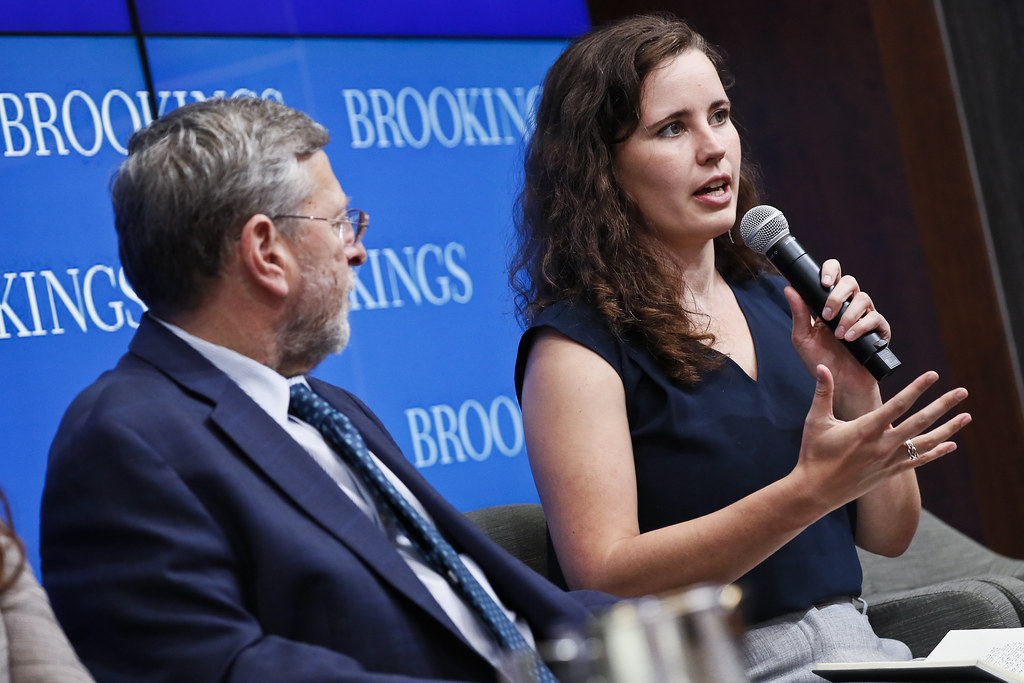
Toner Source: Flickr
She had previously published papers arguing that the fear of China pulling ahead in the AI race was not a good enough justification for a lack of regulation.
As a supporter of effective altruism, the former Open Philanthropy analyst warned back in May of society relying heavily on AI, adding that there was “still a lot we don’t know”.
In October, Toner urged the government to “take action to protect citizens from AI’s harms and risks, while also promoting innovation and capturing the technology’s benefits”.
Ilya Sutskever – departing board member, remaining employee
Chief scientist and a co-founder of OpenAI, Sutskever’s role in Altman’s dismissal was reportedly key, but following days of chaos, it appears his thoughts on the matter changed.
A former Google Brain, the search engine’s old AI division, the 37-year-old computer scientist has been considered a leading force in the industry for close to a decade.
He has been a big supporter of research and innovation in the AI industry.
Sustkever expressed regret for his involvement in Altman’s departure soon after the decision.
Over the weekend, he signed an open letter threatening to quit if Altman was not reinstated and even took to Twitter/X to signal his regret.
I deeply regret my participation in the board's actions. I never intended to harm OpenAI. I love everything we've built together and I will do everything I can to reunite the company.
— Ilya Sutskever (@ilyasut) November 20, 2023